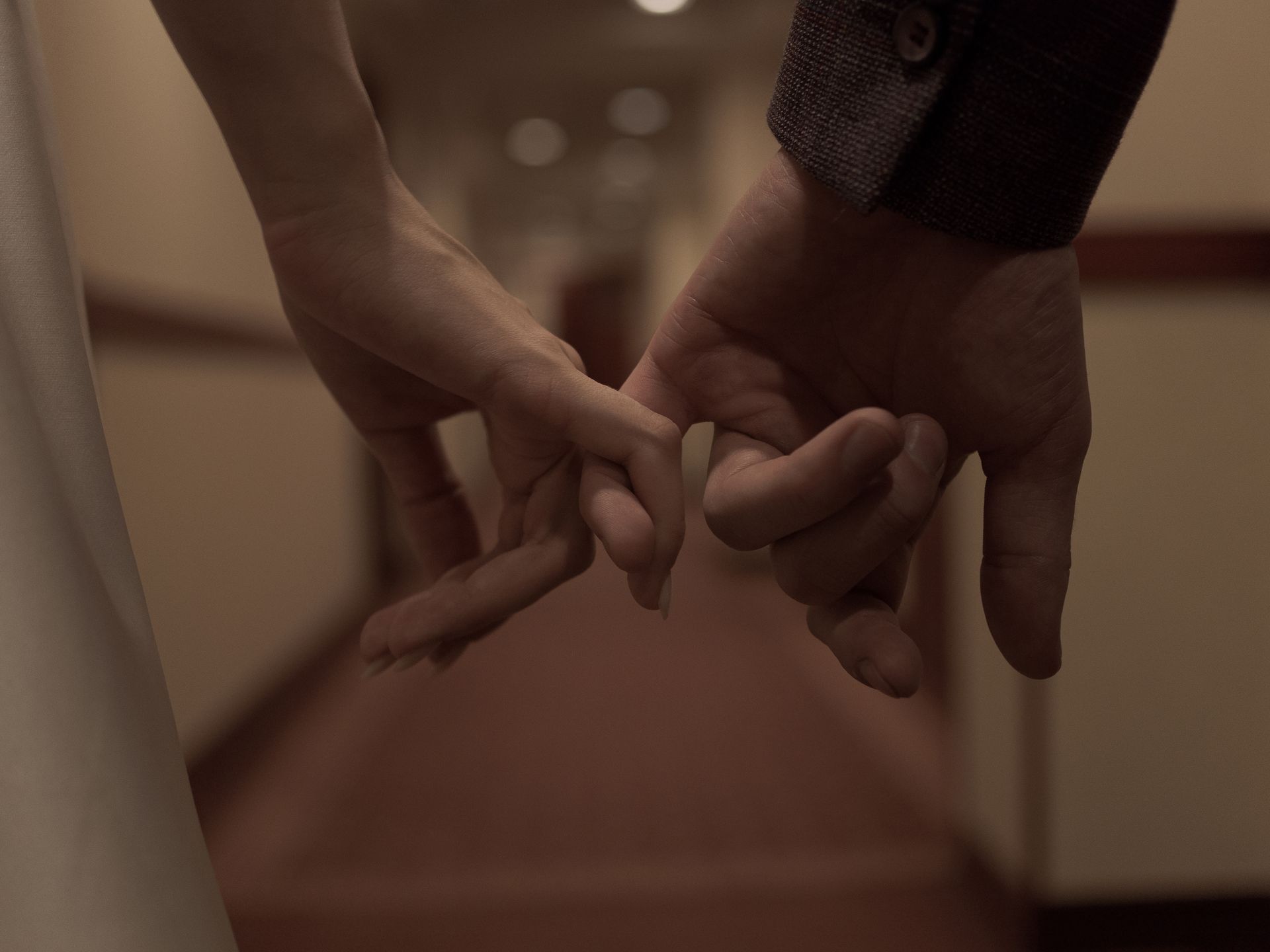
“A Whole World of Unknown”: How Couples Live Between Today and Tomorrow with HD
8 min read
When Huntington’s disease is part of your future, how do you live in the present? New research explores the experiences of partners navigating uncertainty and hope while living with HD.
When someone carries the gene for HD but has not developed visible symptoms, life can look very ordinary from the outside. They may be making plans, attending school, working, travelling, caregiving, and building a home. For those in a relationship, everyday life can be underpinned by a difficult question that couples face together: What might happen in the future?
It was this experience that Pares and colleagues in the UK set out to understand. Rather than focusing on the clinical aspects of being pre-symptomatic, the researchers wanted to investigate what it is actually like to be the partner of someone carrying the expanded huntingtin gene that causes HD. During this period of uncertainty, how do partners make sense of the future? How do they make decisions and plans as a couple and seek information about HD and research? Importantly, how does the experience shape their relationship?
To explore these questions, the researchers interviewed eight partners of gene carriers and gave them the opportunity to describe their experiences in their own words. Three main themes emerged: navigating uncertainty during the pre-symptomatic stage, hope in research, and the shared experience of HD. The study described how partners can move between enjoying the life they have now, preparing for a future they cannot predict, searching for information and hope, and finding ways to navigate uncertainty together.
Navigating HD before symptoms arise
One of the clearest themes was the tension between living in the present but anticipating the future. Participants spoke about wanting to enjoy their lives together while knowing that HD could potentially change their future. This could make decisions that might otherwise be straightforward feel more complicated.
Questions about children, marriage, careers, finances, and future care could all take on additional meaning. Even though nothing had changed in the present, the possibility of change in the future was still there. One participant explained this tension by describing the experience of “Mourning the life I didn’t have.”
At the same time, participants described that they did not want this uncertainty to stop them from living. Some described making a deliberate effort to focus on the present: travelling, making memories, and enjoying their relationship with their partner. Others found comfort in planning. Thinking through possible future scenarios and discussing practical issues could make an uncertain future feel more manageable.
The researchers found that participants moved between these approaches. There was no simple choice between “live for today” and “plan for tomorrow.” Instead, couples might focus on the present at one moment and then turn their attention to future planning when a particular decision required it.

A particularly interesting finding in this study was that planning could actually be a way of coping with uncertainty. That might include talking about difficult subjects like kids, finances or care, which can be uncomfortable. But for some participants in this study, having these conversations meant they knew more about what their partner wanted and what they might do when circumstances change.
For these couples, planning did not necessarily mean expecting something bad to happen and carrying that mental load on their heads, but instead, it could provide a feeling of preparedness when so many things remained outside their control. Participants also described the importance of having conversations before decisions became urgent. In this way, couples could work out what mattered to them while they had the opportunity to make choices together.
Knowledge (and research) is power
For some participants in this study, seeking out and keeping up with scientific information about HD became an important way of coping with uncertainty. After learning that their partner carried the expanded HD gene, participants often turned to research to understand the condition and what the future might hold, particularly the onset of symptoms. But the study found that research could take on another role: providing hope.
Learning about advances in HD biology or the development of potential treatments could make the future feel less fixed. Participants knew that research did not guarantee that a treatment would work, or that a particular treatment would be available when their partner might need it. Nevertheless, witnessing progress could make the possibility of a different future feel more real.
However, the study emphasised that information is not experienced the same way by everyone. Some participants found it reassuring to learn more about HD, but others said that repeatedly reading about it could make them think more about their future and potential symptoms.
Therefore, there is definitely a fine balance between staying informed and protecting one’s own well being.
A united front: facing HD together may bring couples closer
The third theme identified in the study was how facing HD together could strengthen partnerships. HD meant that some couples engaged in conversations which might otherwise have been avoided. Topics included marriage, children, finances, future planning and what they wanted their lives to look like.
These conversations were not necessarily easy.
The participants described disagreements, difficult emotions, and uncertainty about the right decision. But they also noted that being forced to have these conversations sooner could create greater openness and understanding between partners.
In some cases, couples became more deliberate about how they spent their time together. Knowing that the future was uncertain encouraged couples to appreciate the life they were living and to make decisions around what was important to them. This could mean prioritising experiences, making plans together or simply recognising the value of everyday time as a couple.
“You chose your train line at the beginning; will you be with this person? will you not? But then, once you’re on it, it’s a swift change of events … it absolutely has changed the speed and the trajectory of my life.“
-Study Participant
The researchers described this as “us versus the world,” not because couples were isolated from everyone else, but because the shared experience of dealing with HD could strengthen the sense of facing something together.
Importantly, this study does not suggest that HD automatically makes relationships stronger; participants described genuine difficulties and challenges. Yet when couples were able to communicate openly and face complex questions together, those challenges could sometimes strengthen their partnership.
What does this mean for couples living with HD?
One of the most important take-home messages from this study is that the impact of HD on couples can begin long before symptoms. A person carrying the HD gene and their partner may be living a full and wonderful life together, falling in love, making plans, raising families, travelling and building their future, while also carrying the additional load of uncertainty, complicated family decisions, emotional investment in research, financial planning, and the possibility of substantial change.
The authors therefore highlight the importance of recognising partners as people who may have their own support needs alongside the person carrying the HD gene. The study points towards potential support needs around communication, decision-making, psychological wellbeing, and coping with uncertainty. It also suggests that couple-based approaches could potentially help partners navigate difficult conversations and maintain resilient relationships. The findings also suggest that there is value in allowing people to find their own way of managing uncertainty. Some may want detailed information about research, while others may prefer less; some may find planning reassuring, while others may prefer to concentrate on the present.
Limitations and takeaways
The contributions of the eight partners interviewed in this study provide valuable insight into what it can be like to live alongside HD before symptoms arise, helping to shine a light on experiences that are not always captured in research, and we are grateful for their participation. Their quotes, which you can read in the open access publication linked below, capture the findings in ways that numbers cannot.
As with all research, this study has some important limitations to keep in mind. It was a small qualitative study, so the findings cannot represent the experiences of every couple living with HD. The participants were recruited through the Huntington’s Disease Association (a UK-based support organisation) and social media, so those who took part may have already been engaged with HD information or research. The study also only included people who were in relationships, meaning we did not hear from partners whose relationships had ended or changed because of HD.
This matters especially when interpreting the finding that facing HD can strengthen relationships. Staying together is not the only valid outcome. Relationships can change or end for many reasons, and that is completely normal too. The end of a relationship does not mean that someone has failed to cope with HD or failed their partner. In future research, hearing from people with different relationship experiences would give us a fuller picture of how HD can affect couples.
It’s clear that there are many experiences of living alongside HD, but this study provides a window into how couples may move between enjoying the life they have now, preparing for a future they cannot predict, searching for information and hope, and finding ways to navigate uncertainty together.
Summary
- Navigating time and uncertainty: Couples living with HD balance living fully in the present while preparing for an uncertain future, with planning around children, finances, careers and care sometimes providing a sense of control.
- Research as a source of hope: Learning about HD and research developments can make the future feel less predetermined and provide hope, although participants differed in how much information felt helpful versus overwhelming.
- “Us versus the world”: Facing HD together could encourage open communication, navigation of difficult conversations, and appreciation of time together, sometimes strengthening the relationship.
- The experience of being a partner to an HD gene carrier varies between individuals, and may require different sources of support.
For more information about our disclosure policy see our FAQ…