Worms to the Rescue: Separating the Good, the Bad, and the Clumpy Huntingtin
⏱️ 7 min read | A team of researchers developed a simple platform to test how toxic different types of HTT protein clumps are using a laboratory worm model. They showed that certain types of clumps are harmful to the worms, while others are not.
Huntington’s disease (HD) is a fatal brain disorder caused by a defect in the huntingtin (HTT) gene, which produces an extra-long protein. This defect causes the HTT protein to form harmful clumps, or “aggregates” inside cells, a process that is common to other neurodegenerative diseases like Alzheimer’s and Parkinson’s. As proteins clump, they form different shapes and structures, some more harmful than others.
It is important to figure out which specific type of protein clump is the most harmful to cells, because different shapes might cause damage in different ways, and this can guide the development of HD therapies. In new work published in a chemistry research journal, a team of researchers tested how harmful different forms of HTT protein clumps are. They also manipulated the properties of these protein clumps to try to reduce their harmful effects. So what did they find, and what does this mean for HD?
Proteins as construction bricks

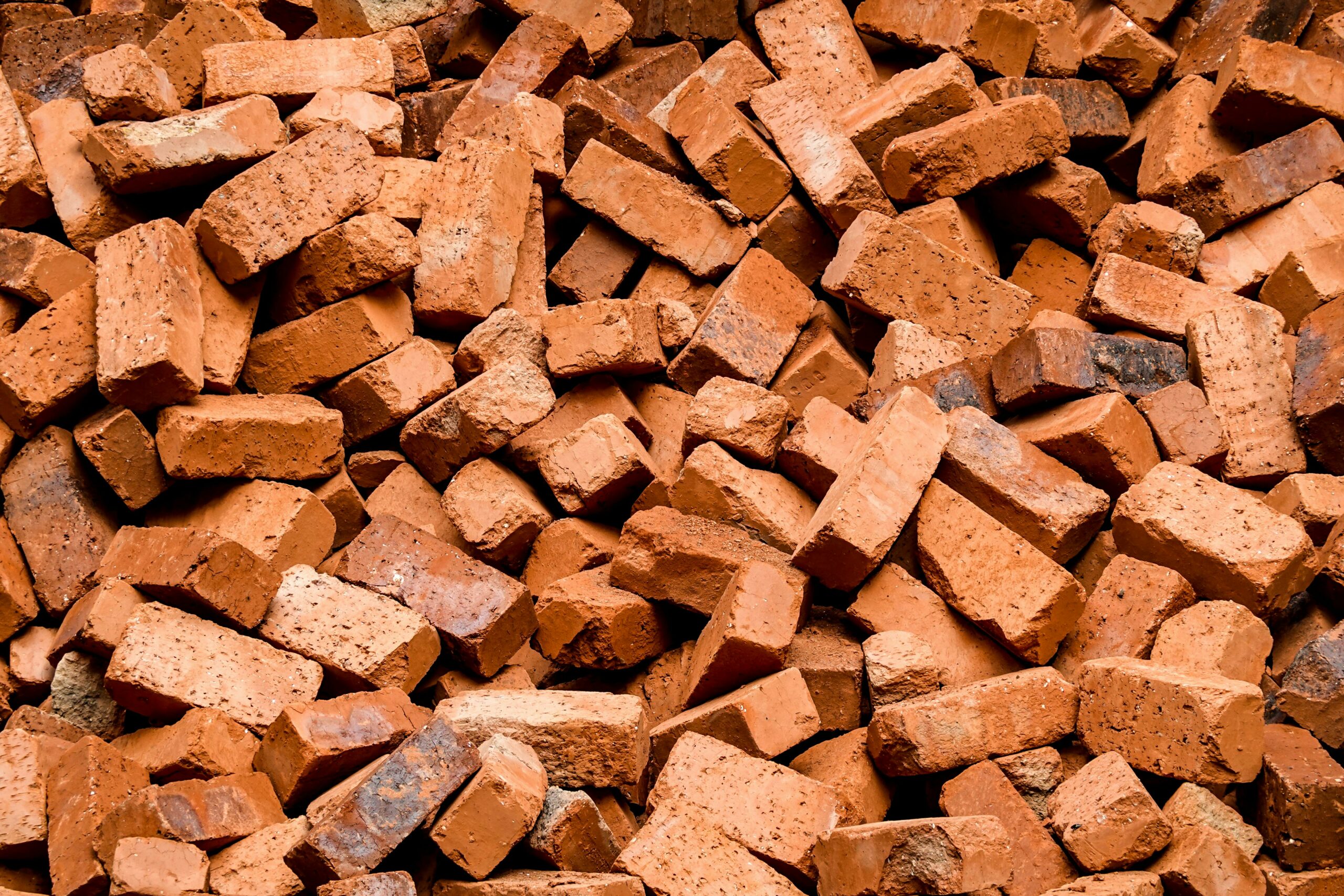
An analogy for explaining the different types of protein clumps is to think about bricks used in construction. Normal proteins are like properly cut and stacked building bricks. Like broken bricks, damaged or mutated proteins can accumulate in different ways as time passes:
Oligomers (the first to form clusters): small, disorganized piles of a few misshapen or broken bricks, small enough to be easily moved around.
Amorphous Aggregates (Disordered clumps): a messy pile of all sorts of different damaged bricks dumped in a corner that lacks a defined structure and is difficult to move around.
Amyloid Fibrils (Ordered fibers): a stack of bricks that has been assembled into parts of a wall that has no function, but cannot be easily moved or disassembled.
Our cells have control systems that work as a construction clean-up crew that tries to sort, rearrange, or remove the damaged bricks before they accumulate into problematic piles. However, in diseases like HD, this control system can become overwhelmed. Over time, there’s just too much expanded HTT for them to keep up with. In other words, there are too many damaged bricks.
Separation by spinning
The researchers wanted to answer a key question: which type of HTT clump causes the most harm? To find out, they first needed a way to separate the different types of clumps from each other.
They used a laboratory spinner (called a centrifuge) that works like a washing machine spin cycle—it separates materials by weight. Just as a washing machine flings water away from clothes, spinning at different speeds separated the HTT clumps by size. Gentle spinning separated out the big clumps, while faster spinning separated the smaller clumps from the larger ones.
After separating the different types of HTT clumps, the researchers fed them to tiny laboratory worms called C. elegans (pronounced “see EL-uh-ganz”) to test which clumps are the most harmful. It might sound strange to use worms for HD research! But these worms are workhorses of scientific discovery. For decades, labs around the world have used them to make breakthrough findings about aging, longevity, and how cells develop throughout life.
C. elegans are about as long as a dash (-), nearly transparent, and almost impossible to see without a microscope. In laboratories, they live in a specialized liquid or gel known as “media,” contained in a controlled environment that has everything they need to survive.
The worms ate the different forms of HTT clumps and the researchers measured the worms’ survival and movement over the next 2 days. The results suggest that the small clumps (oligomers) are the most harmful, reducing worm survival and movement, while the larger fibrils caused no harm at all. Going back to our brick analogy, it seems to be those small, movable piles of broken bricks that cause the most issues, not the big rigid stacks!

Structure affects toxicity
Now that they knew the small clumps were the toxic ones, the researchers wanted to understand why. They tested whether changing the structure of these clumps could make them less harmful.
First, they chemically “stapled” clumps together so they couldn’t move around as easily. The worms survived longer. This suggests that the flexibility of these small clumps, their ability to shift and change shape, is at least part of what makes them dangerous.
They also tested two experimental compounds (EGCG and riluzole) that are known to affect how proteins clump together. Depending on when the compounds were added, they changed the worms’ survival in different ways. This tells us that the timing of interfering with clump formation matters, and that different interventions create clumps with different levels of toxicity. It’s important to note that these compounds are research tools, not potential treatments, but they help scientists understand what’s happening with the HTT protein.
Applying the findings to future research
This research makes two important contributions. First, it gives scientists a simple, reproducible method to separate and test different types of HTT clumps, something other labs can now use in their own work. Second, it reveals that the structure and flexibility of protein clumps determines how toxic they are. That’s a potentially powerful insight! If we can stabilize or rigidify these clumps, we might be able to reduce the harm they cause.
The idea that “locking down” toxic proteins could protect cells is an intriguing new angle for HD therapies, and potentially for other diseases involving protein clumping, like Alzheimer’s and Parkinson’s. Of course, these experiments were done in simple worms, so there’s a long road ahead before we know if this approach could work in people.
The next steps include tracking what happens to these toxic clumps after the worms ingest them. Do they keep clumping inside cells? Which organs are affected? Researchers also need to better understand exactly which forms of small clumps are most dangerous, and test whether this approach works in more complex animals, like mice. If those studies are successful, it could eventually help develop drugs designed to reduce HTT clump toxicity.
Summary
- Huntington’s disease (HD) is caused by a defect in the HTT gene that makes the protein clump together inside brain cells. Similar clumping happens in other brain diseases like Alzheimer’s. These clumps form in different ways, some are small and flexible (oligomers) while others are large and rigid (fibrils).
- Researchers developed a simple method using spinning to separate different types of HTT clumps so they could test each type individually.
- They fed the separated clumps to tiny laboratory worms and measured how the worms fared. The small, flexible clumps were highly toxic to the worms, while the large, rigid clumps caused no harm.
- When researchers chemically “stapled” the small clumps together to make them less flexible, the worms survived longer. This suggests that flexibility is key to why these clumps are dangerous.
- This work gives scientists a new tool for studying HTT clumps and suggests a potential new treatment strategy. If we can lock toxic protein clumps into less flexible forms, we might reduce the damage they cause in HD and other protein clumping diseases.
For more information about our disclosure policy see our FAQ…