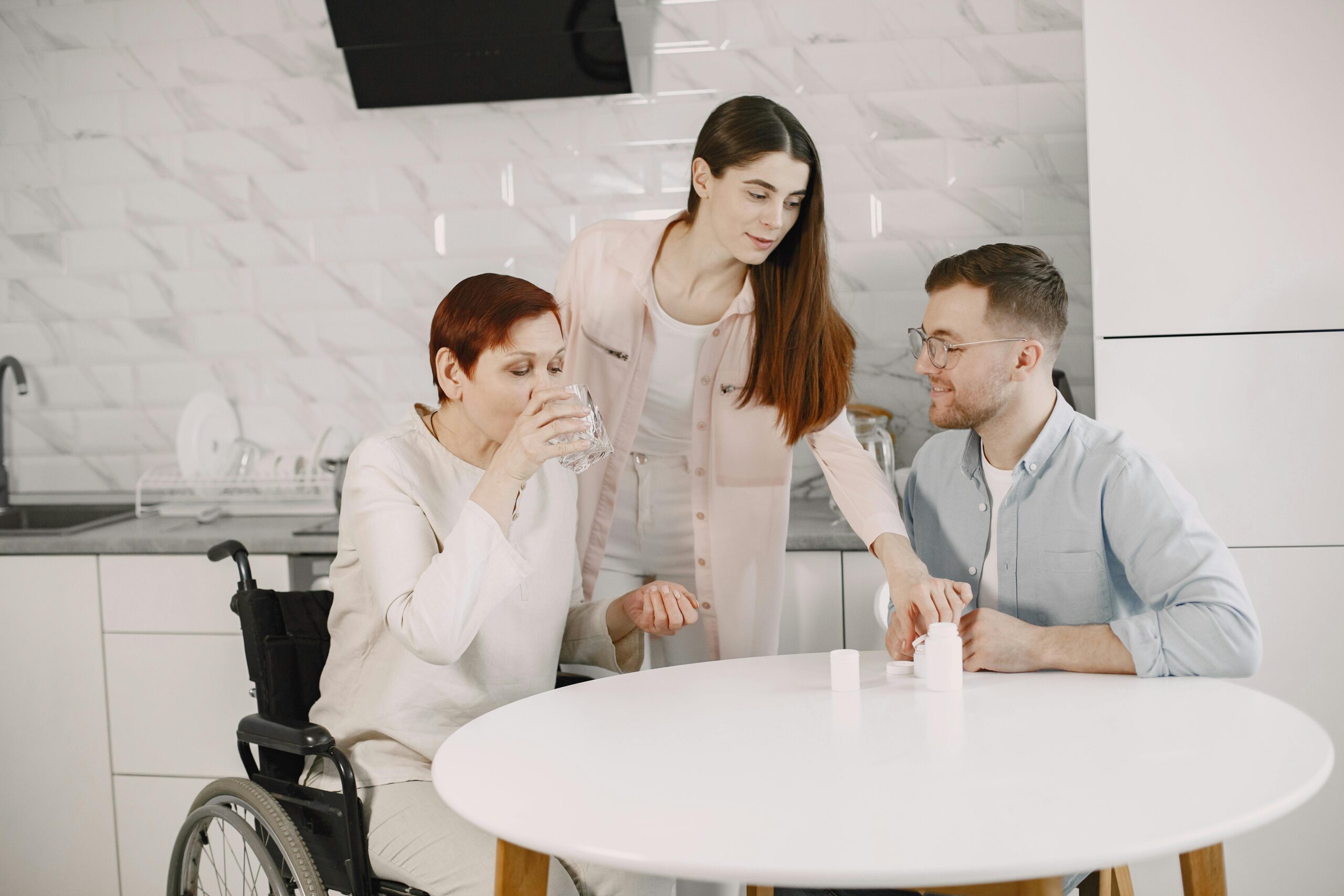
The Great Care Conundrum: What “Good” Care Looks Like in Huntington’s Disease
⏱️8 min read | What does “good care” look like in Huntington’s Disease? A new Dutch study asked familial and professional caregivers, and uncovered how differently it’s experienced in practice.
Caring for someone you love with Huntington’s disease (HD) can feel like baking a cake from a recipe that changes every single day. One morning, you learn the steps: how to help with breakfast, washing, getting dressed, and it feels manageable. The next day, the recipe has changed. What worked yesterday no longer works today. You are constantly learning, adjusting, and doing your best.
For families living with HD, questions about care become impossible to avoid over time. As the condition progresses, people need increasing support with everyday tasks. What may begin as occasional help can gradually become full-time care, and eventually, a move into a specialised nursing home.
At that point, families and healthcare professionals are faced with a difficult question, one without a simple answer: What does “good care” actually look like for someone with HD?
A recent study from the Netherlands set out to investigate this by focusing on real-life experiences. Researchers spoke directly with family members and professional caregivers working in specialised HD nursing homes, asking them what truly matters in day-to-day care.
Why Quality Of Care Can’t Just Be Measured In Numbers
In many areas of healthcare, quality is measured using numbers like survival rates or recovery times. These measures make sense when the goal is to heal or improve. But HD is different. In the absence of a treatment, care is about helping someone live as well as possible for as long as possible. That makes “good care” much harder to define.
When families are choosing care homes, they often rely on reassuring labels like “specialist Huntington’s unit” or “centre of excellence.” While these can be helpful, they don’t guarantee the same experience everywhere. What feels like good care can vary between settings, and between individuals. Because of this, there is a growing need to better understand what quality care really means in HD. Not just through checklists or ratings, but by listening to the people living with the condition and those caring for them every day.
Photo credit: ANTONI SHKRABA production
How Did They Study This?
To explore this question, researchers held six group discussions across three specialised HD nursing homes in the Netherlands. A total of 22 people took part, including professional caregivers (nurses and care assistants) and family members (parents, partners, children, and siblings of people with HD).
Participants were encouraged to share their experiences and perspectives on what makes care “good.” The discussions were guided around key themes such as emotional support, physical care, communication, staff expertise, and how care is organised.
Good Care Through the Lens of Professional Caregivers
Nurses and care assistants described the daily realities of caring for people with HD, and the challenges that come with it.
One of the biggest themes was striking a balance between independence and safety. Due to changes in thinking and judgement, people with HD may not always recognise risks. For example, someone may want to walk independently despite a high risk of falling. Caregivers often have to step in and set limits, which can feel restrictive. However, some nurses explained that clear boundaries can actually reduce stress, as constant decision-making can be overwhelming for residents.
Routine and structure were also seen as very important; even small changes can have a big impact. One nurse described how moving coffee time by just fifteen minutes caused widespread agitation in her unit. Predictability helps residents feel safe and reduces anxiety.
Caregivers also emphasised the importance of looking beyond physical needs. Good care includes ongoing conversations about future wishes, not just at the end of life, but throughout the disease. Topics such as feeding decisions, resuscitation, and what activities bring joy are important to address early.
Nutrition was highlighted as a major concern. People with HD often require more calories and may have difficulty swallowing, increasing the risk of choking. Supporting safe and adequate nutrition is a key part of care.
Emotional support was another central theme. Nurses often act as trusted listeners for residents coping with loss; loss of independence, identity, and ability. Providing emotional care is just as important as managing physical symptoms.
Finally, caregivers stressed the importance of strong teams and good working conditions. Skilled staff, clear communication, and continuity all matter. When staff stay long enough to build relationships, care becomes more consistent and personal. High staff turnover, on the other hand, can disrupt care and reduce quality.
Good Care Through the Lens of Familial Caregivers
Family members agreed with many of these points, but their perspectives were shaped by lived experience in a different way.
Like the professionals, they highlighted the importance of routine. For people with HD, routines are not just habits, they are essential. One family member described how her husband must always put his left leg into his trousers before his right. Small, consistent patterns help make daily life manageable.
Families also spoke a lot about the importance of emotional connection. They valued staff who took time to talk, listen, and respond to how residents were feeling, not just their physical needs. Moments of compassion, especially after distressing events for residents, made a lasting difference for families.

Photo credit: Rafael Oliveira
Families described the transition into a nursing home as particularly difficult. The first few weeks were often overwhelming and filled with uncertainty and emotion. Family carers said they needed extra support, information, and reassurance during this time.
The physical environment also mattered. Families preferred settings that felt warm and homelike rather than clinical. Smaller, quieter units were seen as more suitable, as noise and overstimulation can be distressing. Access to outdoor areas and quiet spaces was also important.
Mealtimes were a common source of anxiety. Families worried about choking risks and appreciated staff who approached meals calmly, taking time, adjusting pace, and creating a peaceful environment rather than rushing through the meal and potentially putting their loved ones under stress.
They also commented on the importance of how care is organised. Having enough staff for 24-hour supervision, and planning consistent daily activities both contributed to a sense of safety. Clear communication within care teams was also meaningful for families. Some mentioned that access to digital care records was helpful for staying informed, although reading detailed updates could also be emotionally difficult.
Above all, families emphasised the importance of the staff’s personal qualities. Kindness, patience, and respect mattered deeply for family members. They noticed and really appreciated when professional caregivers treated their loved one as an individual, with dignity, rather than as a task.
What This Means
This study shows just how tricky quality of care is in HD. You cannot boil it down to medical treatments or simple numbers. Good care means balancing structure with flexibility, and medical know-how with emotional understanding; it’s not just clinical, and it’s not about checking boxes. At its heart, good care is about people. It depends on skilled staff who know what they are doing and who also care deeply. It depends on enough support, so no one is rushed or stretched too thin.
The study also points to a bigger problem. The HD community still has no clear, consistent way to define or measure quality of care. Labels like “specialist centre” can be helpful, but they do not always tell you what daily life is actually like inside. Standards vary widely between countries and between organisations.
This has real consequences. Families are often forced to make hard decisions without any clear way to compare their options. The same problem affects research. Companies running HD trials often pick sites based on reputation or charity badges, even though those labels may not reflect the real quality of day-to-day care.
What this study offers is a step forward. By bringing together the voices of caregivers and families who live this daily reality, it helps identify what matters to both. This kind of research, grounded in lived experience, is a crucial first step toward better, more consistent ways to define and measure quality of care in the future. Future studies must also include people living with HD themselves and from larger groups of people across the world to provide a comprehensive picture of what great care in HD looks like.
Special thanks to all families and care staff who shared their time and views, and to the researchers for carrying out this important study.
Summary
- The study investigated what “good care” means in Huntington’s disease by gathering views from both family members and professional caregivers in specialised nursing homes in the Netherlands.
- Both groups agreed that good care depends on skilled staff, emotional support, good nutrition, stable teams, and strong relationships between caregivers and residents.
- Differences in perspective showed professionals focused more on structure and safety, while families focused more on daily lived experience, routines, and the care environment.
For more information about our disclosure policy see our FAQ…