
Two Heads Are Better Than One: Combined Physical and Music Therapy for Late-Stage Huntington’s Disease
A new study looking into combined music and physical therapy shows that simple rhythmic cues work better than complex music or instructions, helping to improve movement control and reducing chorea.
A new collaboration between researchers at Indiana University Southeast and Bellarmine University in Kentucky, both in the USA, aimed to investigate what happens when a physical therapist and a music therapist work together directly with people in the late stage of Huntington’s disease, describing how these two professionals can join forces to help people with Huntington’s disease (HD) to move better.
The study, published recently in the Journal of Interprofessional Education & Practice, recruited 10 people with HD at the late stage of the disease who were residents in a long-term care facility that specialises in caring for people with HD. These participants were capable of doing some movements, such as standing up or walking, but needed assistance for everything else.
Physical and Music Therapists
Physical therapists – healthcare professionals who help people improve their movement and manage pain – work with individuals at all stages of HD to help maintain mobility and function. Indeed, exercise and therapy have shown positive results in terms of improving walking speed and balance in people with HD. However, little research has been carried out so far on the best ways to help people with HD, specifically in the late stages of the disease.

At the same time, music therapy is known to help people with communication and physical functioning. Music therapists use rhythm and melody to help people with HD reach therapeutic goals, with some evidence showing they can help improve walking and thinking in earlier stages of HD.
What Was Investigated?
To understand how combining therapies might work, the researchers developed a process divided into two main parts. First, there was a “Movement Evaluation Day” where a physical therapist assessed each person’s ability to move without any music, looking at things such as how they stood up, walked, and kept their balanced. Five days later, they held a “Music and Movement Intervention Day”, where a physical therapist and a music therapist worked together with the participants.
During the intervention, the team compared three different conditions to see what worked best. The first condition was standard physical therapy without music. The second condition involved physical therapy paired with a simple rhythmic cue played on a drum, which provided a steady, pulse-like beat that was matched to the participant’s speed. The third condition used a melodic rhythmic cue played on a guitar, which provided a more complex sound using chords and melody.
Exercise and therapy have shown positive results in terms of improving walking speed and balance in people with HD.
Tactile cues were also used, meaning that the physical therapist would touch the participant to guide their movement timing and control, such as pressing on their back to help them begin standing up. The goal was to see how these different cues affected the participants’ ability to perform functional movements. The researchers used observations, video recordings, and interviews to gather data.
What Were the Results?
The analysis allowed the researchers to identify two main themes from the study. The first theme was called ‘Two Parts Make a Whole’ and described how the two different professionals came together to create a complete treatment team, highlighting that successful teamwork depends on the experience level of the therapists. As in this study both the physical therapist and the music therapist were experts in working with neurological disorders, their combined expertise allowed for better decisions than either could have made alone. For example, their experience helped them understand the participants’ needs in the moment and adjust quickly.
Another important part of the first theme was having a clear understanding of what other professionals do. The therapists understood each other’s roles and respected their distinct contributions, for example by knowing when to take a step back and let the other take the lead. This mutual respect created a positive working relationship while also allowing therapists to step out of their professional comfort zones and hone a new collaborative approach to get the best results for people with HD.
The second major theme was ‘Symbiotic Interactions’, which referred to how the therapists worked together in harmony before and during the sessions. This started with collaborative preparation, where they talked beforehand to set specific goals for each participant. If the physical therapist wanted to focus on a specific movement, the music therapist would plan the musical cues to match that goal. During the actual therapy, they practiced ‘co-direction’, meaning they would switch leadership roles naturally to keep the session flowing smoothly. This was especially helpful for participants as having just one person giving main instructions at a time helped reduce confusion.
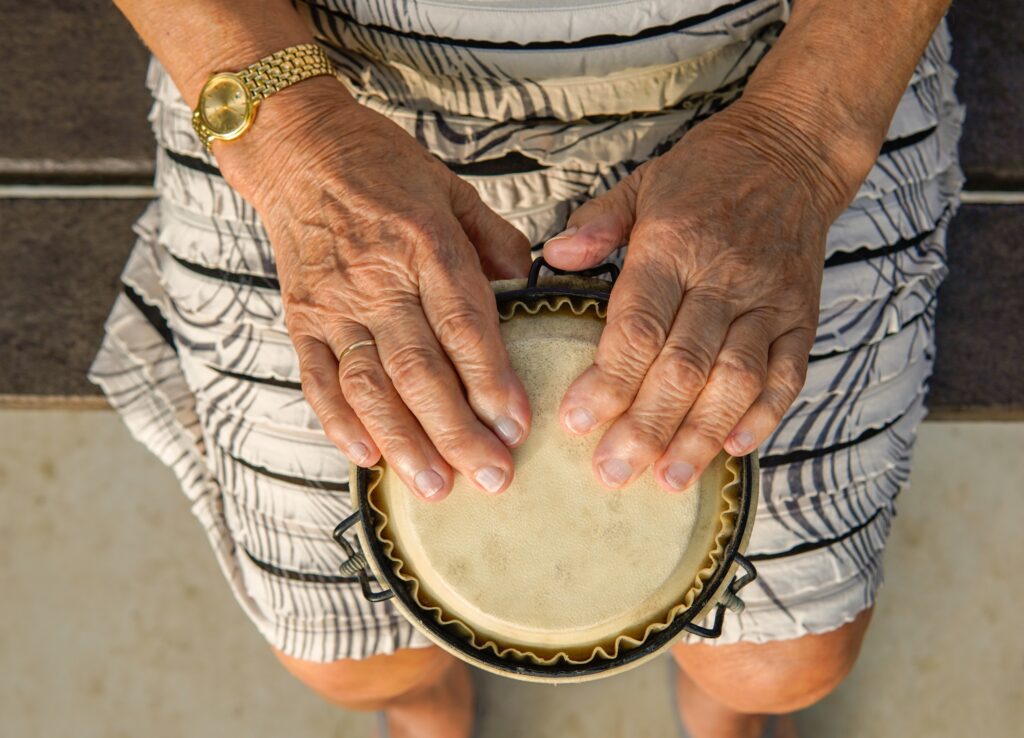
One of the most interesting findings came from the subtheme of ‘co-treatment cueing’, which looked at which types of cues helped participants the most. Cues can be implicit, like a drumbeat or a touch that the body reacts to automatically, or explicit, like verbal instructions that require thinking. The study found that the participants responded much better to the simple, implicit cues. For example, when the music therapist used a simple drum beat, participants showed better movement control, less involuntary jerking (choreachorea Involuntary, irregular ‘fidgety’ movements that are common in HD), and smoother walking patterns.
In contrast, the more complex guitar music did not work as well. The guitar cues had more notes and rhythms, which seemed to perhaps be too much for the participants to process. For people with late-stage HD, who already have trouble thinking through complex tasks, the guitar music was thought to add too much cognitive load – that is, it required too much mental work. Similarly, simple verbal commands from the physical therapist, such as saying ‘left, right, left, right’ were helpful, but long or complicated instructions were less effective. The key was to keep the external triggers simple to help the participants focus on their movements.
Why Does This Matter?
The results of this study are important because they are the first to explore this specific combination of therapies for people with HD. The findings suggest that using simple rhythmic cues, like a drum, can be a powerful tool to help people in the late stage of the condition move with more control and safety. It also showed that slower movement is often better for people with HD because it means they are controlling their body rather than letting the disease rush them. The study also highlights that music therapy is not just about playing songs; it requires a skilled therapist to choose the right sounds to prevent participants from being overwhelmed, as random background music or radio noise might actually be distracting.
Summary
- The study showed that when physical therapists and music therapists join forces, they can improve the care of individuals with late-stage HD.
- The collaboration works best when both professionals respect each other, plan carefully, and use simple, targeted cues.
- This approach can potentially be used in other clinics or to train caregivers on how to best help participants move safely.
- While more research is needed on this topic, this study shows that two heads (and two disciplines) are often better than one when facing complex challenges linked to HD.
For more information about our disclosure policy see our FAQ…