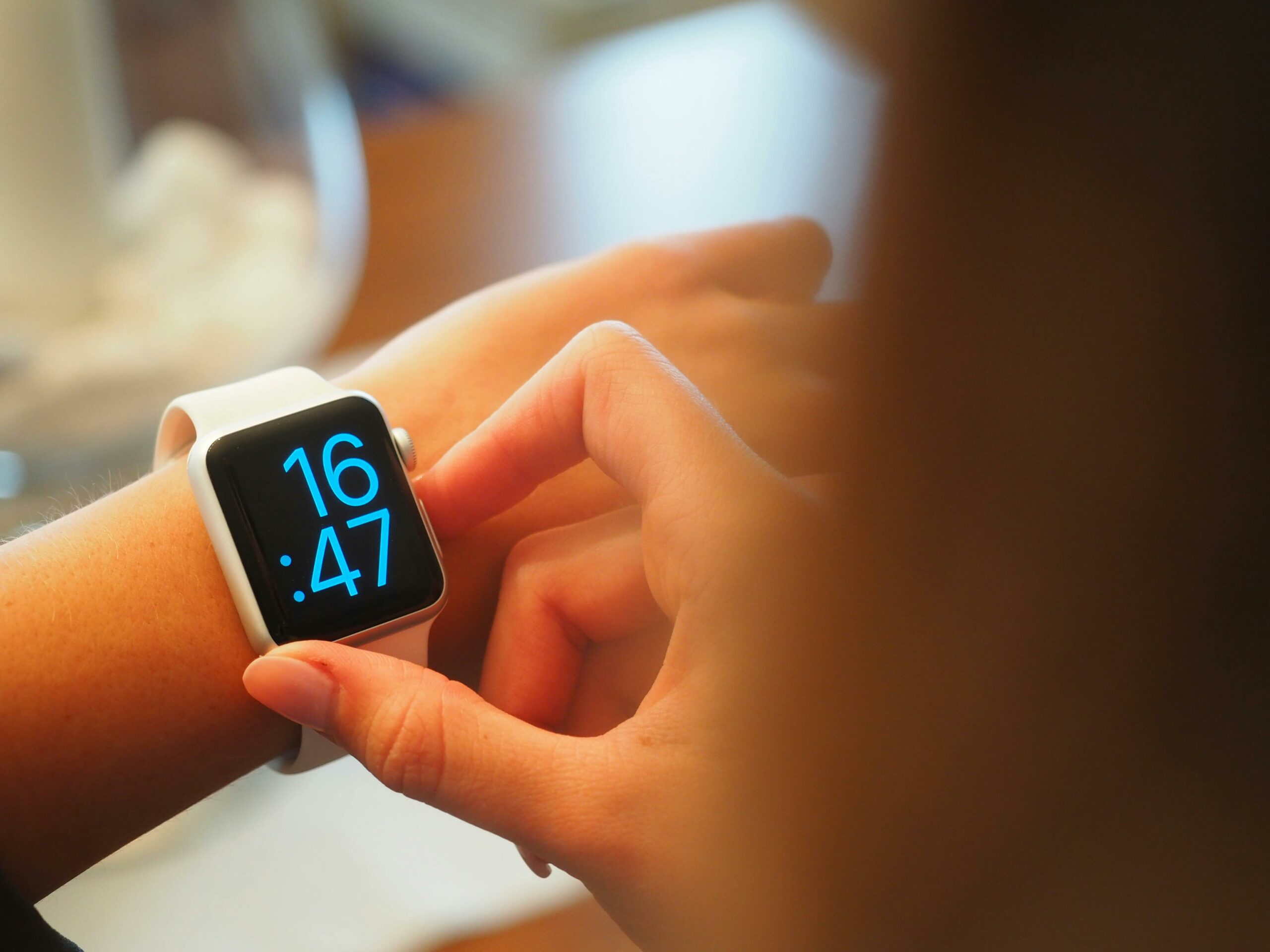
Your Wrist on Watch: Could a Smartwatch Reveal Huntington’s Disease Symptoms?
⏱️ 7 min read | A wrist sensor tracked arm movements in people with HD for a week and could see who had HD and who didn’t. This kind of technology could change how we measure drug effects in trials.

Every day, we reach for hundreds of things without thinking twice. For people with Huntington’s disease (HD), those everyday movements could carry hidden information about how the disease is progressing, according to a new study that uses wrist-worn sensors. Researchers recruited people with HD to wear a Fitbit-like device for a week at home, then used artificial intelligence (AI) to analyze their arm movements. The sensor could detect motor changes, predict clinical scores, and hint at HD even before a formal diagnosis. A larger, longer study is now recruiting to further develop this technology so that it could be applied in future clinical trials.
Your Wrist Knows Something

We spend a lot of time thinking about the HD motor symptoms that we can see, like involuntary movements (chorea), changes in gait, and shifts in speech. But what about the thousands of small, purposeful movements we make every day without thinking? Reaching for a coffee cup. Pushing open a door. Picking up the phone.
It turns out those everyday arm movements might carry a lot of information about HD. A new study suggests that a wrist-worn sensor, similar to a fitness tracker, can pick up on subtle changes in those movements that even a scheduled clinic visit might miss.
The study, published in Communications Medicine, comes from researchers at BioSensics LLC and the University of Rochester. It’s one of the first to focus on upper limb function in HD using wearable technology.
What Did the Study Do?
This small study included 16 people with HD, 7 people with prodromal HD (gene-positive but not yet clinically diagnosed), and 16 people without the gene for HD.
Participants attended one visit at the clinic during which the researchers performed movement tests as part of a standard HD clinical rating scale called the Unified Huntington’s Disease Rating Scale (UHDRS). Then they wore a small wrist sensor on their dominant hand for seven days. They didn’t need to do anything special – they just lived their lives.
The sensor recorded “accelerometer data,” essentially capturing the physics of how the arm moves through space. A week of continuous smart watch wear creates a big pool of data! The researchers then applied a type of advanced AI called a deep learning algorithm to help break it down. AI methods can be incredibly efficient at detecting patterns that humans would be unable to extract on their own.
In this case, the AI was programmed to automatically identify moments of “goal-directed movement”: intentional reaches and grabs, as opposed to passive arm swings. Then the team could analyze these movements to understand how they differed between study groups (symptomatic HD, pre-diagnosis, and HD negative).
What Did the Sensors Find?

The short version: HD affects movement, and the sensors could tell.
People with HD seemed to show slower arm movement speeds and fewer long, sustained reaches compared to people without HD. Their movements also featured more directional changes, little corrections and jerks that reflect chorea, the motor disruptions familiar to anyone who knows HD. These patterns showed up consistently across a full week of real-world activity.
The algorithm could also predict scores on the UHDRS from sensor data alone, and it did reasonably well. Its predictions lined up with participants’ actual motor scores about half the time, capturing about 56% of the measurable variation across individuals, and about 60% for upper limb movements. The remaining 40% likely reflects aspects of HD that the wrist sensor simply can’t see, like cognitive changes, speech, or gait, which the UHDRS captures but an arm sensor doesn’t.
Can Analyzing Sensor Data Reveal Who Has HD?
A machine learning model trained on these movement features could correctly classify people as having HD, prodromal HD, or no diagnosis about 67% of the time overall. For people with HD specifically, it correctly identified them 72% of the time.
The prodromal HD group is where things get interesting, and where we need to temper expectations a bit. That group was small (just 7 people), and many of the differences observed didn’t reach statistical significance. In other words, the trends look promising, but we can’t draw firm conclusions yet.
The measurements from the prodromal group often landed between HD and healthy controls, exactly what you’d expect to see. But with only 7 participants, the numbers just aren’t there to confirm it. Bigger studies are needed, and the researchers know it.
Why Does This Matter for Clinical Trials?
Here’s the exciting part. One of the biggest challenges in HD clinical trials is measuring whether a treatment is actually working. Today’s gold standard is a clinician sitting across from someone and running through the UHDRS at a scheduled visit every few months.
That means researchers can only take a snapshot, and only in a clinical setting, which may not reflect how a person with HD actually functions at home. A wrist sensor worn for a week captures thousands of moments the clinician never sees. If we can validate such digital measures rigorously, they could become powerful tools to track disease progression and, most critically, to tell us whether a drug is helping.
That’s a future worth building toward.
The Next Step: MEND-HD Is Recruiting Now

Enter MEND-HD, a clinical study actively recruiting right now, and it’s fully remote. No travel required.
The study’s lead investigator, Dr. Jamie Adams from the University of Rochester, is a contributing author to the paper we’ve discussed. She’s been leading this research and is now running the larger, more rigorous study needed to validate it. That’s how good science often works: someone builds the tool, tests it in a small group, and then scales up to prove it.
MEND-HD is specifically focused on validating wearables to digitally measure gait and chorea for use as clinical trial endpoints in people with early-to-middle stage HD. It uses virtual visits, surveys, movement tests, and at-home wearable sensors. You’d participate from your own home.
The next time you reach for your coffee cup, push open a door, or pick up your phone, you probably won’t think twice about it. But those small, unremarkable movements might one day tell us whether a drug is working, picked up quietly by a sensor on your wrist, in your own home, on an ordinary day.
We’re not there yet. But studies like MEND-HD are how we get there. If you’re eligible (25-65, diagnosed with HD-ISS Stage 2-3 HD, and have been genetically tested) and want to be part of building the measurement tools that future HD trials will depend on, visit mend-hd.com.
Summary
- Researchers recruited 16 people with HD, 7 with prodromal HD, and 16 people without the HD gene to wear a wrist sensor for 7 days at home, tracking everyday arm movements
- People with HD seemed to show slower, jerkier movements with fewer long, sustained reaches, and these differences were detectable automatically from sensor data
- A machine learning model correctly identified people with HD 72% of the time
- The prodromal HD group showed trends, but the sample was small (just 7 people) and differences didn’t reach statistical significance after correction, meaning bigger studies are needed
- Wearable sensors could be a game-changer for HD clinical trials by providing continuous, real-world data instead of infrequent clinic snapshots
- MEND-HD, a fully remote study, is recruiting right now to do exactly that; visit mend-hd.com to learn more and sign up
For more information about our disclosure policy see our FAQ…