Joining the Starting Lineup: MutLβ’s Role in DNA Repeat Expansions
⏱️8 min read | Scientists have known that MutLβ is linked to repeat expansion but not exactly how. A study reveals that the MutLβ protein complex is a main player supporting and interacting with key DNA repair proteins to drive DNA repeat expansions.
Huntington’s disease (HD) is caused by an expansion of the DNA code, a repeated C-A-G letter stretch within the huntingtin gene. This expanded repeat doesn’t stay stable; it can grow longer in certain types of cells, especially in the brain, through a process called somatic expansionsomatic expansion A process in which the CAG repeat in the Huntingtin gene can change over a person’s lifetime in some cells of the body, particularly in the brain.. DNA repair proteins are front and centre for this process to occur. Although they’re meant to correct genetic mistakes, when faced with long repetitive CAG stretches, DNA repair proteins can mistakenly cause them to grow even longer.
Over the past decade, scientists have carefully probed which DNA repair proteins are involved in specific aspects of somatic expansion. Through this cumulative knowledge, a starting lineup has emerged of key DNA repair proteins most implicated in HD. In biology, it’s common for groups or pairs of proteins to stick together and work like teammates towards key goals. This is known as a protein complex.
One complex that hasn’t received too much attention is MutLβ (pronounced “mute-el-beta”). A new study shines a spotlight on the crucial roles of the MutLβ protein complex in supporting other key players and enhancing repeat expansions. The findings provide a clearer picture of how DNA repair can go offside at repetitive DNA regions and make disease causing repeats grow.
Who’s playing in the DNA repair world cup?
At long repetitive regions in our genetic code, DNA structures can form that require a team effort to resolve and untangle. This is usually a completely normal process, but in HD it can lead to repeat tracts getting longer.
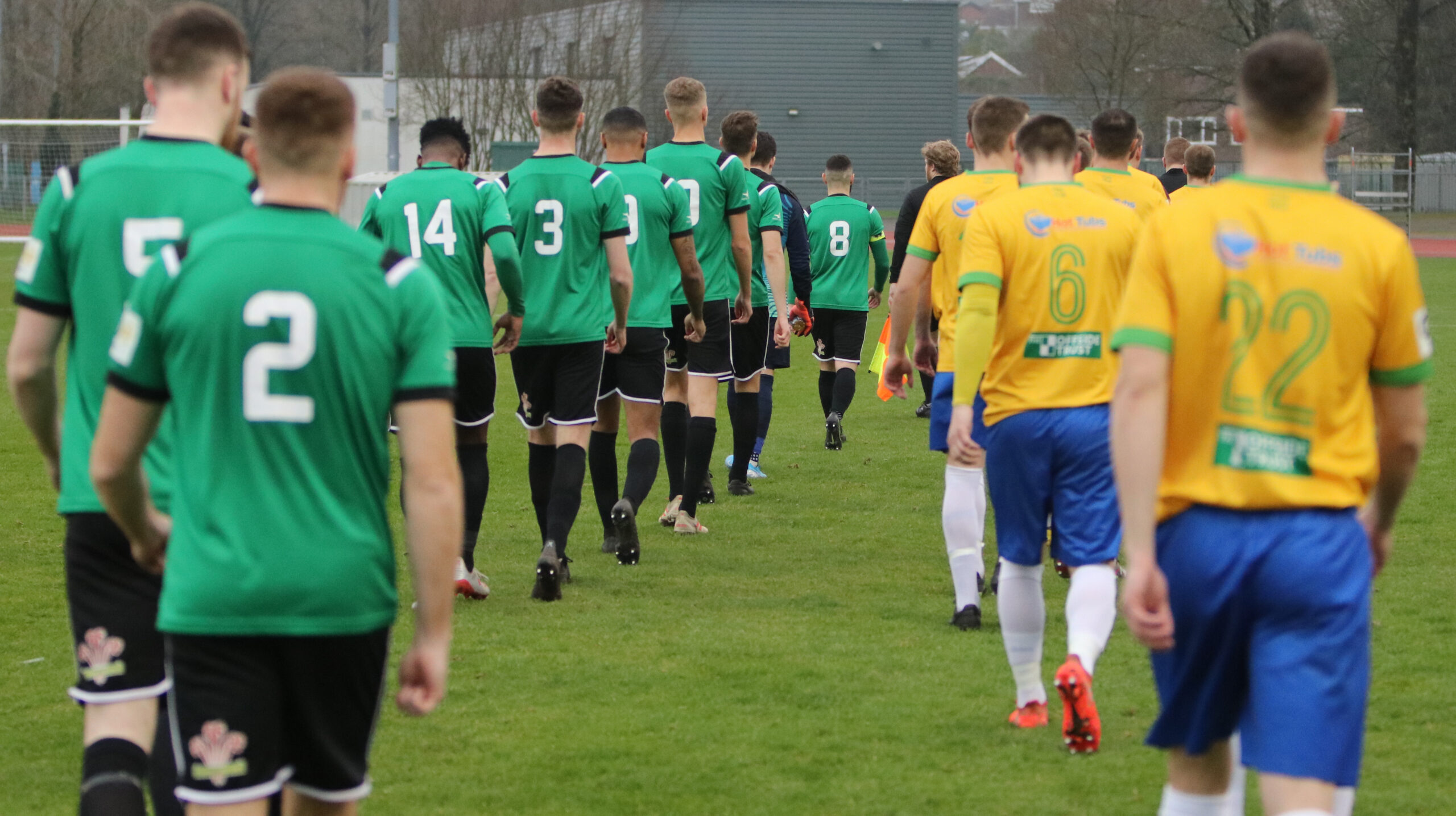
These structures are loops of DNA that can be detected by the DNA repair proteins in our cells. Just like in Football (Soccer for our North American audience), DNA repair is a team sport. So, who exactly are the Messis and Ronaldos of the HD DNA repair team? In this study, researchers focused on:
- MutSβ, (“mute-ess-beta”) the Defender complex: Made from MSH2 and MSH3 proteins, MutSβ patrols the DNA field, looking for unusual structures or errors. When an error or structure is spotted, MutSβ tackles it and calls in the rest of the team. Usually that protects the genomegenome the name given to all the genes that contain the complete instructions for making a person or other organism, but at long CAG repeats, the team intervention can result in an accidental own goal and make repeats longer.
- MutLγ, (“mutet-el-gamma”) the Attacker complex: Made from MLH1 and MLH3, MutLγ carries the molecular blade. DNA is double stranded, and once MutSβ identifies a structure and signals for support, MutLγ makes an incision on the strand opposite the DNA loop. Think of it like taking a shot on goal and creating the opening needed for the expansion process to move forward.
- MutLβ, (“mutet-el-beta”) the Playmaker complex: Made from MLH1 and PMS1, MutLβ links the key players together. In this study, the authors found that MutLβ interacts with MutSβ and MutLγ to assist in driving repeat expansions, similar to how a playmaker passes the ball to get closer to goal.

Throughout the study, the researchers used biochemical approaches to carefully test what each protein complex does. They can do this using human cell extracts from which specific DNA repair proteins are removed. Then, scientists can rebuild parts of the DNA repair process in a test tube, adding or removing individual players to see how the outcome changes.
But how does one see somaticsomatic relating to the body expansions in a test tube? A neat trick that the authors used was to build in a hidden signal next to a small synthetic DNA loop. If expansions take place, this creates a special sequence that can be cut by an enzyme. Once cut, the DNA fragments act like a scoreboard indicating whether expansions happened or not, and by how much!
MutLβ helps the DNA repair team move the ball forward on expansions.
The scientists first tested whether MutLβ actually helps DNA repeats expand. They used the human cell extracts missing key DNA repair proteins, then added in MutSβ, MutLγ, and MutLβ in different combinations and amounts.
When no MutSβ was in the system, expansion remained at background levels even when MutLβ was added. This makes sense because without the defender complex, the DNA loop is not efficiently recognized – and the rest of the team is not properly signaled or activated. When MutSβ was added at low levels alongside MutLγ, bringing MutLβ onto the pitch increased expansion around four- to five-fold. When MutSβ was added at higher levels, it still gave the reaction a strong boost.
The findings provide a clearer picture of how DNA repair can go offside at repetitive DNA regions and make disease causing repeats grow.
Next, the researchers explored the role of the attacker complex, MutLγ. When MutLβ joined MutSβ and MutLγ on the same pitch, the amount of DNA expansion increased as well! At low levels of MutLγ and with no MutLβ, almost no expansion occurred, but when more MutLγ was available, some expansion could happen on its own. When MutLβ was added, the entire expansion reaction got a major boost. Overall, when the team is working together and all the players are available, MutLβ functions as a playmaker, linking the action and creating further expansions.
MutLβ makes the assist by connecting the players and setting up the cut
So how does MutLβ drive the expansion reaction? The researchers isolated individual proteins and checked which teammates were found together. They found that MutLβ physically interacts with MutSβ, MutLγ, and PCNA, another protein that helps organize DNA repair.
The researchers also found that MutLβ increased the cutting activity of MutLγ. MutLγ cuts the DNA strand opposite the loop formed in repetitive DNA, creating an opening that allows the repair process to move forward in the wrong direction and add extra repeats. Importantly MutLβ does not simply make MutSβ better at spotting the loop. Instead, it acts later in the play, timing the intervention to help MutLγ make the cut more effectively. MutSβ identifies the danger, MutLβ makes the assist and MutLγ takes the final action, making the conditions ready for repeat expansion to happen.
When all the players are present
Cell extracts contain thousands of proteins, so it can be difficult to know whether an unseen substitute is helping from the sidelines. To test whether the identified players were enough, the researchers rebuilt the repeat-expansion reaction using only a defined set of proteins in a test tube.
The system included MutSβ and MutLγ alongside all the necessary machinery to organize, copy, and process DNA. When MutLβ was added, repeat expansion increased, and when MutLγ was left out, expansion disappeared completely, confirming that MutLβ acts directly within the expansion machinery.
The authors also tested altered and defective versions of some of these proteins. These experiments further supported the idea that MutLβ interactions are important for its ability to promote expansion.
So what’s the verdict, ref?
This study moves MutLβ from being a semi-unknown quantity in somatic expansionsomatic expansion A process in which the CAG repeat in the Huntingtin gene can change over a person’s lifetime in some cells of the body, particularly in the brain. to a defined member of the responsible team. MutLβ appears to act as a playmaker that helps link recognition of a DNA loop with the actions that create a longer DNA repeat tract.
One important player missing from the reconstructed system was FAN1, a DNA repair protein that generally protects against somatic expansionsomatic expansion A process in which the CAG repeat in the Huntingtin gene can change over a person’s lifetime in some cells of the body, particularly in the brain. in HD. This study was designed to identify the machinery sufficient for producing expansions, rather than recreate every protein that might promote or suppress it. This means we still don’t know whether FAN1 could block the play, compete with MutLβ, or change how the loop is processed.
Lastly, these are tightly controlled biochemical experiments using cell extracts, purified proteins, and engineered DNA – simple systems compared to living, interconnected neuronsneuron Brain cells that store and transmit information within human bodies. Very useful for working out what each player can do, but cannot fully reproduce the complexity of a World Cup game!
By figuring out exact roles of these DNA repair proteins through biochemical studies, the major advantage is testing what can potentially be targeted for therapeutic interventions in animal models and later in humans.
Summary
- The problem: Previously, the function of MutLβ was unknown in terms of how it contributes to repeat expansions.
- The insight: MutLβ seems to be required for MutSβ and MutLγ dependent DNA expansion, and appears to physically interact with a lot of players in the mismatch repair machinery.
- In the lab: This work was done primary with biochemical experiments and cell extracts in test tubes rather than living animal models.
- Why it matters: Understanding how repeat expansion occurs, what exact players are involved and what scientists can safely target in the DNA repair pathway is essential for future therapies that target somatic expansionsomatic expansion A process in which the CAG repeat in the Huntingtin gene can change over a person’s lifetime in some cells of the body, particularly in the brain. players.
Sources & References
For more information about our disclosure policy see our FAQ…