Feeding the Brain Through the Gut: How Prebiotics Might Shape Huntington’s Disease
Studies in mice that model Huntington’s disease suggest that prebiotics – the food that feeds our gut bacteria – might improve gut health and neurological symptoms.
When it comes to thinking about the effects of Huntington’s disease (HD), most people automatically start to think about the brain due to the severe symptoms caused by the breakdown of brain cells. It’s easy to forget that the gene which causes HD is present throughout the whole body – including in the gut! Recent work led by Drs. Carolina Gubert and Anthony Hannan at the University of Melbourne studied how feeding the bacteria in the gut a healthy nutritious meal might improve some signs of HD in mouse models of this disease. Let’s take a closer look at how we can help our bacteria help us.

The tiny tenants living inside of you
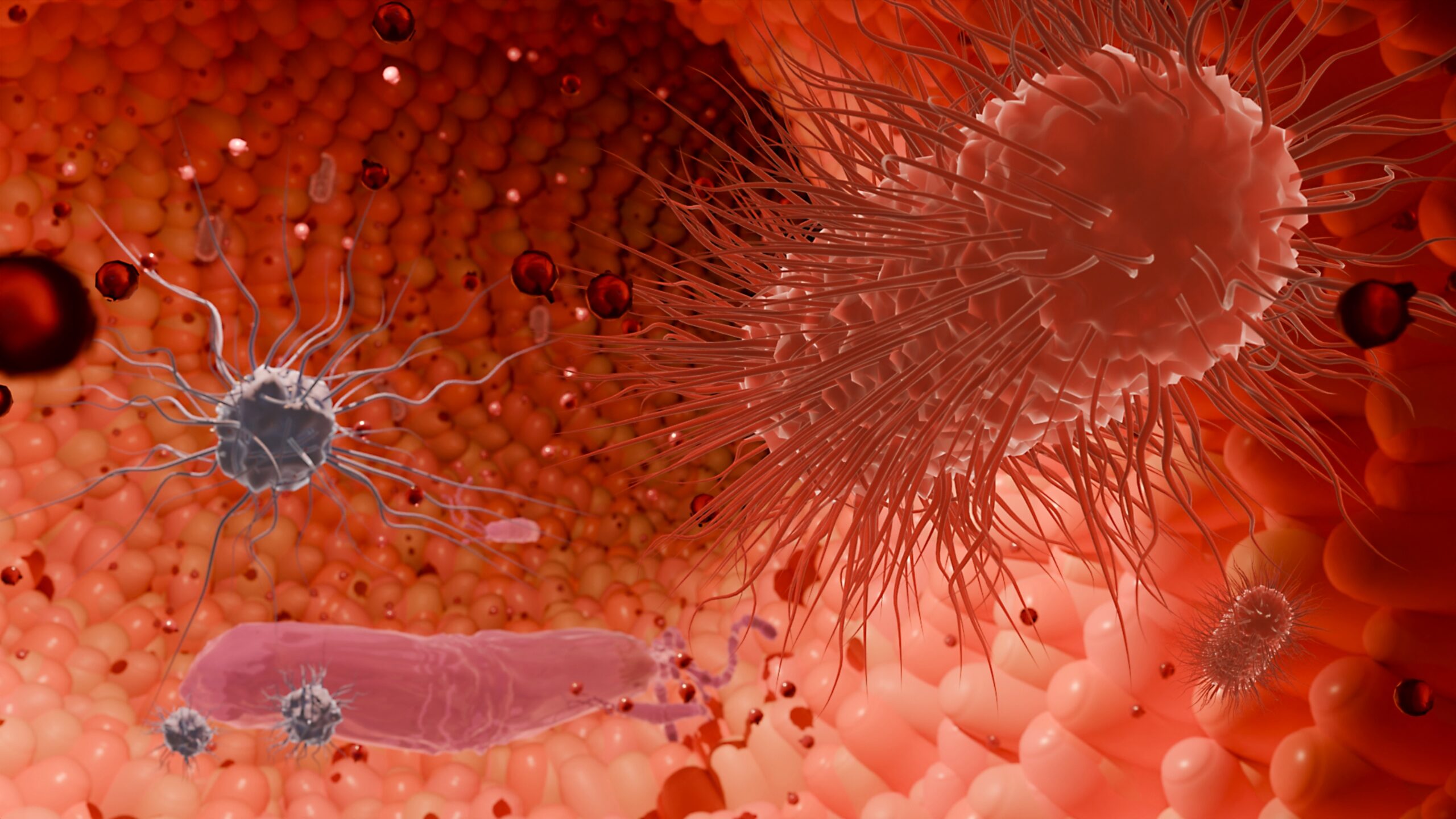
A booming metropolis of microbes – tiny organisms too small to see with the naked eye – live in a thriving community in our gut. Microbes can be bacteria, virus, or fungi – things which often have a bad reputation for causing disease. However, most of them are harmless and can actually be beneficial for our health.
Hundreds of types of bacteria call our guts their home and they help to break down complex carbohydrates, produce essential vitamins, and teach our immune system to tell the difference between friendly and harmful bacteria.
Gut bacteria can even talk to our brains! They communicate using chemicals and our nervous system, and the brain talks back! It’s like two friends constantly texting each other. Ever felt stressed or nervous and experienced stomach pain or changes in bowel habits? This is an example of communication through the gut-brain connection. Your brain texts your gut “we’re nervous” and your gut responds with butterflies or nausea.
In this research study, the authors wanted to see if restoring order to the microbiome neighborhood in HD would help gut symptoms, and if a happier gut could improve other HD symptoms associated with the brain through the two-way communication system between the gut and brain.
The population of the microbe metropolis is different in HD
Many people with HD experience gastrointestinal symptoms which decrease their quality of life, including diarrhea, weight loss, incontinence, and constipation. In HD, the gut microbiome – the population of bacteria in the gut – can become imbalanced, meaning that there might be an overgrowth of harmful bacteria and a loss of beneficial bacteria. It’s like a city where all the helpful residents have moved out, and troublemakers have moved in. This in turn can lead to higher stress, less available services and more pollution in the neighborhood.
These changes can also cause a decrease in how many different types and species of bacteria are present in the microbiome, which can also contribute towards the gastrointestinal symptoms patients get in HD. In this research study, the authors wanted to see if restoring order to the microbiome neighborhood in HD would help gut symptoms, and if a happier gut could improve other HD symptoms associated with the brain through the two-way communication system between the gut and brain.
The potential power of prebiotics
So how can we restore a healthy mix of microbes in our gut? The answer is to feed them something that only the beneficial bacteria can eat, helping them to grow in numbers. This food, known as prebiotics, cannot be easily digested by harmful bacteria, allowing the helpful neighbors to once again outnumber the troublemakers.
The prebiotics used in this study can be classified into two groups: fructooligosaccharide (FOS) and galactooligosaccharide (GOS). FOS is often found in fruits and vegetables, whilst GOS is often found in dairy milk products. A combination of these prebiotics were given to HD mice daily starting from 6 weeks of age and the mice were tested at regular intervals to see if their movement skills, cognitive skills, and gastrointestinal symptoms were improving. Some mice were treated only with water for comparison.

Combating HD through the gut
GI symptoms
First, lets take a look at what happened to the gut. Prebiotic fed mice had softer stools and faster gut transit time, and lower stool output, suggesting that food digestion was smoother. Taking a closer look at how the microbes themselves were impacted, prebiotics seemed to change the diversity of the microbiome, including an increase in beneficial bacteria which aid digestion and immune health.
The more good citizens living in the neighborhood, the more services they can provide! There was also an increase in helpful chemicals produced by beneficial bacteria in prebiotic treated mice. These chemicals, known as short-chain fatty acids, can support both gut and brain health.
Movement symptoms
Next, let’s take a look at movement. Several activities were carried out to test the mice’s performance, including timing how long mice could stay on a rotating rod, how mice move their legs when picked up by their tails, and how they walk on a treadmill. In all these cases, probiotic fed female mice showed better movement characteristics then untreated mice, but there was no obvious improvement in males.
In mouse studies, some aspects of HD do not always manifest the same way in males and females, meaning that treatments don’t always work equally in the two sexes. However, this data is promising as it tells us that improving the health of the gut microbes, sends signals to the brain which can also improve movement symptoms, particularly in females.
Cognitive symptoms
Finally, the scientists investigated if prebiotics improved spatial learning and memory. They used a maze which has three arms the mice can explore. If they continue to explore new arms of the maze, this shows the mice have remembered where they have previously been and are exploring new territory.
Prebiotics improved spatial learning and memory in both control and HD female mice. No improvements were seen in another memory test for male or female mice which investigated how well they remembered objects.
Treatment with prebiotics seemed to improve gastrointestinal, movement, and some memory symptoms in HD mouse models, including better movement coordination in females, improved memory, and healthier gut function.
What does this mean for HD?
The results of this study show that improving overall gut health using prebiotics might have a positive effect on gut symptoms as well as memory and movement symptoms. The results were especially promising in females.
Prebiotics are considered to be very safe treatments, meaning they can be easily incorporated into a clinical trial without huge safety concerns, although mice and humans are very different, so caution is always advised. These encouraging results might also lead to scientists to look at additional ways of improving gut health to see if it might help people with HD.
Summary
- Gastrointestinal issues are a symptom of HD.
- The gut and brain can talk to each other and influence how the other is feeling.
- Prebiotics serve as nourishing food for beneficial bacteria but cannot be eaten by harmful bacteria.
- Treatment with prebiotics seemed to improve gastrointestinal, movement, and some memory symptoms in HD mouse models, including better movement coordination in females, improved memory, and healthier gut function.
- Prebiotics are considered to be very safe and could be easily incorporated into a clinical trial in the future.
For more information about our disclosure policy see our FAQ…