
HD2026 Milton Wexler Biennial Symposium Day 3
25 min read
Day 3 of #HD2026 put HTT under the microscope. Researchers shared new insights into HTT1a, next-generation HTT-lowering approaches, somatic expansion, brain circuitry, and why boosting healthy HTT might help. Read our roundup here.


Welcome to Day 3 of the HD2026 Milton Wexler Biennial Symposium, where HDBuzz is reporting live on the final day of research talks. Today’s sessions focused on the huntingtin proteinhuntingtin protein The protein produced by the HD gene. (HTTHTT one abbreviation for the gene that causes Huntington’s disease. The same gene is also called HD and IT-15), questions about why certain brain cells are so vulnerable in HD, how HD families’ participation in research is reshaping how we understand the molecular drivers of this disease, and many other cutting-edge HD research topics.
A spotlight on HTT1a
First to speak was Aikaterini Papadopoulou, who talked about her work targeting a fragment of the expanded HTTHTT one abbreviation for the gene that causes Huntington’s disease. The same gene is also called HD and IT-15 protein that seems to be extra harmful, known as HTT1a. She discussed observations about this fragment in different models of HD, and how it could potentially be targeted for therapies.
We sometimes think of the genetic dogma of DNA encodes RNARNA the chemical, similar to DNA, that makes up the ‘message’ molecules that cells use as working copies of genes, when manufacturing proteins., then RNARNA the chemical, similar to DNA, that makes up the ‘message’ molecules that cells use as working copies of genes, when manufacturing proteins. encodes protein, as 1 to 1 to 1 process. But in fact, different RNAs and proteins can be made from the same gene. The HTTHTT one abbreviation for the gene that causes Huntington’s disease. The same gene is also called HD and IT-15 gene can result in full-length HTTHTT one abbreviation for the gene that causes Huntington’s disease. The same gene is also called HD and IT-15 protein, but also different smaller pieces. One of these is called HTT1a. Aikaterini has observed in her research that when CAG repeats expand over time, cells and HD mice produce more of the potentially harmful HTT1a fragment. In samples from people with Juvenile HDjuvenile HD Huntington’s disease where symptoms begin before the age of 20., who often begin life with much longer CAG repeats, there also seems to be more HTT1a RNARNA the chemical, similar to DNA, that makes up the ‘message’ molecules that cells use as working copies of genes, when manufacturing proteins..
Given that more and more evidence is pointing to CAG repeatCAG repeat The stretch of DNA at the beginning of the HD gene, which contains the sequence CAG repeated many times, and is abnormally long in people who will develop HD expansion as an important driver of HD, Aikaterini thinks that the HTT1a fragment could be a link between somatic instabilitysomatic expansion A process in which the CAG repeat in the Huntingtin gene can change over a person’s lifetime in some cells of the body, particularly in the brain. and damage to neuronsneuron Brain cells that store and transmit information in HD. To explore this further, her team used fancy genetic tricks to create an HD mouse model that does not produce the HTT1a fragment. These mice showed fewer harmful clumps of HTTHTT one abbreviation for the gene that causes Huntington’s disease. The same gene is also called HD and IT-15 in their brain cells, and fewer changes in spinal fluid biomarkers than mice that do produce HTT1a.
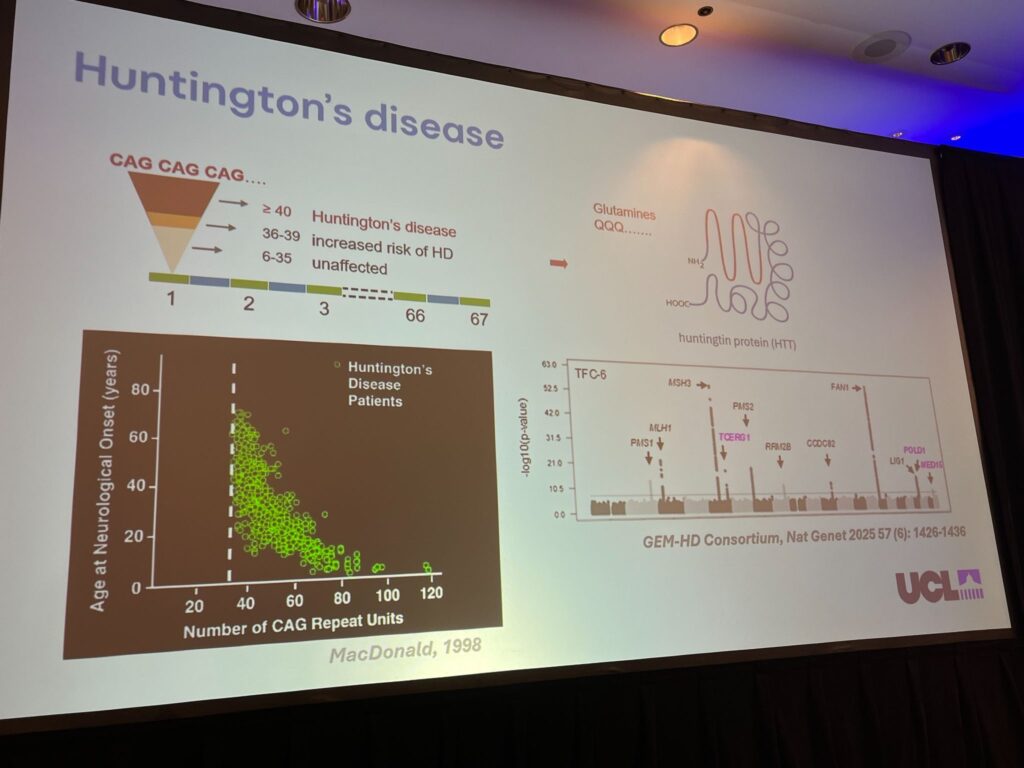
Next, they treated HD mice with a genetic therapy (siRNAsiRNA A way of silencing genes using specially designed molecules of RNA – like DNA but made of only a single strand – that target the message molecules in cells and tell them not to make a certain protein) to lower levels of either full length HTTHTT one abbreviation for the gene that causes Huntington’s disease. The same gene is also called HD and IT-15, or just the HTT1a fragment. Whereas lowering full length huntingtin didn’t have a huge effect on HTTHTT one abbreviation for the gene that causes Huntington’s disease. The same gene is also called HD and IT-15 clumps, lowering HTT1a had a clear effect on the clump numbers in these mice, especially earlier in life. Lowering HTT1a also corrected some other features of HD, like transcriptional changes – the genes that are turned on and off differently in HD versus non-HD mice.
It’s important to remember that from birth, these mice make a ton of HTT1a protein with a huge polyQPolyQ A description of HD and other diseases that are caused by abnormal expansion of stretches of DNA containing the sequence CAG repeated many times. Too many CAGs in a gene results in proteins with too many ‘glutamine’ building blocks, and glutamine is represented by the symbol Q. tract, which is very different to what happens in humans with HD, so more work needs to be done before we can test whether HTT1a targeting strategies might be the best approach in people. It’s nevertheless exciting to hear about work on potential new ways to target HTTHTT one abbreviation for the gene that causes Huntington’s disease. The same gene is also called HD and IT-15. HDBuzz recently covered two studies about HTT1a, if you want to learn more!
Strategies for lowering huntingtin with ASOsASOs A type of gene silencing treatment in which specially designed DNA molecules are used to switch off a gene
Our next speaker, Frank Bennett, covered a specific HTT-lowering approach. Frank works at Ionis, a company which develops genetic drugs for inherited diseases, including HD. These drugs, termed anti-senseanti-sense the half of the DNA double-helix that is mostly used as a backup, but sometimes produces message molecules oligonucleotides (ASOsASOs A type of gene silencing treatment in which specially designed DNA molecules are used to switch off a gene), target specific RNAs to send them to the cell’s trash can. Roche and Wave used this ASOASOs A type of gene silencing treatment in which specially designed DNA molecules are used to switch off a gene technology to make their HTTHTT one abbreviation for the gene that causes Huntington’s disease. The same gene is also called HD and IT-15 targeting drugs, tominersen and WVE-003. In fact, tominersen was originally developed by Ionis. Frank spoke about the ways that ASOASOs A type of gene silencing treatment in which specially designed DNA molecules are used to switch off a gene chemistry has evolved and improved over the years.
ASOsASOs A type of gene silencing treatment in which specially designed DNA molecules are used to switch off a gene are made up of strings of genetic letters that stick specifically to their target. To perform well in people, they have to be decorated with different chemical motifs so our bodies don’t eliminate them before they have had time to work. Different chemical decorations can influence the actions of ASOsASOs A type of gene silencing treatment in which specially designed DNA molecules are used to switch off a gene in different ways, helping them get into cells, target the right tissues, and distribute well through the body. So far, more than 20 ASOASOs A type of gene silencing treatment in which specially designed DNA molecules are used to switch off a gene drugs have been approved, and there are more than 50 clinical trials in progress for other experimental ASOsASOs A type of gene silencing treatment in which specially designed DNA molecules are used to switch off a gene across a wide range of diseases.
One drawback of ASOsASOs A type of gene silencing treatment in which specially designed DNA molecules are used to switch off a gene is that they are BIG molecules, which can make it tough to get them into the tightly controlled environment of the brain. That’s why these drugs are often injected directly into the spinal fluid, as was the case for recent trials of HTT-targeting tominersen and WVE-003. Once they enter the central nervous system, ASOsASOs A type of gene silencing treatment in which specially designed DNA molecules are used to switch off a gene can distribute through different brain regions and may stick around for months. One ASOASOs A type of gene silencing treatment in which specially designed DNA molecules are used to switch off a gene designed to hit tau, a protein important in Alzheimer’s, was able to reduce tau levels in the brain long after dosing with the ASOASOs A type of gene silencing treatment in which specially designed DNA molecules are used to switch off a gene had ended.
Frank switched gears to tell us about all the new cool chemical tricks the smart scientists at Ionis and other companies have been developing to improve ASOASOs A type of gene silencing treatment in which specially designed DNA molecules are used to switch off a gene drugs. These can allow lower doses of drugs to be given less frequently whilst achieving the same beneficial effects. Scientists have also developed a way to deliver ASOsASOs A type of gene silencing treatment in which specially designed DNA molecules are used to switch off a gene just to the part of the body where it is needed. By sticking a molecular homing beacon on the ASOASOs A type of gene silencing treatment in which specially designed DNA molecules are used to switch off a gene, it can be sent to a single organ or tissue, which could help with potential side effects by limiting the drug to a smaller area. One of these homing beacons targets the transferrin receptorReceptor a molecule on the surface of a cell that signalling chemicals attach to – a molecular signpost on the blood brain barrier. This makes it possible for ASOsASOs A type of gene silencing treatment in which specially designed DNA molecules are used to switch off a gene to be delivered into the blood stream and get into the brain – a huge hurdle for drug hunters!
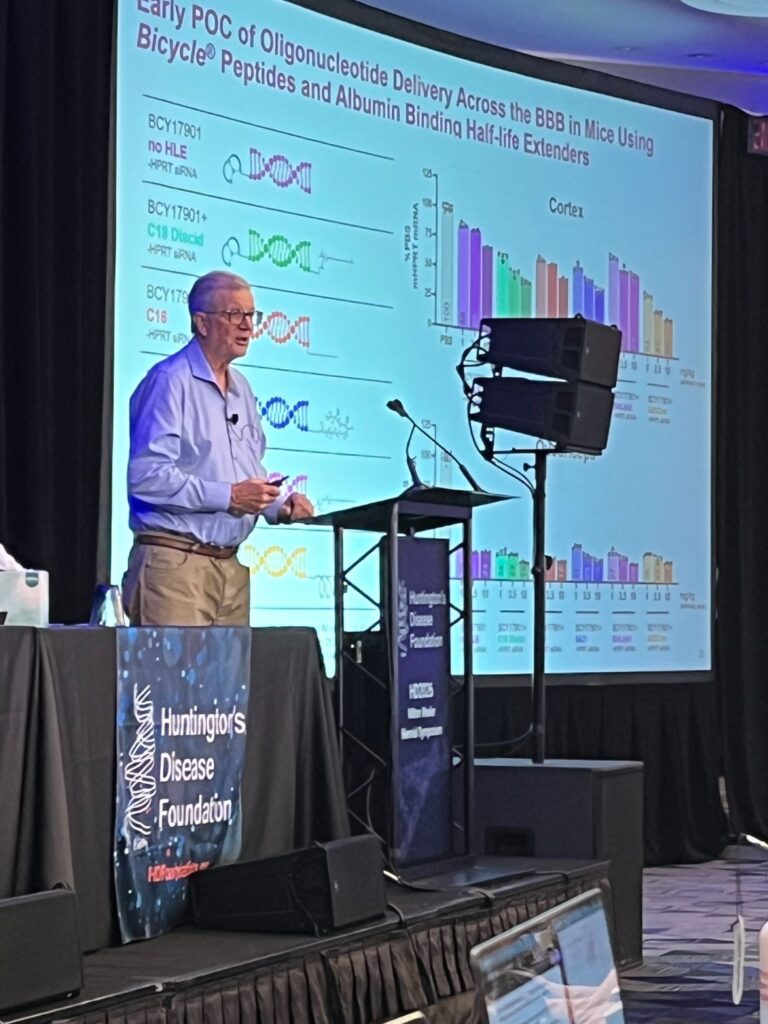
Frank reminds us that many of these new chemistry developments mean that older ASOASOs A type of gene silencing treatment in which specially designed DNA molecules are used to switch off a gene drugs are using very outdated technology relative to newly developed ASOsASOs A type of gene silencing treatment in which specially designed DNA molecules are used to switch off a gene. This is the case for tominersen, which was originally developed over a decade ago. Roche decided to end work on tominersen last month after disappointing Phase 3 results in the GENERATION-HD2 trial. Frank dives into why tominersen might not have panned out as we hoped. He speculated that perhaps the treatment time was not long enough, HTTHTT one abbreviation for the gene that causes Huntington’s disease. The same gene is also called HD and IT-15 was not lowered enough in the cells that matter, or the side effects masked the benefit. Or perhaps the approach of targeting full-length HTTHTT one abbreviation for the gene that causes Huntington’s disease. The same gene is also called HD and IT-15 protein simply needs to evolve.
Like others, Frank thinks that combination strategies for treating HD might ultimately be the best approach – perhaps drugs that lower HTTHTT one abbreviation for the gene that causes Huntington’s disease. The same gene is also called HD and IT-15 and also target somatic instabilitysomatic expansion A process in which the CAG repeat in the Huntingtin gene can change over a person’s lifetime in some cells of the body, particularly in the brain., or one of these “3rd wheel” drivers that Jim flagged in his talk yesterday. Thankfully, this is a busy space with many active companies taking multiple shots on goal!
Cutting-edge methods to study vulnerability of brain cells in HD
Next we heard from Sonia Sanchez-Vasquez, who has developed ways to study human brain tissue in amazing depth to understand why some brain cells get more sick than others. Sonia’s research uses tissue that was selflessly donated by people with HD. With these precious samples, she maps out brain layers, distinguishes between all the different types of neuronsneuron Brain cells that store and transmit information, studies which genes are switched on or off, and examines many molecular markers of HD across the maps she constructs.
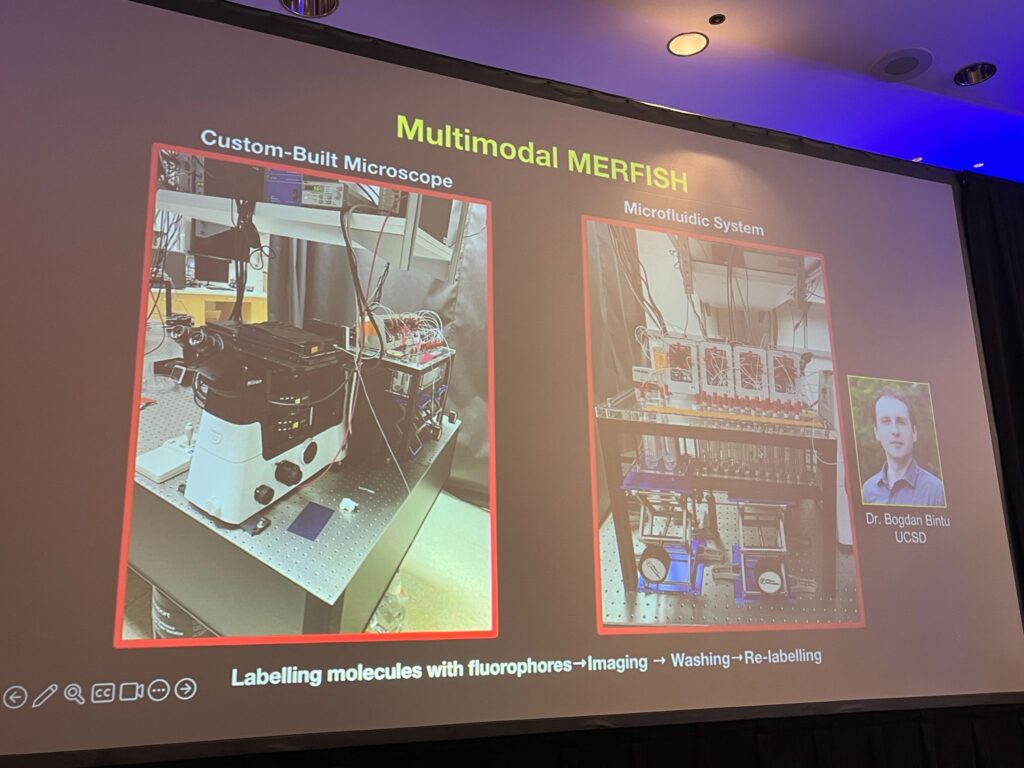
The crux of her research is a question which has boggled HD scientists for ages – why do only some cells seem to get sick if every cell in our body makes the expanded HTTHTT one abbreviation for the gene that causes Huntington’s disease. The same gene is also called HD and IT-15? She is looking at 2 angles: the HTTHTT one abbreviation for the gene that causes Huntington’s disease. The same gene is also called HD and IT-15 protein itself, and somatic expansionsomatic expansion A process in which the CAG repeat in the Huntingtin gene can change over a person’s lifetime in some cells of the body, particularly in the brain., as possible explanations. Sonia and her team have developed microscopes that allow them to examine brain tissues for protein and genetic markers, mapping out thousands of different markers cell by cell. Then they trawl through this data to try and spot patterns to explain what is happening in different types of brain cells.
The microscope system they have built allows them to test and retest the same brain slice almost 100 times, getting tons of data per sample. Cutting-edge technology like this ensures that precious brain tissue is used to its maximum potential, as the original donors would have hoped. This is a testament to the partnership between HD families and researchers!
They are also able to map out exactly which cells are lost in HD brains compared to control brain samples with much greater accuracy than can be done with other imaging technologies. Alongside cell loss, they also looked at the amount of HTTHTT one abbreviation for the gene that causes Huntington’s disease. The same gene is also called HD and IT-15 made in each type of cell. It turns out that the amount of expanded HTTHTT one abbreviation for the gene that causes Huntington’s disease. The same gene is also called HD and IT-15 made in cells does not track with whether brain cells will be lost. They also looked at the location and number of HTTHTT one abbreviation for the gene that causes Huntington’s disease. The same gene is also called HD and IT-15 protein clumps. Cells with more clumps in the nucleusnucleus A part of the cell containing genes (DNA) did seem to be more likely to be lost.
Next, they looked at the CAG number in individual cells in the brain. Cells with more instability and bigger CAG numbers also seem to be more likely to be lost. Early on, these cells had more clumps of HTTHTT one abbreviation for the gene that causes Huntington’s disease. The same gene is also called HD and IT-15 in the nucleusnucleus A part of the cell containing genes (DNA), but those with the longest CAGs actually started to have fewer clumps later on. Both the HTTHTT one abbreviation for the gene that causes Huntington’s disease. The same gene is also called HD and IT-15 protein clumps and somatic instabilitysomatic expansion A process in which the CAG repeat in the Huntingtin gene can change over a person’s lifetime in some cells of the body, particularly in the brain. seem to contribute to which genes are switched on and off in cells.
Next Sonia and her team sought to look for the HTT1a by trying to find the message molecule which encodes this fragment. This is non-trivial as the HTT1a genetic message sequence is nearly identical to the full length message molecule – a complicated experiment to say the least!
To test whether this complicated technology is working, they first tried this approach in mice that we know make a ton of HTT1a. They see big clusters of HTTHTT one abbreviation for the gene that causes Huntington’s disease. The same gene is also called HD and IT-15 RNARNA the chemical, similar to DNA, that makes up the ‘message’ molecules that cells use as working copies of genes, when manufacturing proteins. but most of this seems to be the bigger message molecule. There are smaller clumps, some of which seem to be just the HTT1a message. This is good news – it shows the tools they have developed are working. Now they can begin to dig into their questions in precious samples of human brain.
Can boosting regular HTTHTT one abbreviation for the gene that causes Huntington’s disease. The same gene is also called HD and IT-15 help in HD?
Fred Saudou was next with his interesting approach to counteract the harmful effects of expanded HTTHTT one abbreviation for the gene that causes Huntington’s disease. The same gene is also called HD and IT-15 – instead of removing the harmful stuff, what about increasing the amount of good huntingtin? Fred reminded us that in most people with HD, only half of the HTTHTT one abbreviation for the gene that causes Huntington’s disease. The same gene is also called HD and IT-15 protein is the extra-long kind. Human genetics has given us clues about how the “dosage” of normal length versus expanded HTTHTT one abbreviation for the gene that causes Huntington’s disease. The same gene is also called HD and IT-15 can affect the age at which symptoms occur.
His lab studies the regular function of the huntingtin proteinhuntingtin protein The protein produced by the HD gene., which may have a role in helping to transport things around cells, and preserve the structure of neuronsneuron Brain cells that store and transmit information. They also look at HTT’s role in brain circuits and what makes them vulnerable in HD. The lab uses microfluidic technology they call brain-on-a-chip to look at simple circuits between different types of brain-like cells grown in a dish. They can treat HD cells and unaffected cells with different brain-signalling molecules or make genetic changes to better understand their effects on the circuit.
While HTT-lowering is an important (and we hope, effective!) therapeutic approach, getting rid of ALL huntingtin entirely can have consequences for the cell’s “traffic” of biological molecules. To see if adding extra healthy HTTHTT one abbreviation for the gene that causes Huntington’s disease. The same gene is also called HD and IT-15 could help, Fred’s team created a “mini-HTT” – a small piece of the healthy gene that they could add into their HD neuronsneuron Brain cells that store and transmit information in dishes. This approach seemed to restore some healthy patterns seen in non-HD cells, like structure and chemical signaling.
Next they genetically applied these pieces of healthy huntingtin to HD mice, while also lowering expanded huntingtin! This helped to improve brain health, including the structure of nerve cells, and seemed to improve some measures of movement behaviors. More recent work involves taking a closer look at what their miniHTT fragments are actually doing in cells. They seem to be replacing expanded HTTHTT one abbreviation for the gene that causes Huntington’s disease. The same gene is also called HD and IT-15 on the cellular bubbles that move around cells, which is a good sign. In future they plan to test this approach in larger animal models.
Fred is interested in how we can apply these ideas to make new types of drugs for HD. He has a company which has developed a small molecule that helps ensure regular HTTHTT one abbreviation for the gene that causes Huntington’s disease. The same gene is also called HD and IT-15 is working at max capacity in neuronsneuron Brain cells that store and transmit information. The company, HuntX, will have more updates in the coming months we hope!
Updates on the HUNTIAM trial – does thiamine and biotin help in HD?
Next was Jose Lucas who updated us on the clinical trialclinical trial Very carefully planned experiments designed to answer specific questions about how a drug affects human beings he is involved in, HUNTIAM, which looks at thiamine as a possible option for treatment of HD. Jose first explained the actions of thiamine, also known as vitamin B1. A lack of thiamine in the diet, or in genetic cases where an individual can’t properly make, process, or absorb thiamine, can cause brain disease. In particular, thiamine deficiencies can cause problems in the basal ganglia – the same part of the brain that is affected in HD. Some people with this type of disorder can be very effectively treated with a combination of thiamine and another vitamin called biotin, vitamin B7.
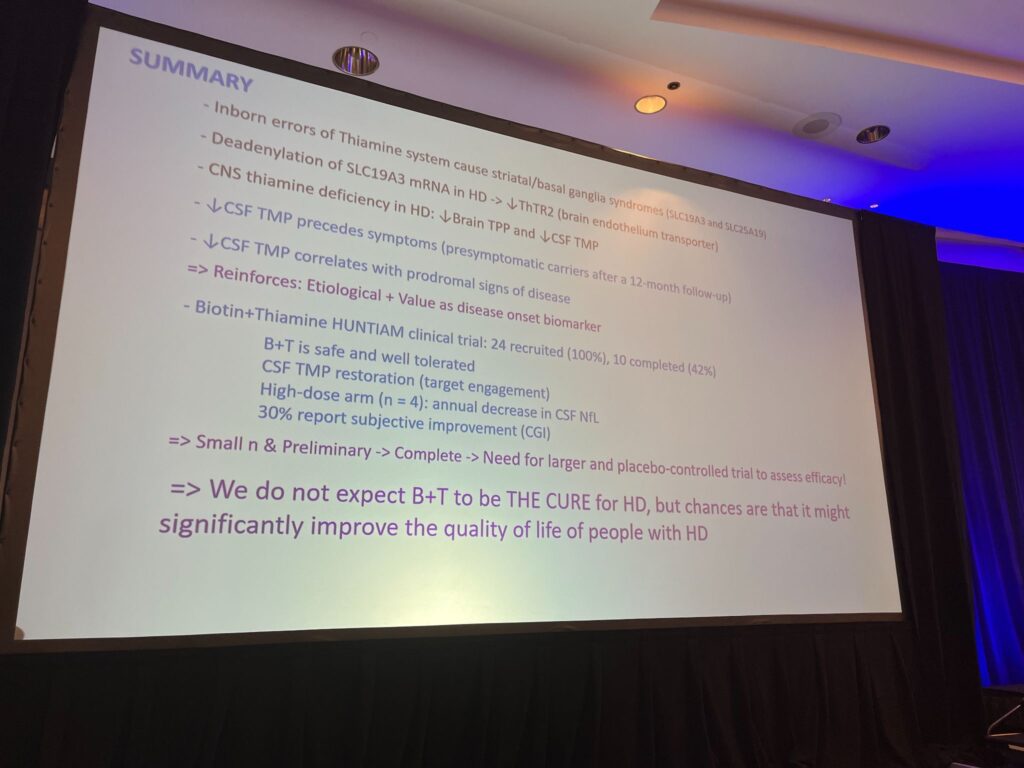
Jose’s idea is simple – since HD affects a similar region of the brain, maybe thiamine-biotin could be tested as a treatment for improving HD brain health. In fact, Jose showed that people with HD have lower levels of thiamine in the brain and in the spinal fluid. This was the impetus for the HUNTIAM trial, which tests biotin and thiamine in people with HD at medium and high doses for up to 2 years. The trial provides vitamin treatment and collects clinical information, blood, and spinal fluid to understand whether the treatment is safe and tolerable.
Next, Jose shared preliminary results from HUNTIAM. So far, thiamine and biotin appear to be safe and to restore levels of thiamine. Early results also show that the treatment seems to decrease levels of NfLNfL biomarker of brain health in spinal fluid (a marker of nerve cell injury). This is exploratory, but could be a sign of improved brain health. It’s important to note that this is a very small trial (24 people total) focused primarily on safety. Jose himself emphasized that they do not expect that a vitamin regimen could be a cure for HD, but they think it’s worth testing the hypothesis that it could improve quality of life.
How HD circuitry drives cell vulnerability
Our next speaker was Mark Bevan. His research focuses on understanding different drivers of HD in mouse models, including protein clumping and somatic instabilitysomatic expansion A process in which the CAG repeat in the Huntingtin gene can change over a person’s lifetime in some cells of the body, particularly in the brain., and how it affects the way neuronsneuron Brain cells that store and transmit information communicate. Mark’s team studies cells within a brain circuit called the indirect pathway, that helps to regulate thoughts, movements and emotions. These neuronsneuron Brain cells that store and transmit information are some of the most impacted in HD, so they set out to find out why this subset of brain cells get so sick.
They looked at HTTHTT one abbreviation for the gene that causes Huntington’s disease. The same gene is also called HD and IT-15 clumps, somatic instabilitysomatic expansion A process in which the CAG repeat in the Huntingtin gene can change over a person’s lifetime in some cells of the body, particularly in the brain., and cell type differences, with the ultimate goal of understanding HD at a granular level, and helping to find new ways we might develop drugs for HD. All of this was done across multiple types of HD mouse models. Like others, Mark sees lots of clumps in the striatum of mice with 175 CAG repeats in the HTTHTT one abbreviation for the gene that causes Huntington’s disease. The same gene is also called HD and IT-15 gene. Most of these clumps are found in the nucleusnucleus A part of the cell containing genes (DNA) where all the DNA is stored. Other cell types and brain regions have fewer clumps and they are often found in other places in the cell.
In another mouse with 107 CAGs, somatic instabilitysomatic expansion A process in which the CAG repeat in the Huntingtin gene can change over a person’s lifetime in some cells of the body, particularly in the brain. causes the CAG number in striatum to increase up to about 180, and again Mark sees HTTHTT one abbreviation for the gene that causes Huntington’s disease. The same gene is also called HD and IT-15 clumps. A cousin of this mouse, in which CAGs can’t expand, shows very few protein clumps. It seems that more protein clumps form in the presence of very long CAGs.
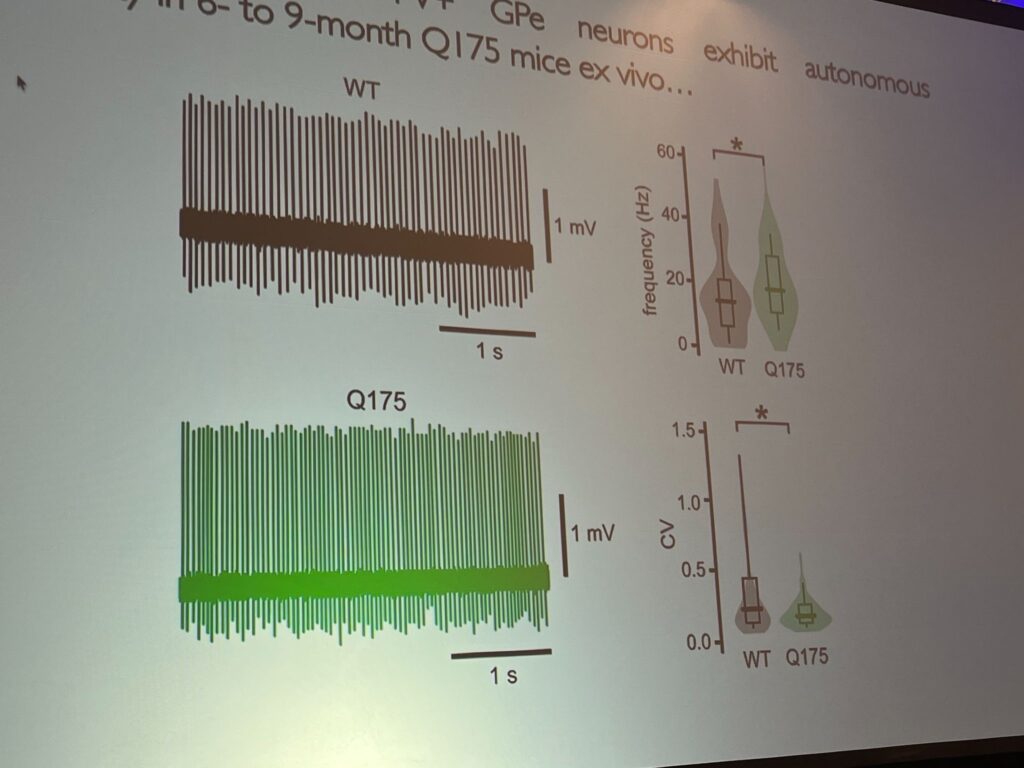
Mark’s team can measure electrical impulses in nerve cells using a technique called patch clamping. Many of the neuronsneuron Brain cells that store and transmit information in HD mice seem to be overactive, firing much more than we would expect when compared to regular mice. This hyperactivity of nerve cell firing seems to be dependent on both long CAGs and somatic instabilitysomatic expansion A process in which the CAG repeat in the Huntingtin gene can change over a person’s lifetime in some cells of the body, particularly in the brain.. Not only are the indirect pathway neuronsneuron Brain cells that store and transmit information hyperactive, but so are the nerve cells they connect to. Mark’s team figured out that many cell types in these HD mice have different genes switched on or off compared to regular mice, which might be leading to the differences in nerve cell firing.
Later on in the lifespan in these HD mice, the nerve cells start to fire less. This seems to be due to an energy imbalance. When Mark’s team reduced HTTHTT one abbreviation for the gene that causes Huntington’s disease. The same gene is also called HD and IT-15 levels in the mice, the firing returned to normal. With their nerve cells firing at more regular levels, the mice move about like control mice and have fewer HD-like movement symptoms. With HTTHTT one abbreviation for the gene that causes Huntington’s disease. The same gene is also called HD and IT-15 levels reduced, the nerve cell loss also seemed to lessen, showing that HTTHTT one abbreviation for the gene that causes Huntington’s disease. The same gene is also called HD and IT-15 levels can be tuned to improve signs of HD in these mouse models.
Mark’s team uses a HTTHTT one abbreviation for the gene that causes Huntington’s disease. The same gene is also called HD and IT-15 lowering tool called zinc-finger proteins or ZFPs. These tools hit the HTTHTT one abbreviation for the gene that causes Huntington’s disease. The same gene is also called HD and IT-15 gene itself, targeting HTTHTT one abbreviation for the gene that causes Huntington’s disease. The same gene is also called HD and IT-15 DNA rather than the RNARNA the chemical, similar to DNA, that makes up the ‘message’ molecules that cells use as working copies of genes, when manufacturing proteins. message molecule, like most HTTHTT one abbreviation for the gene that causes Huntington’s disease. The same gene is also called HD and IT-15 lowering drugs being tested in the clinic. Another cool technology we have to advance HD research!
Vulnerability, CAG expansion, and survival
Next was Nat Heintz who spoke about his research on the precise molecular drivers of HD in different types of cells. He began by acknowledging long-standing colleagues who created important mouse models and techniques that drive HD research, and who encouraged him to study HD. Like many in the room, Nat is trying to figure out why some cells get more sick than others in HD. His lab develops and applies cool technology at the level of single cells to work out which genes are switched on and off, and how these networks are controlled.
Nat’s team are continuing to study brains selflessly donated by people with HD who have passed. Previously, Nat’s team showed that somatic instabilitysomatic expansion A process in which the CAG repeat in the Huntingtin gene can change over a person’s lifetime in some cells of the body, particularly in the brain. happens in cells that are the most vulnerable to HD, but also in other cells of the brain, which don’t seem to be impacted as much. But in most brain cells with expanded CAGs, the regulation of their genes seems to be out of whack.
His team have recently focussed on brain tissue from folks with Juvenile onset HD. They see expansions in most brain regions, and in more types of cells than are affected in adult onset HD. Interestingly, even cells with very long CAGs don’t necessarily survive better or worse than those with shorter CAGs, suggesting that CAG expansion is not the only thing that drives cell death in HD. One type of cell which doesn’t seem to show CAG repeatCAG repeat The stretch of DNA at the beginning of the HD gene, which contains the sequence CAG repeated many times, and is abnormally long in people who will develop HD expansion in any context are glial cells. These cells provide support to neuronsneuron Brain cells that store and transmit information and are important for brain health in many ways. Glia have “rock solid” CAG numbers in every brain Nat’s team has analysed.
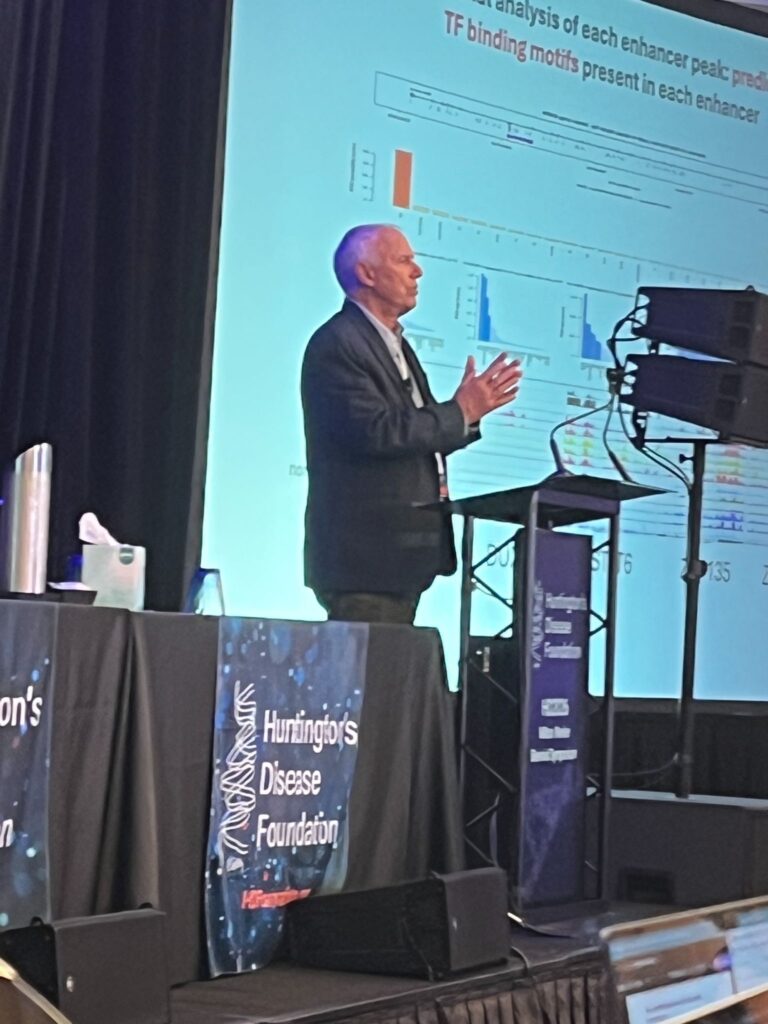
To better understand the gene regulation changes they have observed, Nat’s team looked at which gene switch signals are on and off. There are all kinds of signal changes that promote or suppress particular genes and they seem to occur mainly in the cells which get sickest in HD. One point of contention among HD scientists is in their beliefs about how messed up gene regulation needs to be in order to impact HD and drive disease. Nat thinks the early differences they observe are critical, but acknowledges that others believe that only the much later stages of this process matter in HD.
While it might seem bad for the field that folks disagree on their data, this is actually great for constructive discussions to drive us forward to consensus. We need all these smart folks to butt heads (in a professional manner) so we can get to the ground truth!
Nat’s model is that HTTHTT one abbreviation for the gene that causes Huntington’s disease. The same gene is also called HD and IT-15 interacts with gene regulating proteins, and this is disrupted in HD. Other enzymes regulating gene switches (chemical marks on the DNA itself) are also messed up, and all of this means that gene regulation is altered, even at the early stages of HD. Nat thinks that these chemical markers on the DNA could be exploited to develop both HD therapies and HD biomarkers. Turns out this is already being done in the cancer field, so maybe we can learn from their experiences to repurpose this idea for HD.
Building brain maps from data in individual cells
Raleigh Linville was next to step up to the podium. Raleigh studies the striatum, the region of the HD brain that is most impacted by disease. He takes a comprehensive approach, termed multiomics in science lingo, synthesising diverse data on genetics, gene regulation and proteins. Raleigh is digging even deeper into the question of why some cells get sicker than others in the HD brain, looking at sub-regions of the striatum and different types of cells. They get so specific that it’s necessary to re-define categories of cells among those affected most by HD.
He is once again reliant on precious samples of human tissue to look in high resolution at what’s happening in these subtypes of cells – work that would not be possible without the HD community. Raleigh and colleagues have developed a way to link on/off changes in networks of genes with the amount of CAG repeatCAG repeat The stretch of DNA at the beginning of the HD gene, which contains the sequence CAG repeated many times, and is abnormally long in people who will develop HD expansion and cell loss that is happening in single cells and brain areas. With this rich landscape of data, the lab can create maps of vulnerability throughout the brain.

Cells that have the most instability (longer CAG repeats) seem to lose their “identity,” with their genetic on/off states becoming less unique. Raleigh is looking in even more detail at which genes and networks of genes might be driving this phenomenon. Some of these are already recognized as important in HD! The titanic effort that goes into understanding patterns within circuits, cells, and genes at this level of detail is astounding, and it’s particularly exciting when data collected at multiple levels points to similar pathways.
Tracking the location of protein in HD cells
Vanessa Casha’s research maps how the amount and location of proteins within different types of cells can contribute to HD. She reminded us that when DNA is made into RNARNA the chemical, similar to DNA, that makes up the ‘message’ molecules that cells use as working copies of genes, when manufacturing proteins. messages, and messages are made into proteins, the RNARNA the chemical, similar to DNA, that makes up the ‘message’ molecules that cells use as working copies of genes, when manufacturing proteins. and protein levels don’t always correspond. Also, when most scientists study RNARNA the chemical, similar to DNA, that makes up the ‘message’ molecules that cells use as working copies of genes, when manufacturing proteins. or protein, they’re not able to look at their sublocation within cells – what’s floating around the cytoplasmcytoplasm A part of a cell including everything inside the cell and outside the nucleus; where most of the cell’s work happens, or attached to mitochondriamitochondria tiny machines inside our cells that process fuel into energy, enabling cells to function, or inside the nucleusnucleus A part of the cell containing genes (DNA) gets lost in the mix.
To work out the location and amount of different proteins in the cell, she uses a chemical marking system that can determine when proteins are located near to each other. This marker system can be switched on and off and adapted to look in different tissues and at different timepoints. Vanessa is deploying these approaches in mice that model HD, to map out protein networks and landscapes in different compartments of both neuronsneuron Brain cells that store and transmit information and astrocytes. HD mice show many changes in these maps in comparison to control mice.
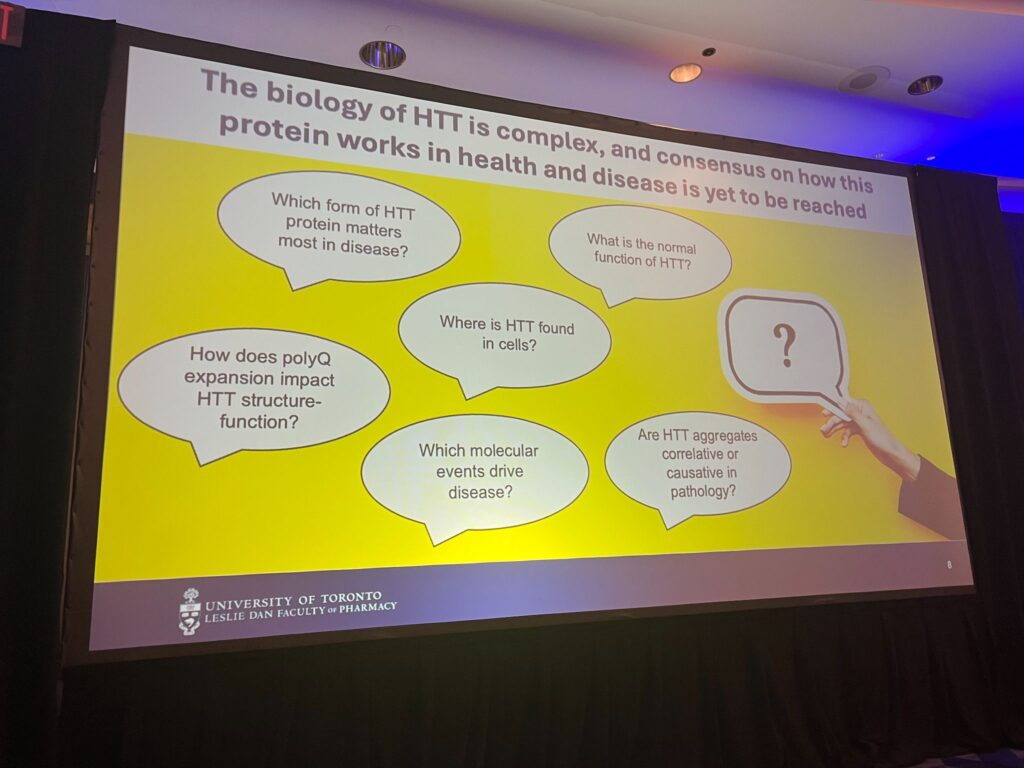
Vanessa’s maps allow us to dive into different changes observed in different compartments of a cell. An overall trend she saw was a decrease in many important protein families, including those key to nerve cell signals, genetic message processing and gene regulation. She also found that in HD, many of the proteins showed up in the wrong place. For example, some proteins which should be found on the boundary of the cell were instead found in the nucleusnucleus A part of the cell containing genes (DNA).
Vanessa is now in the process of looking at the landscapes of specific proteins which are known to be important in HD, and which we heard about over the course of the conference, including MED15, MSH3 and FAN1. Altogether, this is a wealth of data for the HD community and we look forward to hearing more from Vanessa as this project progresses.
Studying clumps of extra-long HTTHTT one abbreviation for the gene that causes Huntington’s disease. The same gene is also called HD and IT-15 in the nucleusnucleus A part of the cell containing genes (DNA)
Our final speaker of the meeting was Won-Seok Lee, this year’s recipient of the Nancy S. Wexler Young Investigator Prize. His research is focused on how HTTHTT one abbreviation for the gene that causes Huntington’s disease. The same gene is also called HD and IT-15 clumps and somatic expansionsomatic expansion A process in which the CAG repeat in the Huntingtin gene can change over a person’s lifetime in some cells of the body, particularly in the brain. can drive how neuronsneuron Brain cells that store and transmit information get sick in HD. First, he recapped recent discoveries about CAG repeatCAG repeat The stretch of DNA at the beginning of the HD gene, which contains the sequence CAG repeated many times, and is abnormally long in people who will develop HD expansion: it seems to happen in vulnerable cells of the striatum, and to contribute to cell death in HD.
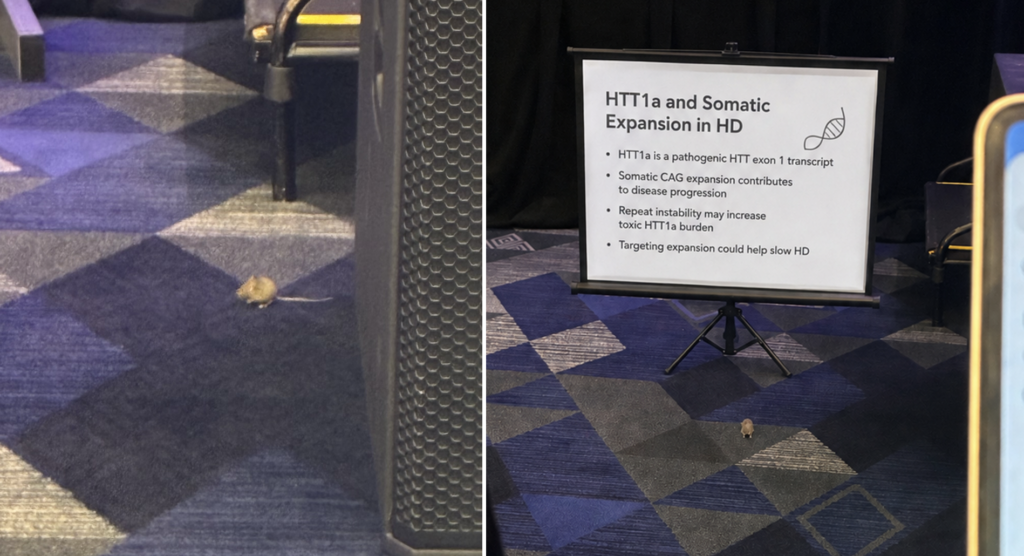
Won-Seok has done work that separates this process into different phases through the life of a neuronneuron Brain cells that store and transmit information with expanded CAG repeats, involving first slow and later very rapid CAG expansion, all driven by somatic instabilitysomatic expansion A process in which the CAG repeat in the Huntingtin gene can change over a person’s lifetime in some cells of the body, particularly in the brain.. Won-Seok is interested specifically in the clumps of protein (“inclusions”) that show up in the nucleusnucleus A part of the cell containing genes (DNA) of cells with CAG repeatCAG repeat The stretch of DNA at the beginning of the HD gene, which contains the sequence CAG repeated many times, and is abnormally long in people who will develop HD expansions in HTTHTT one abbreviation for the gene that causes Huntington’s disease. The same gene is also called HD and IT-15. He identified which types of cells contain clumps in the nucleusnucleus A part of the cell containing genes (DNA), and found that they show higher levels of expansion than cells that don’t contain nuclear clumps.
Once again comparing cells that have nuclear clumps with those that don’t, Won-Seok showed that there are changes in which genes are turned on and off, and in the types of chemical “decorations” on the DNA and DNA packaging proteins. Won-Seok was also interested in understanding what happens to the shape and type of HTTHTT one abbreviation for the gene that causes Huntington’s disease. The same gene is also called HD and IT-15 clumps when the CAG number gets super-long, with more than 150 repeats. They can define different forms of clumped-up HTTHTT one abbreviation for the gene that causes Huntington’s disease. The same gene is also called HD and IT-15 based on how it appears, moves, and dissolves in detergents. It turns out that certain fragments of HTTHTT one abbreviation for the gene that causes Huntington’s disease. The same gene is also called HD and IT-15 are more likely to form clumps in the nucleusnucleus A part of the cell containing genes (DNA) than others. Since the nucleusnucleus A part of the cell containing genes (DNA) contains DNA, Won-Seok thinks that they can interfere with processes, like gene regulation, including the chemical tags that regulate gene switches.
Thanks for sticking with us
That’s a wrap on the HD2026 Milton Wexler Biennial Symposium! Thank you for sticking with us as we described these past three days of talks. We hope we have given you a flavour of how much HD research continues to evolve and grow.
Marcy McDonald received a prestigious HD research prize at the end of the conference, and in her remarks she noted that pursuing HD science requires hard work, patience, inventiveness, and lots of collaboration. This is true for both researchers and for the tens of thousands of people with HD who have contributed their time and trust over the years.
So much of the research we have covered is only possible thanks to the generosity of HD families and all of their contributions to HD research, participating in clinical trials, observationalobservational A study in which measurements are made in human volunteers but no experimental drug or treatment is given studies, and selfless donations of samples and tissue. We’re honored to share these results back with the community!
Highlight summary:
- HTT1a may connect CAG expansion to toxicity: New mouse studies suggest that levels of the potentially harmful HTT1a fragment rise as CAG repeats expand, and selectively lowering HTT1a reduced protein clumps and some HD-related molecular changes.
- HTT-lowering technology continues to evolve: Frank Bennett highlighted major advances in ASOASOs A type of gene silencing treatment in which specially designed DNA molecules are used to switch off a gene chemistry and delivery, including approaches that could improve brain penetration, while stressing that newer technologies have moved far beyond those used to develop tominersen.
- Why some brain cells die remains a central question: Detailed mapping of human HD brain tissue linked vulnerable cells with somaticsomatic relating to the body CAG expansion and nuclear HTTHTT one abbreviation for the gene that causes Huntington’s disease. The same gene is also called HD and IT-15 clumps, while showing that simply making more expanded HTTHTT one abbreviation for the gene that causes Huntington’s disease. The same gene is also called HD and IT-15 does not predict cell loss.
- Could boosting healthy HTTHTT one abbreviation for the gene that causes Huntington’s disease. The same gene is also called HD and IT-15 help? Fred Saudou presented work suggesting that adding functional pieces of regular HTTHTT one abbreviation for the gene that causes Huntington’s disease. The same gene is also called HD and IT-15 alongside lowering expanded HTTHTT one abbreviation for the gene that causes Huntington’s disease. The same gene is also called HD and IT-15 can improve cellular and behavioural features in HD models.
- Several other therapeutic clues emerged: Early HUNTIAM results suggest thiamine and biotin are safe and may lower NfLNfL biomarker of brain health in a small trial, while studies of HD brain circuitry and gene regulation reinforced that somatic expansionsomatic expansion A process in which the CAG repeat in the Huntingtin gene can change over a person’s lifetime in some cells of the body, particularly in the brain. is important, but unlikely to explain every aspect of selective cell vulnerability.
- HD brain circuits may be disrupted before cells are lost: Studies in HD mice found that vulnerable neuronsneuron Brain cells that store and transmit information initially become overactive, then underactive as energy problems develop, while lowering HTTHTT one abbreviation for the gene that causes Huntington’s disease. The same gene is also called HD and IT-15 restored more typical brain activity, movement, and cell survival.
- CAG expansion matters, but does not act alone: Analyses of donated adult- and juvenile-onset HD brains showed that very long CAG repeats do not consistently predict which cells survive, pointing to gene regulation and other cell-specific factors as additional drivers of vulnerability.
- Detailed brain maps are revealing how cells lose their identity: By combining several types of molecular data from individual cells, researchers linked CAG expansion and cell loss with the breakdown of the gene activity patterns that normally distinguish one cell type from another.
- In HD, proteins may be depleted or end up in the wrong place: New methods for mapping proteins within different cellular compartments revealed changes in proteins involved in nerve cell signalling and gene regulation, including proteins appearing in parts of the cell where they do not normally belong.
- Nuclear HTTHTT one abbreviation for the gene that causes Huntington’s disease. The same gene is also called HD and IT-15 clumps are closely tied to extreme CAG expansion: Cells containing HTTHTT one abbreviation for the gene that causes Huntington’s disease. The same gene is also called HD and IT-15 clumps in the nucleusnucleus A part of the cell containing genes (DNA) tended to have longer CAG repeats and altered gene regulation, supporting the idea that certain HTTHTT one abbreviation for the gene that causes Huntington’s disease. The same gene is also called HD and IT-15 fragments may form clumps that interfere with DNA-related processes.
For more information about our disclosure policy see our FAQ…