
HD2026 Milton Wexler Biennial Symposium Day 2
⏱️ 23 min read | Day 2 of #HD2026 brought us updates on the mechanics of somatic instability, new ways to track HD in people, AI tools to help drive research forward, and developments in our understanding of the HTT protein. Catch up right here.


We are back for Day 2 of the 2026 Milton Wexler Biennial Symposium in Boston, Massachusetts, with the Huntington’s Disease Foundation. Today’s scientific talks covered a range of topics, from somatic instabilitysomatic expansion A process in which the CAG repeat in the Huntingtin gene can change over a person’s lifetime in some cells of the body, particularly in the brain. and clinical biomarkers, to artificial intelligence (AI) and the behavior of the huntingtin proteinhuntingtin protein The protein produced by the HD gene.. Let’s get into it!
Building on human HD genetics to study DNA repair modifiers
This morning kicks off with talks focussed on HD genetics and how DNA repair machines influence how symptoms start and then progress in people with HD. The first speaker was Vanessa Wheeler, whose research looks into some of the molecular machines driving somatic instabilitysomatic expansion A process in which the CAG repeat in the Huntingtin gene can change over a person’s lifetime in some cells of the body, particularly in the brain. – the process by which CAG numbers can increase in some cells over time. Although somatic instabilitysomatic expansion A process in which the CAG repeat in the Huntingtin gene can change over a person’s lifetime in some cells of the body, particularly in the brain. might seem like a new idea, Vanessa starts by reminding us of its long track record in the HD field, starting not long after the mapping of the HTTHTT one abbreviation for the gene that causes Huntington’s disease. The same gene is also called HD and IT-15 gene in 1993. As tools and datasets have developed, we now have a much better understanding of how this process is driving HD.
Vanessa and others have investigated how genetic variations outside of the HD gene that influence HD symptoms, known as genetic modifiers, can influence levels of somatic instabilitysomatic expansion A process in which the CAG repeat in the Huntingtin gene can change over a person’s lifetime in some cells of the body, particularly in the brain.. Drawing from human data first, they turned to HD mice to better understand how this works, and found genes which increase or decrease the rate of instability. This is important work to figure out 1. what is driving this process in HD, and 2. which of these genes might be a good drug target to slow HD.
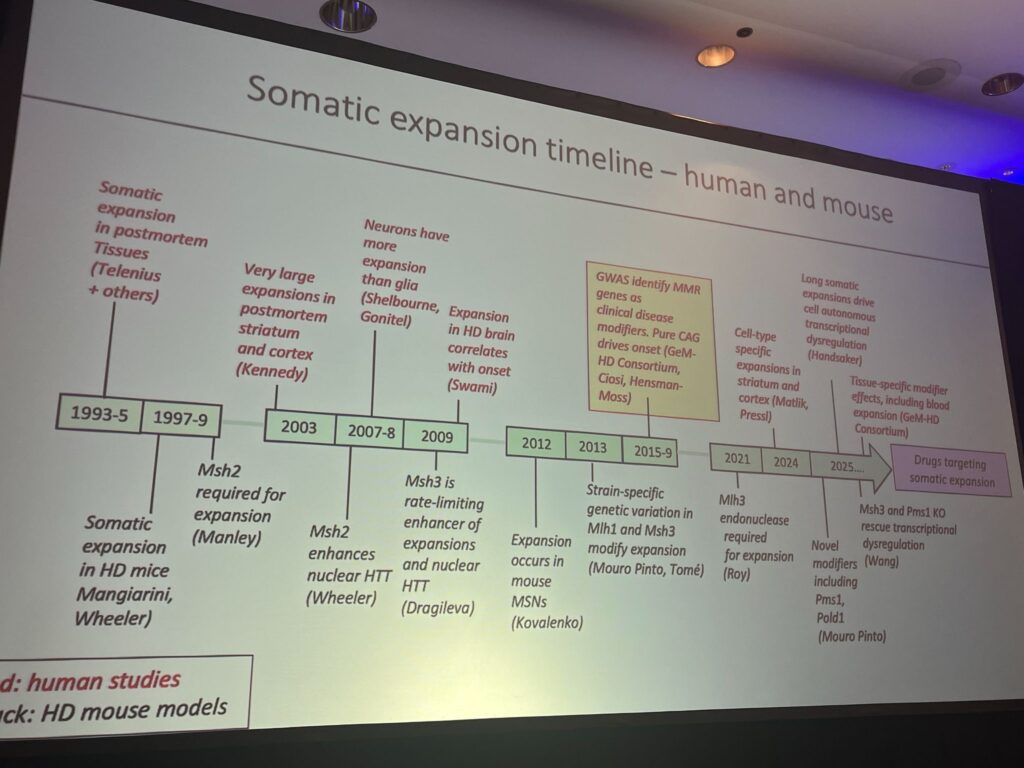
One modifier which stuck out in this work was ATAD5. In mice without ATAD5, Vanessa’s team saw more stability of CAG repeats. This was true in both the liver and the striatum, a deep part of the brain impacted in HD. Next they did some fancy genetics, making mice which lack multiple modifiers. It turns out that ATAD5 works separately to other more commonly studied DNA repair machines, such as a modifier called FAN1. Another modifier gene they looked at was LIG1. This modifier impacts instability, but also helps cells to survive, so it’s probably not a good drug target.
One of the front-running targets in the HD field is MSH3 – this is the target that Latus and Loqus23 are going after, as we heard yesterday. MSH3 is well known to drive instability overall, but exactly when this happens through the lifetime of someone with HD is less clear. To study this further, Vanessa removed MSH3 at different timepoints in the lifespan of HD mice. The earlier they removed MSH3, the better the effect on slowing instability, reducing toxic HTTHTT one abbreviation for the gene that causes Huntington’s disease. The same gene is also called HD and IT-15 clumps and controlling which genes are switched on/off. This suggests that drugs targeting MSH3 should be tried early on in HD.
Like others, Vanessa is also interested in the HTT1a fragment and how it is made. It turns out that mice lacking MSH3 also make less HTT1a. It seems this is happening because longer CAG repeats lead to more HTT1a, so slowing instability affects how much HTT1a is made.
Vanessa’s team are also developing new ways to measure CAG repeats, one cell at a time. These new tools are important in HD research: the hardcore geneticists have strong opinions about why one method might be problematic over another. Using multiple approaches can give us more confidence in the data.
Genetic modifiers of psychiatric, motor, and cognitive symptoms in HD
Next, we heard from Qingqin Li, who also studies genetic modifiers of HD. These are genetic differences outside of the HD gene which can influence when symptoms might start or how they progress. Qingqin is interested in how we can connect genetic data with clinical information about HD, to understand what drives specific symptoms and find drug targets which help us treat the different aspects of HD.
To do this, we need genetic data, so Qingqin and her team are sequencing the complete genomes of participants in Enroll-HD. This is more than 20,000 samples, with each sample linked (anonymously) to a participant in the study, along with all of their clinical assessment data. ~14,000 of these samples will also be analysed in even more depth, to precisely sequence the HTTHTT one abbreviation for the gene that causes Huntington’s disease. The same gene is also called HD and IT-15 gene. This is not easy, because long CAG repeats can interfere with many routine sequencing methods.
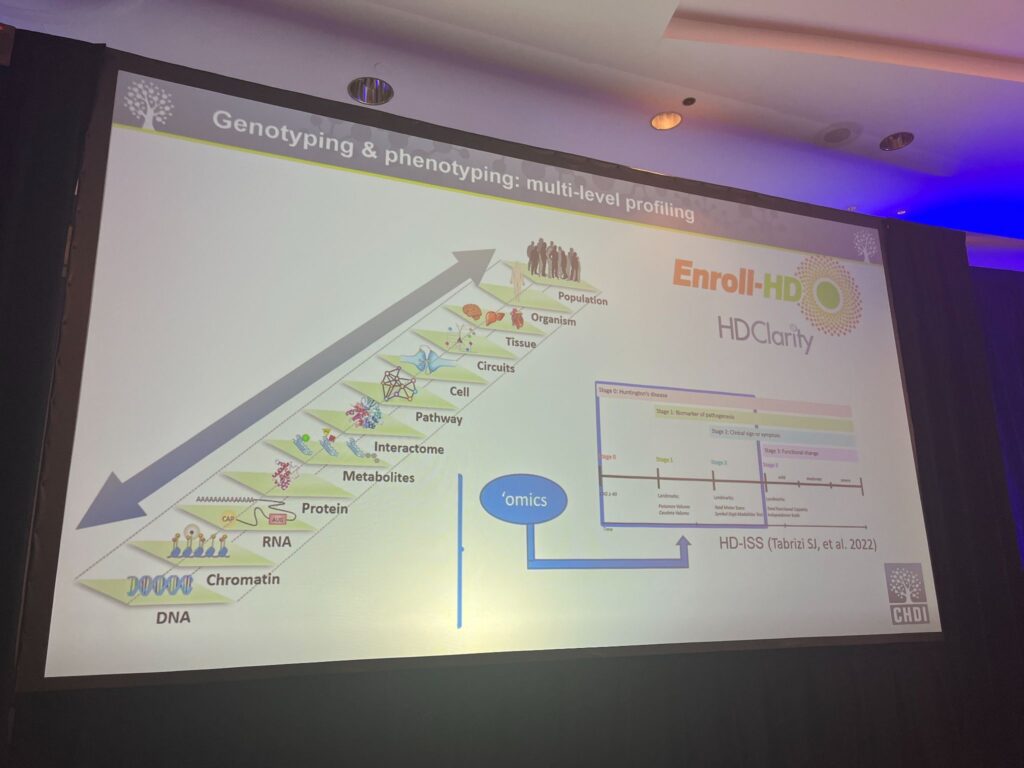
Qingqin and her team have all kinds of analysis tricks up their sleeves, and with all this data in hand they are now starting to dive into the trends. They are looking at which genetic markers track generally with thinking, mood and movement symptoms of HD. They dove even deeper to look at which genes influence the timing of diagnosis and the appearance of specific symptoms, like irritability and apathy. Some familiar faces popped up in this analysis, including the genes FAN1 and MSH3.
In addition to single genes, Qingqin and her team looked at whole networks of genes that might operate in parallel to drive different signs of HD. Along with networks of genes linked to DNA repair, they see connections with the genes that regulate how proteins are monitored and sent to the cell’s trash bins. Compared to previous studies linking genetics and symptoms, this represents a new avenue for HD research.
To find how genetics tracks with different aspects of HD, we need huge datasets to ensure studies have enough power, and many scientists to look at them from different angles and using a multitude of mathematical techniques. We are grateful for HD researchers like Qingqin who advocate for scientists to work together and create consortiums to analyze big datasets.
The third wheel driving HD
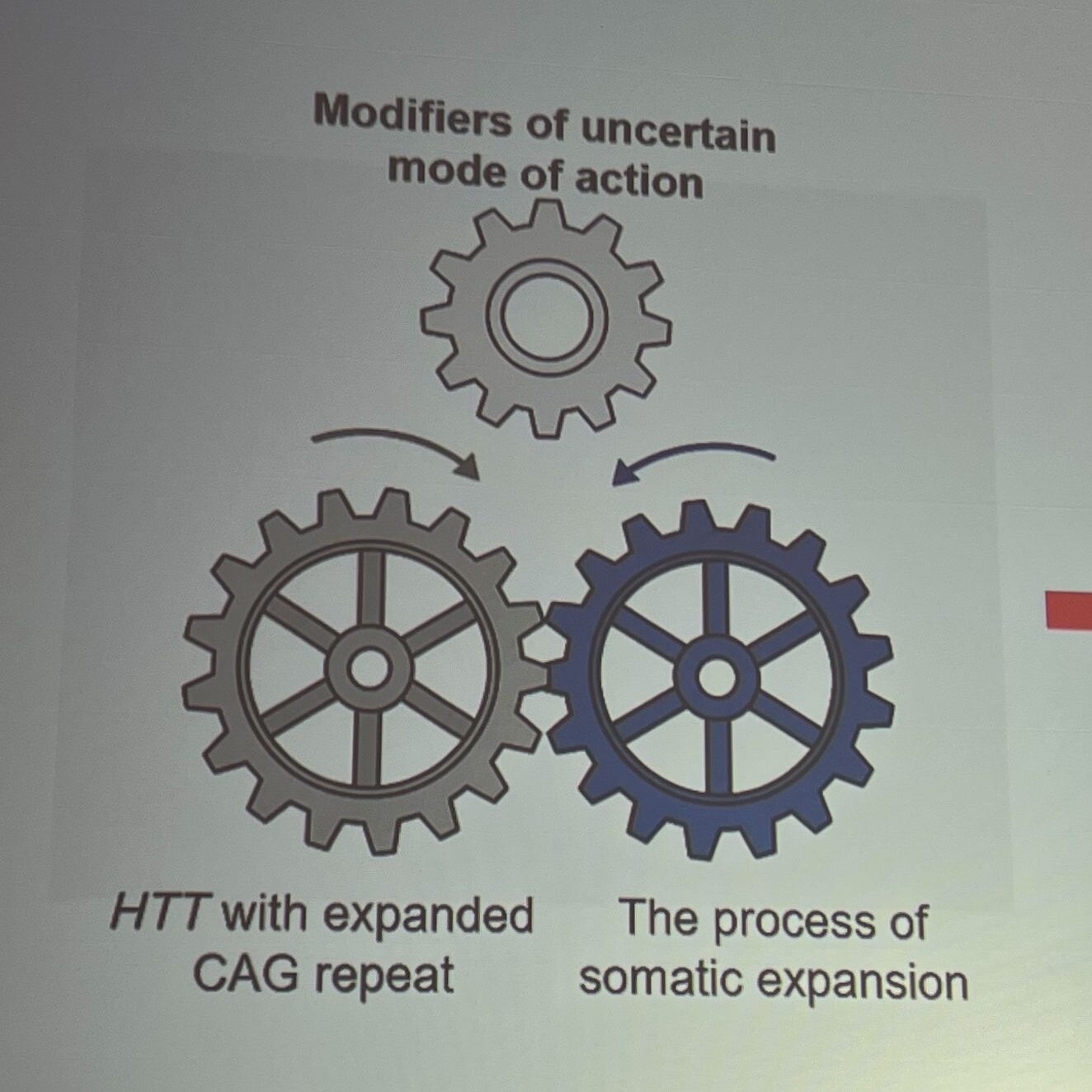
Qingqin was followed by James (Jim) Gusella, a titan in the field of HD. Jim described two of the key drivers of HD: 1. Having a HTTHTT one abbreviation for the gene that causes Huntington’s disease. The same gene is also called HD and IT-15 gene with an expanded CAG repeatCAG repeat The stretch of DNA at the beginning of the HD gene, which contains the sequence CAG repeated many times, and is abnormally long in people who will develop HD, and 2. Somatic expansionsomatic expansion A process in which the CAG repeat in the Huntingtin gene can change over a person’s lifetime in some cells of the body, particularly in the brain. of the CAG repeatCAG repeat The stretch of DNA at the beginning of the HD gene, which contains the sequence CAG repeated many times, and is abnormally long in people who will develop HD through someone’s lifetime. His talk centred on a potential third driver of HD: other genetic modifiers that may influence when symptoms begin. Jim urged the audience to remember that there are many of these that may have little to do with the HTTHTT one abbreviation for the gene that causes Huntington’s disease. The same gene is also called HD and IT-15 gene or the DNA repair pathways driving CAG expansion. We actually don’t yet know exactly how these “third wheel” modifiers might be working!
Jim highlights that not all cells in the brain are impacted in the same way by HD, so maybe this will give us some clues as to how these less well studied modifiers work. One gene he highlighted is TCERG1, a modifier found in a recent GWAS (an in-depth study of thousands of HD genomes). TCERG1 was originally described more than 20 years ago as a modifier of HD signs and symptoms. Interestingly, like the HTTHTT one abbreviation for the gene that causes Huntington’s disease. The same gene is also called HD and IT-15 gene, TCERG1 also has a repeating sequence, whose length seems to matter for its influence in HD. In people who already carry the expanded HTTHTT one abbreviation for the gene that causes Huntington’s disease. The same gene is also called HD and IT-15 gene, longer repeats in TCERG1 seem to lead to earlier signs and symptoms of HD.
Another one of these potential modifiers is MED15, a component of a huge molecular machine called Mediator that helps control which genes are switched on and off. Some changes in the MED15 genetic code seem to cause HD symptoms to start even earlier. MED15 is also a repeat containing protein (seeing a pattern here?!) and has a CAG repeatCAG repeat The stretch of DNA at the beginning of the HD gene, which contains the sequence CAG repeated many times, and is abnormally long in people who will develop HD, just like HTTHTT one abbreviation for the gene that causes Huntington’s disease. The same gene is also called HD and IT-15. This time the connection of MED15 genetics to HD symptoms was a bit more complex when Jim explained his analysis, but there again seems to be some kind of an influence of MED15 on HD.
Jim highlighted several additional potential modifiers that may work in unexpected places, like across different copies of DNA, in energy-producing mitochondriamitochondria tiny machines inside our cells that process fuel into energy, enabling cells to function, or with partners of huntingtin proteinhuntingtin protein The protein produced by the HD gene.. Jim’s another prominent HD scientist who values sharing and feedback on early data, so these analyses are still in progress, but they may give us clues about the “third wheel” involved in HD!
Tracking DNA repair in living systems
Next we heard from Judith Praena-Fernandez who told us about her work to develop improved ways to detect DNA repair activity that drives somatic instabilitysomatic expansion A process in which the CAG repeat in the Huntingtin gene can change over a person’s lifetime in some cells of the body, particularly in the brain. in a mouse model of HD. While somatic expansionsomatic expansion A process in which the CAG repeat in the Huntingtin gene can change over a person’s lifetime in some cells of the body, particularly in the brain. seems to be an important for determining when HD signs and symptoms might begin, this whole process happens over a very long period of time in people, making it tough for scientists to track and monitor. This is a road block for therapies which hope to slow somatic instabilitysomatic expansion A process in which the CAG repeat in the Huntingtin gene can change over a person’s lifetime in some cells of the body, particularly in the brain. – how will we know if they are working?
Judith and her team have been working to find new ways to measure DNA repair as a proxy to track CAG repeatCAG repeat The stretch of DNA at the beginning of the HD gene, which contains the sequence CAG repeated many times, and is abnormally long in people who will develop HD expansion. Their method is called URSA, which stands for unscheduled DNA repair synthesis. They use special DNA letters that act as beacons to mark when and where DNA repair is happening in different models of HD, starting with cells in a dish.
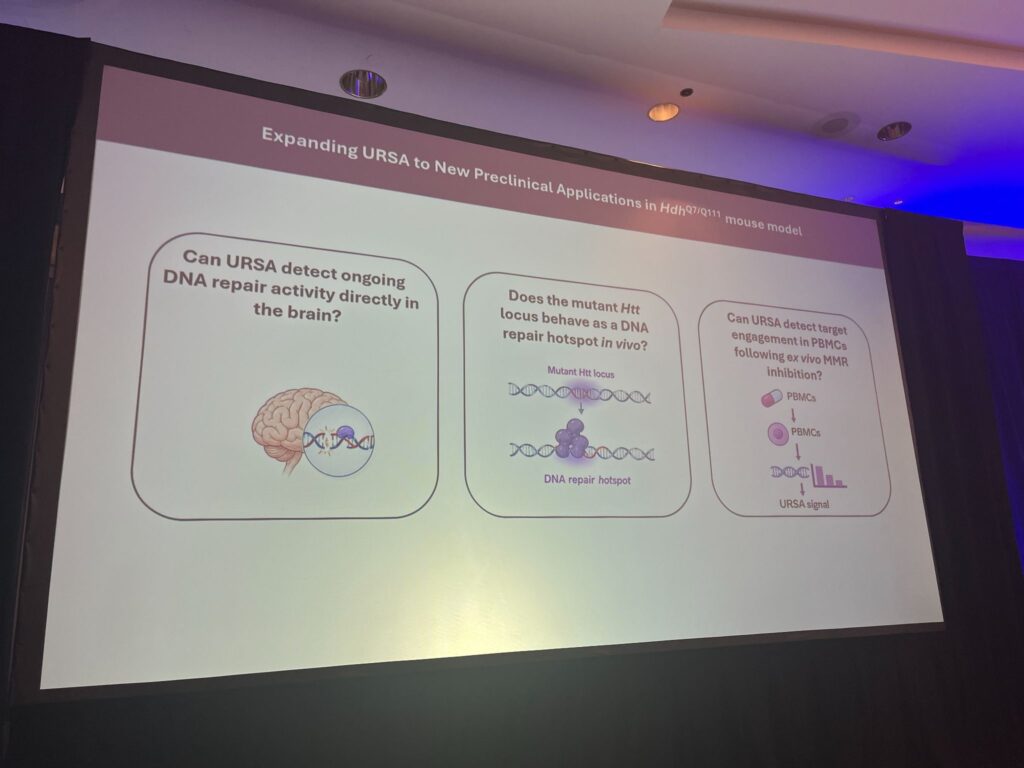
They found that the HTTHTT one abbreviation for the gene that causes Huntington’s disease. The same gene is also called HD and IT-15 gene itself is being repaired a lot in models of HD, and confirmed that MSH3 is an important player in that process. Moving on from HD models, they then applied this new approach to human blood samples, with great success! Next they turned back to HD mice, doing even more checks to make sure their approach was working. They found that the expanded HTTHTT one abbreviation for the gene that causes Huntington’s disease. The same gene is also called HD and IT-15 gene itself was the MOST repaired gene in these mice and this was happening in the part of the gene which contains the CAG repeating DNA letters.
Judith and her team hope that this new technique might be used to track DNA repair activity which leads to somatic expansionsomatic expansion A process in which the CAG repeat in the Huntingtin gene can change over a person’s lifetime in some cells of the body, particularly in the brain. of the HTTHTT one abbreviation for the gene that causes Huntington’s disease. The same gene is also called HD and IT-15 gene CAG number. Ultimately we need methods like this for future clinical trials to help assess if drugs that try to slow this process down are working.
A new way to take out the HTTHTT one abbreviation for the gene that causes Huntington’s disease. The same gene is also called HD and IT-15 trash out in the cell
The last talk of the session on modifiers was from Asa Petersen, who has been researching a protein called SIDT2 and its link to HD. Asa studies different ways we might send HTTHTT one abbreviation for the gene that causes Huntington’s disease. The same gene is also called HD and IT-15 to the cell’s trash, focusing on a process called autophagy. She is interested in a particular flavour of autophagy which targets genetic material.
It turns out that SIDT2 sticks to the CAG repeatCAG repeat The stretch of DNA at the beginning of the HD gene, which contains the sequence CAG repeated many times, and is abnormally long in people who will develop HD in the HTTHTT one abbreviation for the gene that causes Huntington’s disease. The same gene is also called HD and IT-15 genetic message, and seems to be able to help send it to the cell’s trash, reducing the number of toxic HTTHTT one abbreviation for the gene that causes Huntington’s disease. The same gene is also called HD and IT-15 clumps. In people with HD, there is generally less SIDT2 protein found in the striatum (the most vulnerable brain region in HD) than in controls. The SIDT2 that is there seems to get stuck in clumps, suggesting it might not be working properly to keep the brain cells clear of molecular trash.

To follow up on these findings in cells, Asa and her team turned to mice that model HD. Their in vivo findings were similar: HD mice have less functional SIDT2, and more toxic clumps of HTTHTT one abbreviation for the gene that causes Huntington’s disease. The same gene is also called HD and IT-15. Boosting SIDT2 seemed to improve these signs of HD in these models. Whether it could be a good target for a drug remains to be seen, but as was commented by the audience, it is great to have another player on the chess board of HTTHTT one abbreviation for the gene that causes Huntington’s disease. The same gene is also called HD and IT-15 lowering.
New tech and new analyses in the search for HD biomarkers
Our next talk came from Niels Skotte, who proposed a new way to approach HD biomarkers. A biomarkerbiomarker a test of any kind – including blood tests, thinking tests and brain scans – that can measure or predict the progression of a disease like HD. Biomarkers may make clinical trials of new drugs quicker and more reliable. is simply something we can measure, for example in the blood or through imaging, to understand how much HD has advanced, or whether a drug is working. There’s been an exciting explosion of therapies in development, but it’s still tough to measure brain changes accurately and non-invasively. This is key because as clinical trials move forward, we’ll need ways to confirm that new drugs are hitting their targets and protecting the brain in people with HD.
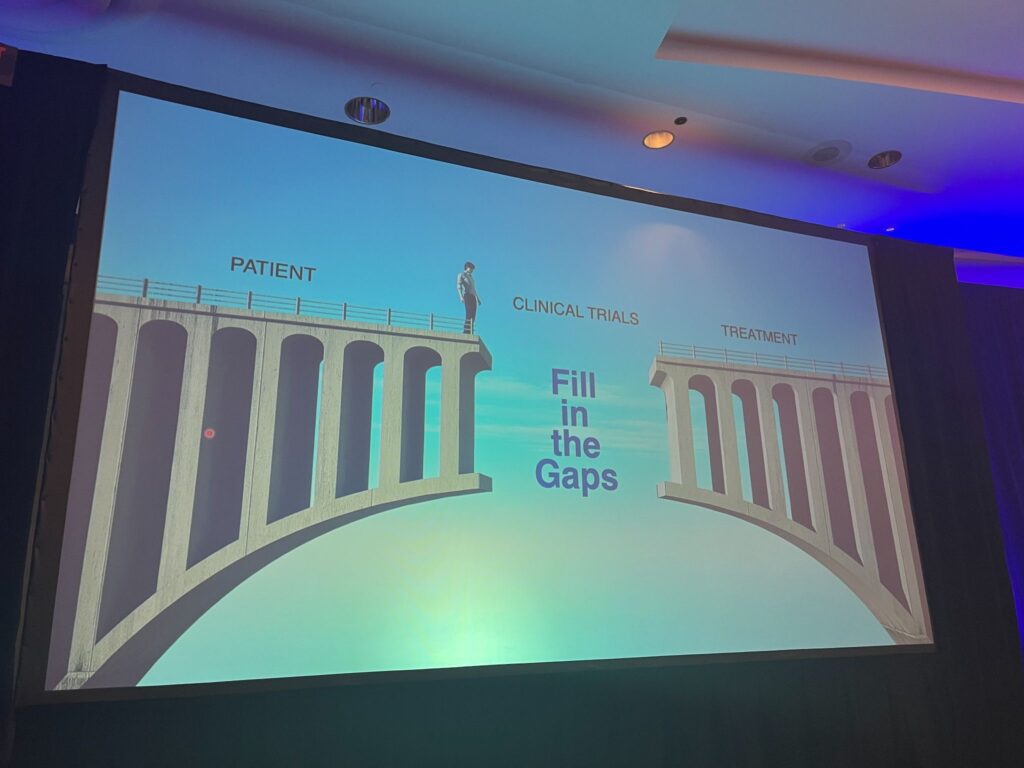
Niels’s work proposes to measure multiple biomarkers at the same time in spinal fluid (CSFCSF A clear fluid produced by the brain, which surrounds and supports the brain and spinal cord.), and use math models to understand what it means as they change in tandem. This can potentially provide a more detailed view of both HD progression and any effects of an experimental therapy.
We have a wealth of data that tells us about HD biology. Large-scale “omics” analyses look on a grand scale at changes that occur in proteins, RNARNA the chemical, similar to DNA, that makes up the ‘message’ molecules that cells use as working copies of genes, when manufacturing proteins., lipids (fats), and more. Because protein levels are comparatively stable, Niels looks to “proteomics” analyses for biomarkers for HD. He notes that current biomarkerbiomarker a test of any kind – including blood tests, thinking tests and brain scans – that can measure or predict the progression of a disease like HD. Biomarkers may make clinical trials of new drugs quicker and more reliable. candidates like PENK and NfLNfL biomarker of brain health can also change in other diseases and with brain injury, which can complicate the analysis to know what the level readouts mean. But when these two are analyzed together they are even better at tracking the course of HD.
Niels is building on this, by adding HTTHTT one abbreviation for the gene that causes Huntington’s disease. The same gene is also called HD and IT-15, PENK, and NfLNfL biomarker of brain health to the same analysis, and applying multiple cutting-edge technologies to measure their levels in CSFCSF A clear fluid produced by the brain, which surrounds and supports the brain and spinal cord.. He uses samples and data from a large study of human CSFCSF A clear fluid produced by the brain, which surrounds and supports the brain and spinal cord. called HDClarity. Different technologies seem to work better for different biomarkers. With a combination of statistics and technology to measure protein levels, Niels and colleagues can map out which approaches are best in different contexts, and how they complement one another to best match what we know about CAG repeatCAG repeat The stretch of DNA at the beginning of the HD gene, which contains the sequence CAG repeated many times, and is abnormally long in people who will develop HD numbers and stage of HD.
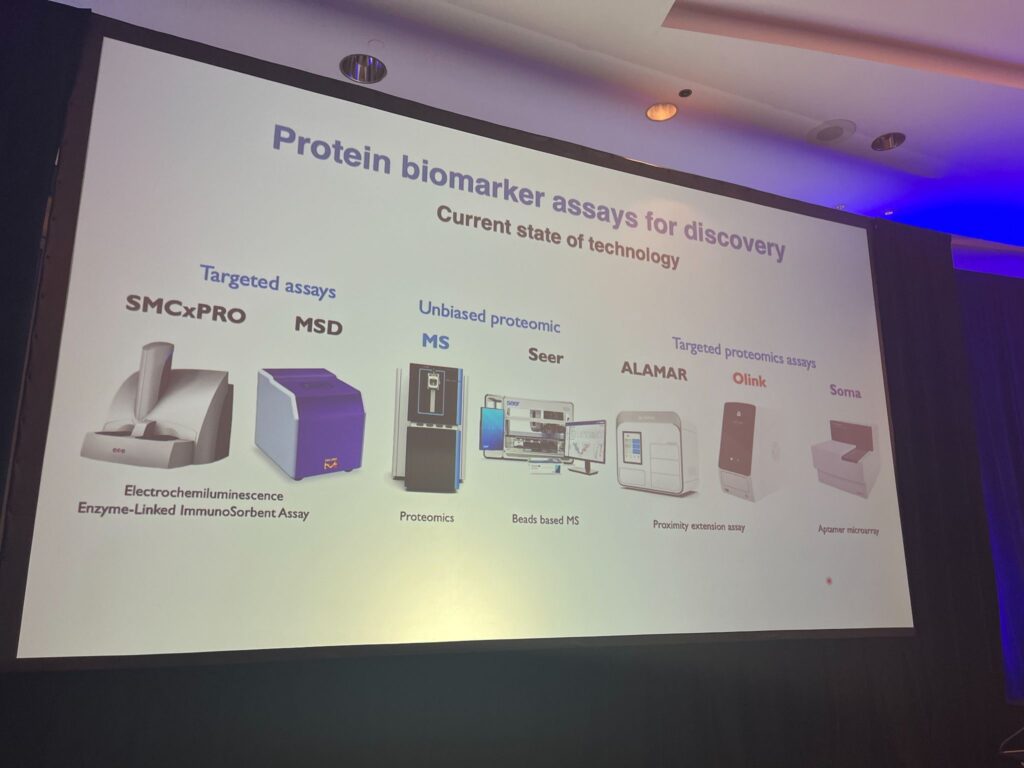
Aside from the usual suspects like HTTHTT one abbreviation for the gene that causes Huntington’s disease. The same gene is also called HD and IT-15, PENK, and NfLNfL biomarker of brain health, Niels has examined other proteins known to be involved in HD biology, to see how well they track with CAG length and other scores related to age and disease burden. Studies like these generate a TON of data which can be tough to wade through as a human. But now we have cool AI tools that can help us gain insights and spot trends. Niels is using all sorts of novel AI tricks to better understand all of this biomarkerbiomarker a test of any kind – including blood tests, thinking tests and brain scans – that can measure or predict the progression of a disease like HD. Biomarkers may make clinical trials of new drugs quicker and more reliable. data.
Can AI Help Us Solve Huntington’s Disease?
Next we heard from Steve Finkbeiner who told us about all the cool new ways we can use AI tools and platforms to try and answer biomedical research questions, pertinent to the HD field. Steve thinks that one of the reasons it’s so hard to develop new drugs through clinical trials is because human biology is so complex. Steve’s been working with AI for longer than many scientists – more than 13 years! – and he feels like AI can really help us move towards solutions for HD.
Years ago, Steve and his team developed a form of robotic microscopy, a way to take images of individual cells and monitor their health over long periods of time in response to different drugs and stimuli. This allows them to investigate tons of different conditions and variables.
Using these systems his group showed expanded CAG repeats influence cell health, while removing HTTHTT one abbreviation for the gene that causes Huntington’s disease. The same gene is also called HD and IT-15 can actually boost their health. Using AI to analyse how the cells change in shape, size, and complexity, they saw that CAG-expanded cells got bigger, while cells with no HTTHTT one abbreviation for the gene that causes Huntington’s disease. The same gene is also called HD and IT-15 got smaller! They can also take “omics” data about large sets of RNAs and proteins and use AI to identify patterns in what changes over time in HD cells, finding patterns it would be tough for humans to spot.
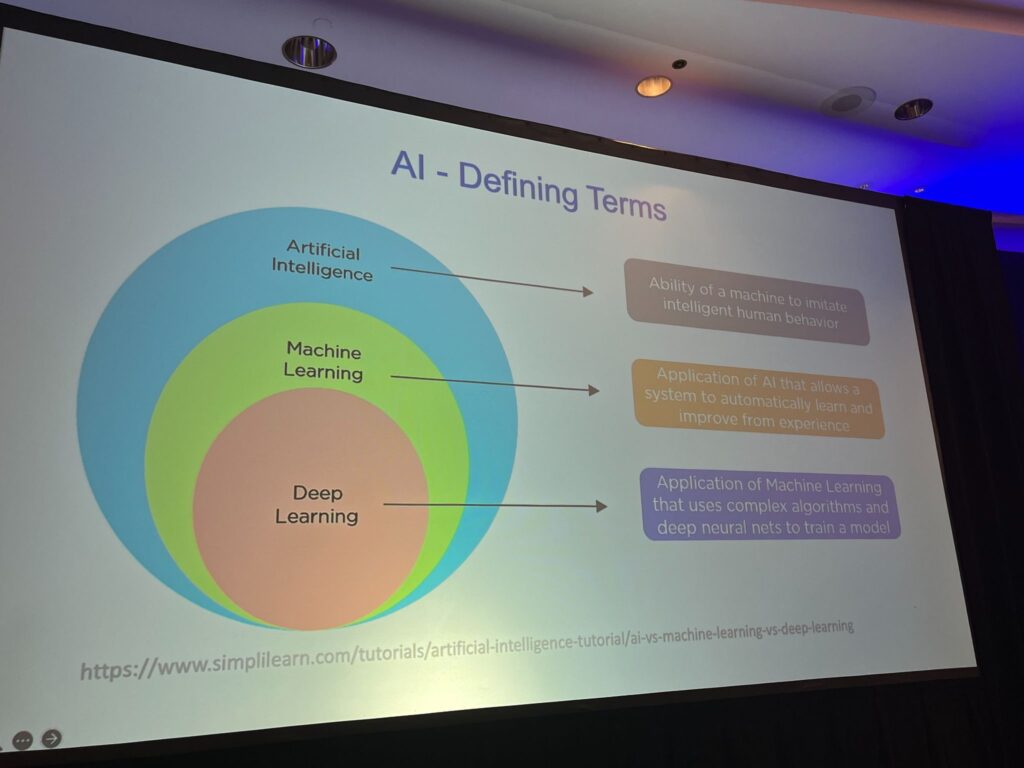
Steve explains that “deep learning” AI algorithms contain layers of mathematical units that collaborate to perform different functions. This is how AI can look at a picture and identify that it’s a cat, a flower, or an HDBuzz writer eating a hot dog, perhaps. Working in partnership with Google, Steve and his team were able to feed images of cells into a deep learning AI algorithm, to identify patterns in how cells are changing over time in different disease settings.
HD always stems from the same gene, but diseases like ALS can have different genetic causes or arise “sporadically” – with no known cause. Using cells in dishes that model ALS, Steve investigated different forms of ALS to look for different “signatures” which might define the genetic and sporadic forms. Unlike the human eye, AI can pick out the difference between ALS and control cells, no matter what type of ALS the cells modeled. This suggests there is a “signature” of ALS in cells, a pattern that a human could not have easily identified on their own.
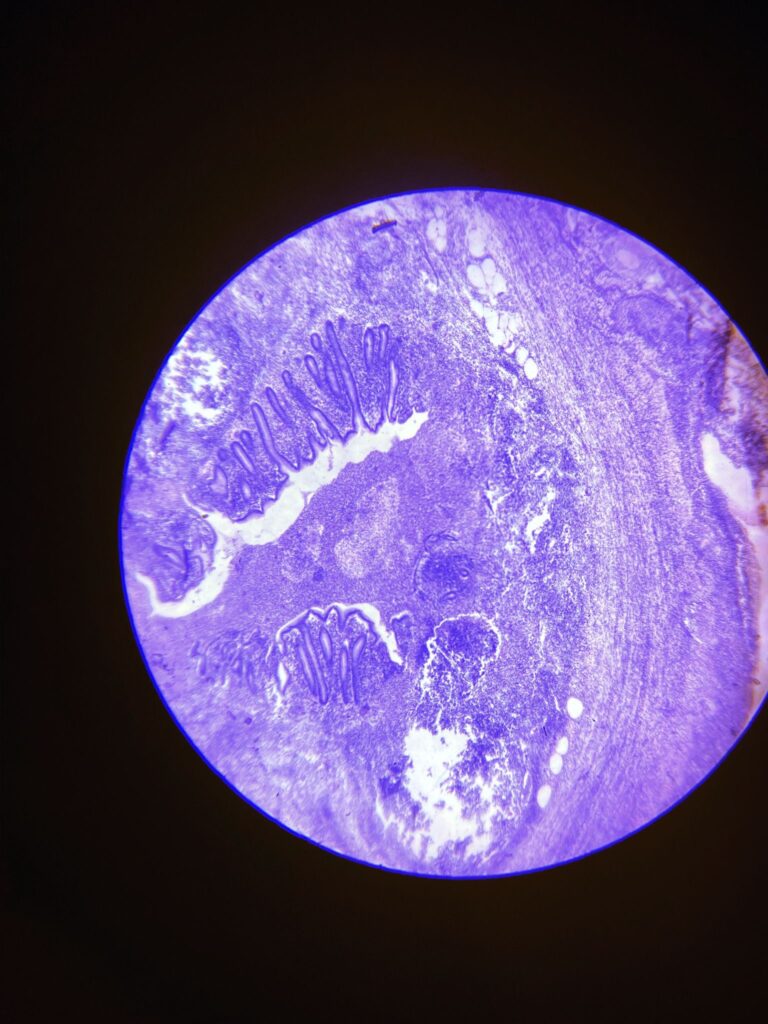
Working backwards with additional AI tools, they identified the features that indicated a cell was affected by ALS. It seemed to be a defect in the membrane around the nucleusnucleus A part of the cell containing genes (DNA), the envelope that keeps the all-important DNA and nuclear machinery separate from the rest of the cell.
Steve is showing us other examples of how AI can be useful in pathology – helping to identify disease features in tissue or even diagnose disease. The AI was remarkably accurate, often as good as an expert pathologist. This suggests that AI tools can be useful to learn more from human tissue. Another example of AI’s utility in medicine is to pick out subtle features of distinct diseases that look quite similar. For example, it can be hard to distinguish “Parkinson’s disease with dementia” from “dementia with Lewy bodies” because they have very similar features in tissue. But AI tools can do it!
Steve describes a “thinking microscope” that can run experiments in dishes of cells with minimal human input. Using light activation it can focus down to the level of individual cells, stimulating or treating particular cells and then using AI to analyze the data in real time and decide on next steps. Wow!
Open questions about the HTTHTT one abbreviation for the gene that causes Huntington’s disease. The same gene is also called HD and IT-15 protein
Next up was HDBuzz editor Rachel Harding! She began by encouraging scientists in the audience to consider writing for HDBuzz. We’re always looking for passionate HD researchers to help us bring new findings to our readers.
Rachel is a structural biologist who studies the shape and folding patterns of proteins. She was tasked with providing an overview of the current questions scientists are asking about the structure of huntingtin and its role in cells, as well as the systems that keep proteins in balance. What questions remain, and how can HD scientists collaborate to answer them? She recapped a recent HDF workshop focused on the complex structure and function of the HTTHTT one abbreviation for the gene that causes Huntington’s disease. The same gene is also called HD and IT-15 protein. Even defining the HTTHTT one abbreviation for the gene that causes Huntington’s disease. The same gene is also called HD and IT-15 protein itself, with its many fragments and ways of folding and clumping, is complex.
Rachel talked about some of the big questions that scientists are working on in this realm: what does huntingtin do? Which forms of HTTHTT one abbreviation for the gene that causes Huntington’s disease. The same gene is also called HD and IT-15 are harmful? Which pieces coordinate particular activities in the cell? And importantly, which forms or parts of huntingtin should we go after with drugs? Rachel also noted that HD is a disease where the levels of many proteins get out of balance. Sometimes the context in which we study the HTTHTT one abbreviation for the gene that causes Huntington’s disease. The same gene is also called HD and IT-15 protein can influence the results, and results using different approaches can be in total opposition!
Given that the field has recently become so focused on somatic instabilitysomatic expansion A process in which the CAG repeat in the Huntingtin gene can change over a person’s lifetime in some cells of the body, particularly in the brain., Rachel is interested in what it actually means for the HTTHTT one abbreviation for the gene that causes Huntington’s disease. The same gene is also called HD and IT-15 protein when there are very large CAG repeatCAG repeat The stretch of DNA at the beginning of the HD gene, which contains the sequence CAG repeated many times, and is abnormally long in people who will develop HD expansions in the HD gene. For example, if a cell gains 500 CAG repeats in the HD gene over time, is the cell actually making that HUGE protein?
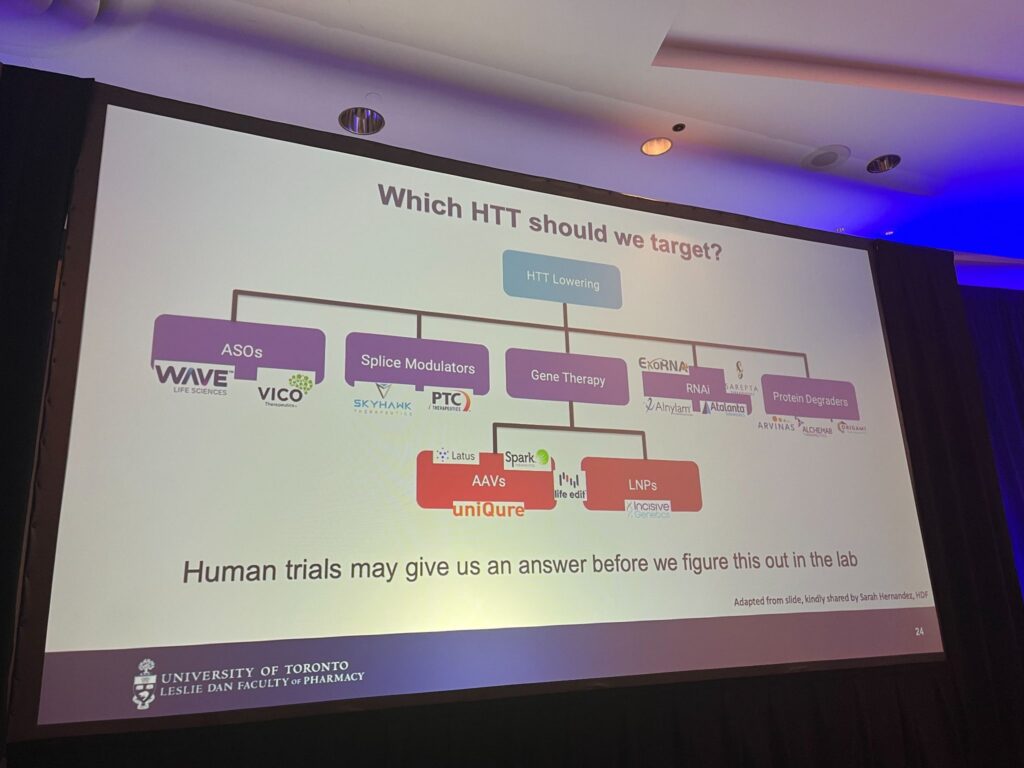
Rachel also reminds us that companies in the HD space are targeting huntingtin from many different angles, in terms of the pieces these experimental therapies target, the approach to removing it, and the ways the drugs are delivered. Right now, the vast majority of therapeutic approaches target the DNA or RNARNA the chemical, similar to DNA, that makes up the ‘message’ molecules that cells use as working copies of genes, when manufacturing proteins., so that the HTTHTT one abbreviation for the gene that causes Huntington’s disease. The same gene is also called HD and IT-15 protein itself is made in much lower amounts.
As a structural biologist, Rachel is interested in developing ways to target expanded HTTHTT one abbreviation for the gene that causes Huntington’s disease. The same gene is also called HD and IT-15 at the protein level. To this end, her team is making degraders and tools that target it not with “genetic sledgehammers” but with fine-tuned attacks based on a detailed understanding of HTTHTT one abbreviation for the gene that causes Huntington’s disease. The same gene is also called HD and IT-15 shape and function.
PolyQPolyQ A description of HD and other diseases that are caused by abnormal expansion of stretches of DNA containing the sequence CAG repeated many times. Too many CAGs in a gene results in proteins with too many ‘glutamine’ building blocks, and glutamine is represented by the symbol Q. proteins help control networks of genes
Next was Joanna Wysocka, who talked about CAG repeats in other proteins and how they have developed and persisted throughout evolution. They’re quite abundant in transcriptiontranscription the first step in making a protein from the recipe stored in a gene. Transcription means making a working copy of the gene from RNA, a chemical messenger similar to DNA. factors, proteins that coordinate genetic on/off switches in cells.
In genes other than HTTHTT one abbreviation for the gene that causes Huntington’s disease. The same gene is also called HD and IT-15, CAG repeats can lead to disease when they expand. One gene that Joanna highlights is FOXP2, which has more than 40 CAG repeats in its regular gene DNA letter code. As with HTTHTT one abbreviation for the gene that causes Huntington’s disease. The same gene is also called HD and IT-15, the CAG repeatCAG repeat The stretch of DNA at the beginning of the HD gene, which contains the sequence CAG repeated many times, and is abnormally long in people who will develop HD in FOXP2 also encodes a polyQPolyQ A description of HD and other diseases that are caused by abnormal expansion of stretches of DNA containing the sequence CAG repeated many times. Too many CAGs in a gene results in proteins with too many ‘glutamine’ building blocks, and glutamine is represented by the symbol Q. tract within the protein, a stretch of the amino acidamino acid the building blocks that proteins are made from called glutamineglutamine the amino acid building block that is repeated too many times at the beginning of the mutant huntingtin protein (Q).
On the other end of this protein molecule is a special section where DNA can bind, helping the protein control which genes are switched on and off. When the DNA binding domain is messed up, the FOXP2 protein doesn’t work well, forming clumps. Some of its properties can be restored when the polyQPolyQ A description of HD and other diseases that are caused by abnormal expansion of stretches of DNA containing the sequence CAG repeated many times. Too many CAGs in a gene results in proteins with too many ‘glutamine’ building blocks, and glutamine is represented by the symbol Q. is chopped off. This is also true for other proteins that regulate which genes are switched on or off.
How these polyQ-containing proteins shuttle between working in the nucleusnucleus A part of the cell containing genes (DNA) and hanging out in these clumps is also controlled by chemical “decorations” on the proteins. Adding these decorations can “evict” proteins like FOXP2 from the DNA and send them into clumps, changing how they work.

This might seem like a lot of effort for cells, but this highly tunable system is essential to ensure genes are switched on and off precisely when they are needed. This is especially important for complex organisms like humans! This data suggests that polyQs might be important for the evolution of species with complicated brains and nervous systems, like people, but Joanna reminds us that this is just an idea she has been punting around – it’s a tough concept to prove!
Joanna switches gears to tell us why this matters to HD. Adding on DNA binding domains to HTTHTT one abbreviation for the gene that causes Huntington’s disease. The same gene is also called HD and IT-15 fragments with long Q’s can stop them from forming toxic clumps! However, this rescue effect gets weaker and weaker as the Q length gets longer.
Tracking HTTHTT one abbreviation for the gene that causes Huntington’s disease. The same gene is also called HD and IT-15 clumps
The final talk of the day comes from Xin Zhang who is investigating how protein clumping can stress cells out – considered by many to be a key driver of HD. Scientists have a range of ways for defining different types of protein clumps, based on how they appear, how they dissolve in detergents, who they hang out with in cells and what surrounds them. Proteins also behave differently in living cells than in test tubes and there are different types of chemical tools that can be used to understand clumped up proteins in both of these settings.
Xin and his team develop specialized tools using light and chemical tags to better define the type and shape of protein clumps (aggregatesaggregate Lumps of protein that form inside cells in Huntington’s disease and some other degenerative diseases). Some of these tools allow his team to watch proteins form clumps in real time and in living cells, to better define their location and size.
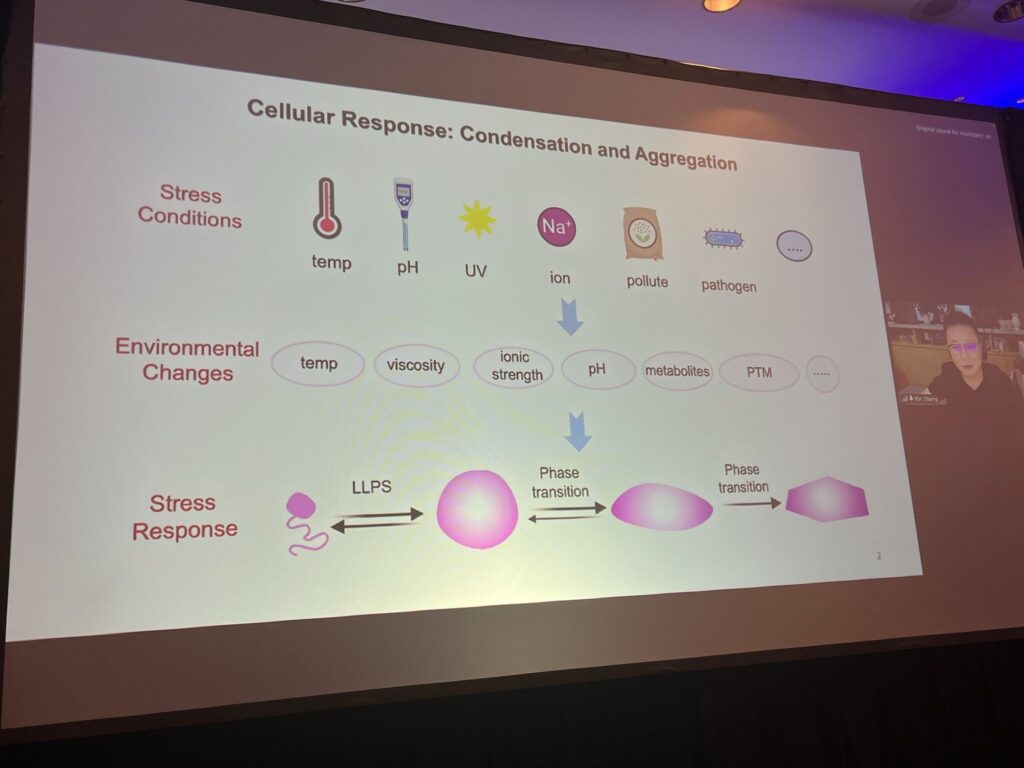
These super-technical chemical experiments can also help to define the shape, stickiness, chemical state, and other features of aggregatesaggregate Lumps of protein that form inside cells in Huntington’s disease and some other degenerative diseases. Xin can then use his tools to monitor what happens when cells are stressed or when drugs are given to dissolve disease-causing protein clumps.
These tools could be useful for HD scientists who study HTTHTT one abbreviation for the gene that causes Huntington’s disease. The same gene is also called HD and IT-15 clumping to investigate the protein and monitor the effects of interventions. Although the details of this work are above the heads of many of the HD scientists in the room (us included!), we’re delighted that experienced chemists are thinking about HD!
Last day of HD2026 is tomorrow
That wraps everything for HD2026 today. We will be back tomorrow for the final day of this meeting, reporting updates on new frontiers in HD research, more insights on the HTT1a protein and lots of other cool new science that is helping fuel new ideas for drugs and future clinical trials.
Highlight Summary:
- Somaticsomatic relating to the body CAG expansion remains a major focus for HD research, with new work on the role of DNA repair modifiers including MSH3, ATAD5 and FAN1. Studies in mice suggest that targeting MSH3 earlier may have the greatest impact on slowing expansion and downstream HD-related changes.
- Genetics is revealing additional drivers of HD beyond CAG expansion itself. Large-scale analyses of Enroll-HD data are linking genetic variation to specific motor, cognitive and psychiatric symptoms, while modifiers such as TCERG1 and MED15 point to disease mechanisms beyond the familiar DNA repair pathways.
- Better biomarkers could help researchers tell sooner whether experimental drugs are working. New approaches include measuring DNA repair activity as a proxy for somatic expansionsomatic expansion A process in which the CAG repeat in the Huntingtin gene can change over a person’s lifetime in some cells of the body, particularly in the brain. and combining multiple CSFCSF A clear fluid produced by the brain, which surrounds and supports the brain and spinal cord. biomarkers, such as HTTHTT one abbreviation for the gene that causes Huntington’s disease. The same gene is also called HD and IT-15, PENK and NfLNfL biomarker of brain health, to build a more complete picture of disease progression and treatment effects.
- AI is becoming an increasingly powerful tool for making sense of complex HD biology. Researchers are using AI to analyse huge biomarkerbiomarker a test of any kind – including blood tests, thinking tests and brain scans – that can measure or predict the progression of a disease like HD. Biomarkers may make clinical trials of new drugs quicker and more reliable. datasets, identify subtle disease signatures in cells and tissues, and even develop “thinking microscopes” that can analyse experiments and adapt what they do in real time.
- There are still fundamental questions about the huntingtin proteinhuntingtin protein The protein produced by the HD gene., and new ways to tackle them. Researchers are working to understand which forms of HTTHTT one abbreviation for the gene that causes Huntington’s disease. The same gene is also called HD and IT-15 are harmful and should be targeted therapeutically, while new chemical tools are being developed to precisely degrade HTTHTT one abbreviation for the gene that causes Huntington’s disease. The same gene is also called HD and IT-15 and track how expanded polyQPolyQ A description of HD and other diseases that are caused by abnormal expansion of stretches of DNA containing the sequence CAG repeated many times. Too many CAGs in a gene results in proteins with too many ‘glutamine’ building blocks, and glutamine is represented by the symbol Q. proteins form and behave in cells.
For more information about our disclosure policy see our FAQ…