
HD2026 Milton Wexler Biennial Symposium Day 1
27 min read
Day 1 of HD2026 is a wrap! From what human brains can teach us about HD, to HTT1a, somatic CAG expansion and the normal biology of HTT, today’s talks spanned the spectrum from fundamental biology to potential treatments.


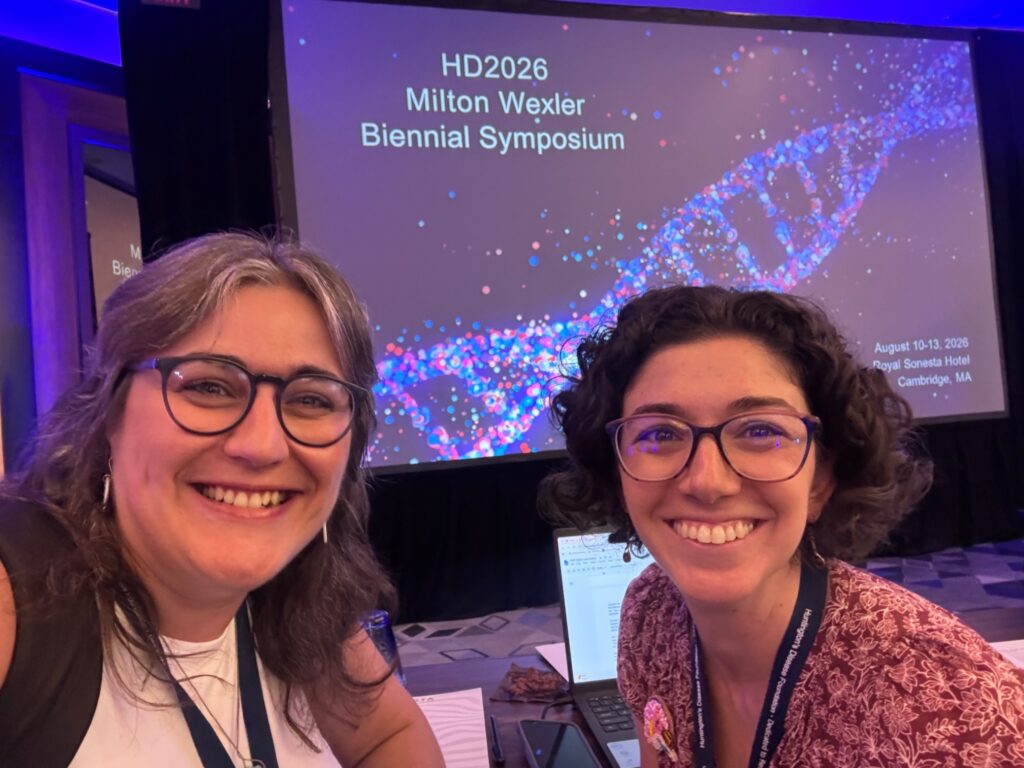
This week, HDBuzz is attending the HD2026 Milton Wexler Biennial Symposium in Boston, Massachusetts. Held every other year and organized by the Huntington’s Disease Foundation (HDF), this conference brings together almost 300 of the world-leading experts in Huntington’s disease (HD) and other CAG repeatCAG repeat The stretch of DNA at the beginning of the HD gene, which contains the sequence CAG repeated many times, and is abnormally long in people who will develop HD diseases.
The first HDF conference was held in 1998, with just 75 participants – it’s amazing how much interest has grown. While this meeting has been taking place for almost 30 years, this is just the 3rd time that HDBuzz has been able to live post the talks. We’re excited to be sitting up front and sharing the latest updates on BlueSky, and we’ll summarize with daily articles for our regular HDBuzz readers. Buckle up for an exciting three days of coverage, from the function of Huntingtin and CAG repeatCAG repeat The stretch of DNA at the beginning of the HD gene, which contains the sequence CAG repeated many times, and is abnormally long in people who will develop HD expansion, to the evolving clinical landscape.
Huntington’s Disease Clinical Insights
The conference actually kicked off in the evening with a keynote talk by Anne Rosser, a professor of clinical neuroscience at Cardiff University and a leader in the HD field. She provided a broad overview of the HD clinical landscape and insights that are shaping drug development, noting that over the last 10 years we have seen a massive shift in our understanding of HD biology and progression. She discussed the complex nature of symptoms, current trials, remaining challenges, and scientific opportunities.
Anne covered the basics of HD and some of the observations driving research – its origin in extra CAG repeats, the harmful expanded protein, the tendency of repeats to expand further in some cells (somatic instabilitysomatic expansion A process in which the CAG repeat in the Huntingtin gene can change over a person’s lifetime in some cells of the body, particularly in the brain.), and vulnerability of an area of the brain called the striatum in people with HD. She highlighted the complexity of HD motor symptoms, describing involuntary movements (choreachorea Involuntary, irregular ‘fidgety’ movements that are common in HD) but also other movement symptoms like stiffness and difficulty with walking, balance, and repetition.
Anne also emphasized psychiatric and behavioral symptoms, like depression, anxiety, irritability, apathy, perseverationperseveration The inability to to change thoughts or actions to match changed plans (getting stuck on thoughts or patterns), and delusions, as well as cognitive symptoms like difficulty concentrating, completing complex tasks, making decisions, and communicating. This overview may seem quite basic to those familiar with HD, but it’s important that the researchers in the audience – most of whom spend their time in the lab – better understand the actual challenges of living with HD and how complex it can be for individuals and families. Ultimately, Anne underscored that today we have a much better understanding of the very early changes that occur in HD, how these are accompanied by subtle changes in brain imaging, and how we can use this information towards a staging system to better track HD and design clinical trials.
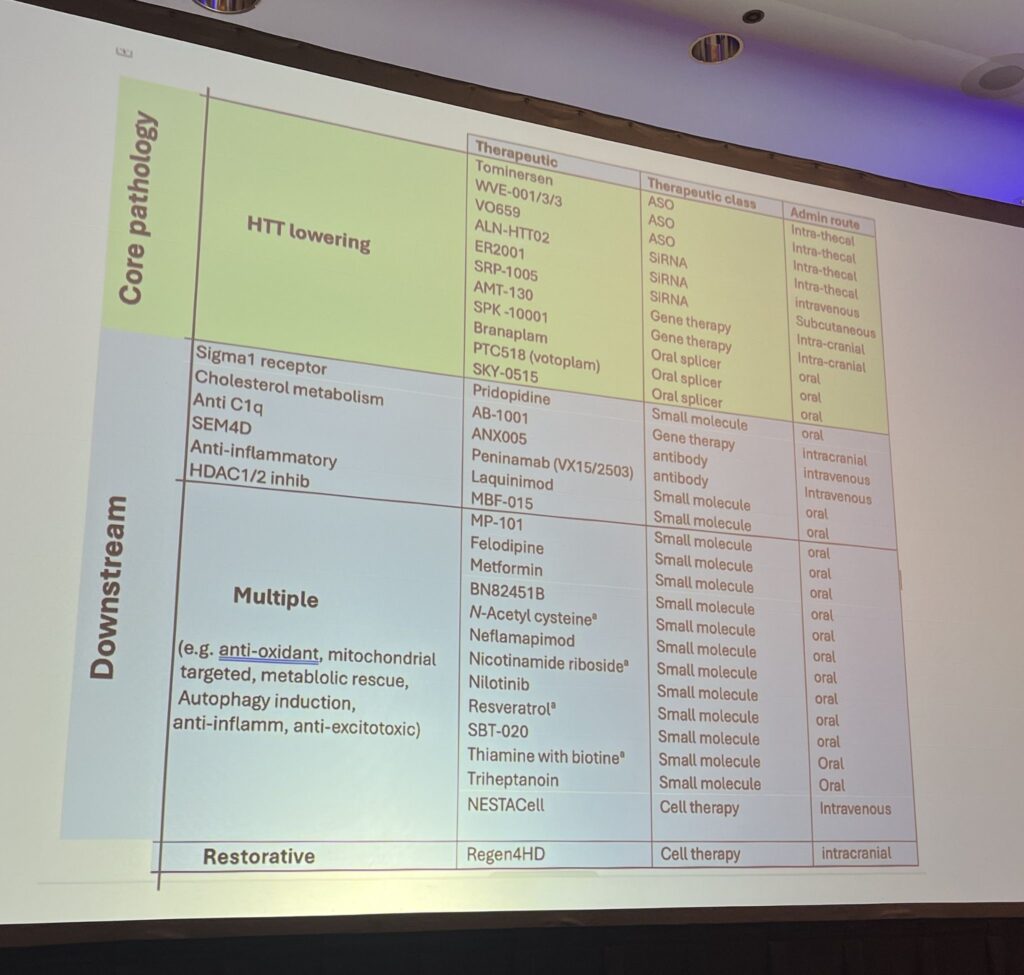
She then provided an overview of all the ongoing and planned clinical trials with different approaches to tackling HD, and spoke to the challenge of developing preventative therapies. There are some key general obstacles to HD drug development: HD progresses slowly and begins subtly, and we don’t have great ways to measure whether drugs are working. Fortunately, clinical scientists are addressing the challenge of measuring subtle symptoms, applying new computer-based cognitive tests and speech programs. Regardless, large groups of people are needed to participate in clinical trials in order to get good data, which is a tough ask for a rare disease.
Anne concluded by noting that we have a much better understanding of the life-long course of HD, and urged the audience of researchers to think about how to approach treatment as early as possible.
An HD Family Perspective
Every HDF meeting and workshop kicks off with an interview between a neurologist and one of their patients with HD. Many researchers, especially students, postdocs, and young investigators who are working hard to develop HD treatments, may have never met someone with the disease.
While these conversations are deeply personal and we don’t share the specifics on a global platform, they serve an important purpose. An audience of researchers comes face-to-face with the lived experience of HD, giving them a small glimpse into how this disease truly impacts a person day-to-day. The hope is that if every researcher in the room knows what we’re up against, what we’re fighting for, and what we’re working toward, their resolve will be strengthened and they’ll make the choice to become a life-long member of the HD research community.
Clinical Features and Neuropathology of HD
Next we dove into talks from HD scientists, starting with Dan Child. Dan is a neuropathologist who helps coordinate a biobank for brains, selflessly donated by people who have passed from different brain diseases, including HD. Using these precious samples of HD brain, Dan has been investigating how a protein called TDP-43 might be contributing to how brain cells get sick over time. TDP-43 is an important protein in ALS, another brain disease.
Dan started by reminding us that people with HD are not exempt from having other types of brain illnesses which impact the general population, including Alzheimer’s, cancers, or other age-related diseases and injuries. This means that symptoms can sometimes be the sum of all of these underlying issues, known as comorbidities – not just HD in isolation. This matters when we are thinking about applying different drugs and treatments to improve brain health for people with HD.
One example of this is the clumps of TDP-43 that Dan sees in brain slices, which can appear in ALS and other brain diseases. These clumps vary widely across different people and are typically considered the end point of these diseases. Many studies have seen a connection between TDP-43 and HD. Dan has been keen to further explore whether TDP-43 clumps are a feature of HD, where these clumps form in HD brains, and how they might contribute to disease.
His team has access to an extensive brain bank, and they were able to study samples from 48 folks with HD who had selflessly donated their brains to research. Some of these precious samples were preserved decades ago, and have continued to inform research for decades. Dan studied these samples to identify HTTHTT one abbreviation for the gene that causes Huntington’s disease. The same gene is also called HD and IT-15 and TDP-43 clumps. In more than 40,000 cells, only 7 had both types of clumps in the same cell! However, it was still more likely to find TDP-43 clumps in HD brains than in unaffected ones.
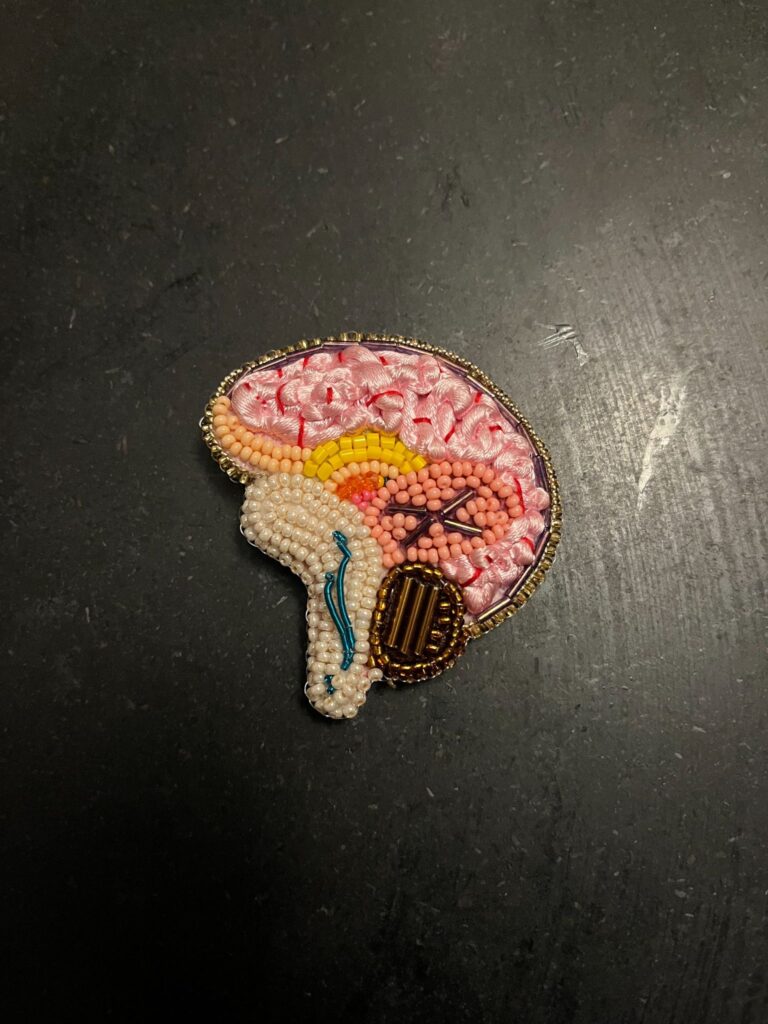
Dan’s team did a ton of complex stats to try and figure out what this all means. It seems like there is a connection between HD and TDP-43 driven diseases. Dan concludes that TDP-43 clumps may contribute to the nature and severity of HD symptoms. The challenge is that even with 48 brains, this is still too small a sample size to make a firm conclusion. It’s important to remember that all of this analysis comes from post-mortem samples so we only have data for the endpointendpoint A specific outcome or measurement that researchers use to assess the effectiveness or safety of a treatment. Endpoints are predefined before the trial begins and can be either primary (the main result the trial is designed to evaluate, such as improvement in symptoms) or secondary (additional outcomes of interest, such as quality of life or biomarker changes). of these folks’ brain disease journey – we don’t know the molecular details of what happened to get them there. Dan is keen to expand this study, adding more brain samples, imaging data, and other genetic information to figure out what is driving the HD/TDP-43 connection.
All of this amazing research is only possible because of brain donation. If you would like to learn more, check out this HD Buzz article.
A link between brain features and types of HD symptoms
Next, we heard from Richard Faull. Richard is an HD brain scientist who has worked for 40+ years with a biobank of human brains in New Zealand. Since the 1980s, his team has collected more than 185 brains from 95 HD families. His research was always centred on a partnership between HD families and HD clinicians to drive discovery through study of these precious samples.
Richard’s research is trying to find patterns in what we observe in these brain samples post mortem (after death), and how that might track with the symptoms these folks experienced in their HD journey. As we know, the symptoms each person with HD experiences can be quite different. Richard’s team compared brain samples from folks with mostly mood or mostly motor symptoms, and looked to see which parts of their brains were most sick and showed loss of brain cells.
By correlating patient histories with cell loss in specific regions of the brain, Richard and his team could map out different regions associated with different categories of symptoms, and which types of neuronsneuron Brain cells that store and transmit information were lost in each region. This helped them figure out which cell types drive specific symptoms of HD in the human brain.
This research was only possible because of open dialogue between the families and research teams, which enabled Richard and his colleagues to collect rich and detailed information about each individual’s experience with HD. This type of research is important to help us better understand the complexities of the disease – Richard ended by extending his heartfelt thanks to all of the HD families who helped make this possible!
A connection between somatic instabilitysomatic expansion A process in which the CAG repeat in the Huntingtin gene can change over a person’s lifetime in some cells of the body, particularly in the brain. and a fragment of huntingtin
The next talk was from Jeff Carroll, editor emeritus at HDBuzz! Jeff told us about his work to connect the dots on different drivers of HD, including somatic instabilitysomatic expansion A process in which the CAG repeat in the Huntingtin gene can change over a person’s lifetime in some cells of the body, particularly in the brain., the process by which CAG numbers can get longer in some cells over time, and a toxic fragment of the HD protein, HTT1a. Jeff kicked off by recapping the great milestones the field has achieved in understanding other genetic factors which modify the age at which HD symptoms begin. These factors seem to be linked to somatic instabilitysomatic expansion A process in which the CAG repeat in the Huntingtin gene can change over a person’s lifetime in some cells of the body, particularly in the brain..
Another big finding recently has been that very long CAGs can cause the HTTHTT one abbreviation for the gene that causes Huntington’s disease. The same gene is also called HD and IT-15 message to be processed differently, creating a fragment of the HTTHTT one abbreviation for the gene that causes Huntington’s disease. The same gene is also called HD and IT-15 protein which many scientists think might be an important driver of HD. Jeff’s team have used tools to ask which type of HTTHTT one abbreviation for the gene that causes Huntington’s disease. The same gene is also called HD and IT-15 might need to be lowered to help improve symptoms in mice that model HD. His data suggest that approaches targeting this fragment (known as Htt1a) seem to work better in mice to improve signs of HD.
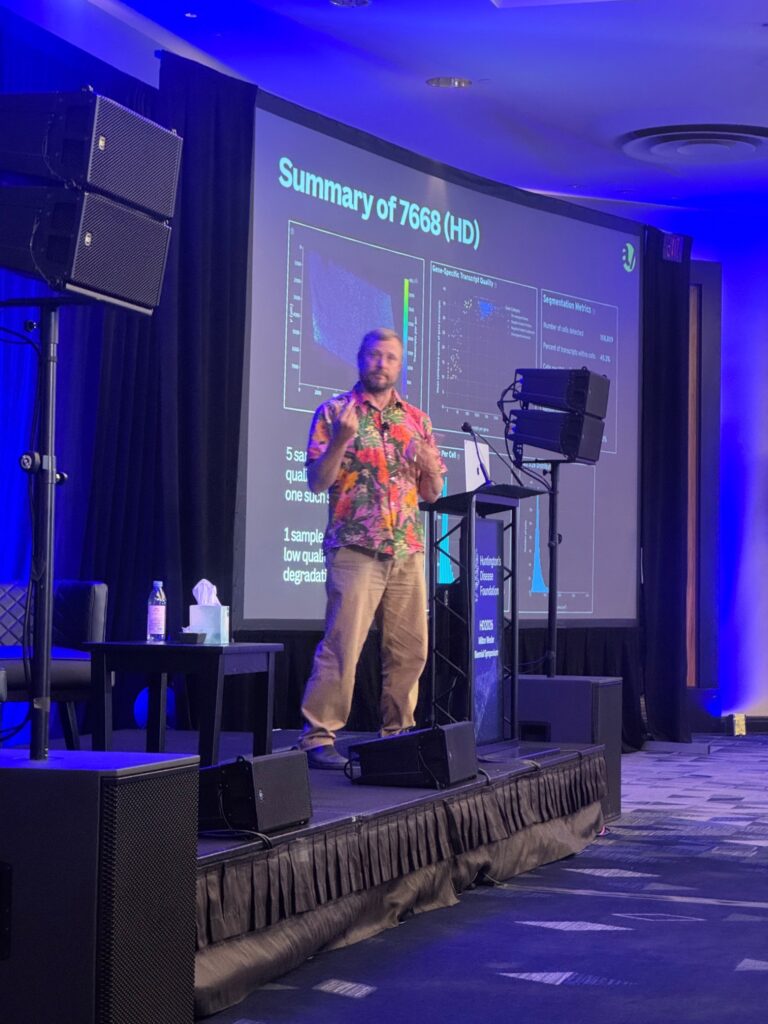
Jeff also reminded us of some key caveats of these findings. This research was done in mice that carry huge CAGs in every cell in their body from birth – which does not tally with how this works in humans. Nonetheless, mouse models allow researchers to explore which type of HTTHTT one abbreviation for the gene that causes Huntington’s disease. The same gene is also called HD and IT-15 might be most problematic. Jeff highlighted a question he often gets: if HTT1a is so important in mouse models of HD, why is studying it in people so tricky? Is it potentially an artifact – something that only shows up in HD mice?
To look into this, Jeff worked with colleagues including Dan Child (who spoke earlier about his work in the human brain), to see if they could detect HTT1a in brains donated by people with HD. This included tissue from someone with juvenile HDjuvenile HD Huntington’s disease where symptoms begin before the age of 20., who had a very long CAG number, closer to what we see in the mice that model HD. They used a cool imaging method to “see” the genetic message encoding this fragment in the different brain samples. It seems like there might be more HTT1a in HD and JHDjuvenile HD Huntington’s disease where symptoms begin before the age of 20. brains.
This data is super preliminary, so Jeff and his team are still figuring it out! The spirit of this meeting has always been to present early data and encourage dialogue that furthers HD research, so it’s great when scientists share true work in progress. Jeff again reminded us about the incredible generosity of individuals with HD and their families who are key to all of this research. Without the brains these folks have donated to science, none of these discoveries would be possible.
Exploring variability of symptoms in big HD datasets
The last speaker of the morning session was Jingwen Yao. Jingwen researches how HD impacts the global community, and how symptoms can differ across different populations of people around the world. She noted that although we have ways to track how HD develops and worsens, we need better tools to understand the differences between individuals, not only in their symptoms but in how their brains change over time.
Jingwen used data from large observationalobservational A study in which measurements are made in human volunteers but no experimental drug or treatment is given trials that study people with HD over time, including Enroll-HD, PREDICT-HD, and TRACK-HD. These studies follow the nature and timing of symptoms that appear in each participant’s HD journey. Jingwen applied specialized statistics and computer models to data from thousands of participants with HD. She examined different features and classes of symptoms and grouped people based on whether they had primarily movement, mood, or thinking symptoms.
Jingwen emphasized that while she is not creating new information, like some laboratory scientists, organizing this information can uncover new insights into different subtypes of HD and how we can best treat and care for individuals on different journeys. She also looked at potential biomarkers and outcomes – the ways we measure HD and the effectiveness of potential treatments – to understand how well they capture the different courses of HD. This can give us insights into who might be the best candidate for a trial or future treatment. As data from the HD community grows and computing becomes more powerful, skilled statisticians and computational scientists like Jingwen are key to interpreting human data in a way that allows for better, faster clinical trials and more specific ways to measure success.

Not to sound like a broken record, but this research is only possible because of everyone who volunteered to participate in observationalobservational A study in which measurements are made in human volunteers but no experimental drug or treatment is given studies, and their family members who supported them. These huge datasets are so valuable to researchers like Jingwen to give us new insights into HD.
The developmental origins of HD
The afternoon session of Day 1 focused on the normal functions of the huntingtin proteinhuntingtin protein The protein produced by the HD gene., beginning with a talk from Sandrine Humbert. Sandrine studies the effects of the HD gene change in development to see how it might alter the growth and health of an embryoembryo the earliest stage during the development of a baby, when it consists of just a few cells early on. Her group has studied tissue from human fetuses that carry the HD gene. They have discovered changes that occur many, many years before symptoms appear, in the size of certain brain regions and in the way that they are wired.
In mouse models of HD, Sandrine’s team have focused on the growth and organization of layers of cells in the cortex. This large region of the brain contributes to symptoms related to thinking and function in HD. There is a big bundle of axonsaxon long extensions of neurons, that act like electrical wires to carry signals in the nervous system., the long wire-like parts of neuronsneuron Brain cells that store and transmit information, that allow the left and right sides of the brain to communicate. This bundle and the cells it contacts show different growth and communication patterns in early development in mice with HD.
Sandrine’s lab has also shown that delivering a corrective drug during an early window of development in young mice can reverse some of the growth, structure, and communication deficits seen in HD neuronsneuron Brain cells that store and transmit information. This is not intended as a treatment, but a way to show the importance of these early developmental pathways.
Given that so many actual experimental therapies focus on lowering huntingtin, Sandrine also studies the huntingtin proteinhuntingtin protein The protein produced by the HD gene. itself, and how different parts of the cell’s scaffolding, which maintain its shape and structure, change when huntingtin is removed. Her data points to an important role for huntingtin in assembling groups of proteins that shape neuronsneuron Brain cells that store and transmit information and allow movement of important building blocks within cells, especially during development. She emphasized that we ultimately hope to treat HD as early as possible, and understanding the earliest occurring brain changes can inform how and when to intervene.
Could extra CAG repeats have evolved as an advantage?
The next talk came from Peg Nopoulos, who studies HD in youth and at-risk individuals. Despite the harmful effects of having the HD gene, Peg has shown that longer CAG repeatCAG repeat The stretch of DNA at the beginning of the HD gene, which contains the sequence CAG repeated many times, and is abnormally long in people who will develop HD lengths could have benefits during brain development. Peg thinks about expanded HTTHTT one abbreviation for the gene that causes Huntington’s disease. The same gene is also called HD and IT-15 differently to many folks – her model is that there are benefits to having expanded HTTHTT one abbreviation for the gene that causes Huntington’s disease. The same gene is also called HD and IT-15 early on in life, but the payoff wanes over time. She speculates this initial benefit could be why evolution has allowed the HD genetic change to persist.
To investigate this hypothesis, Peg studies HD in children and young adults. Peg has been running these programs for many years, including the Kids-HD and Change-HD programs, which studied 6 to 18 year olds at risk of HD, with follow on studies until these folks were 30.
Because those at risk for HD have a 50/50 chance of having the HD gene, this group of study participants included controls and individuals with HD. All are tracked over the course of many years. Genetic testing is done only for research purposes and neither the participants nor the researchers know any individual’s gene status.
(Anonymously) knowing the CAG numbers of participants with HD allows Peg and her team to predict when different groups may start showing symptoms. Then the team can map how signs and symptoms of HD evolve over time, including thinking skills, and changes in brain structure.
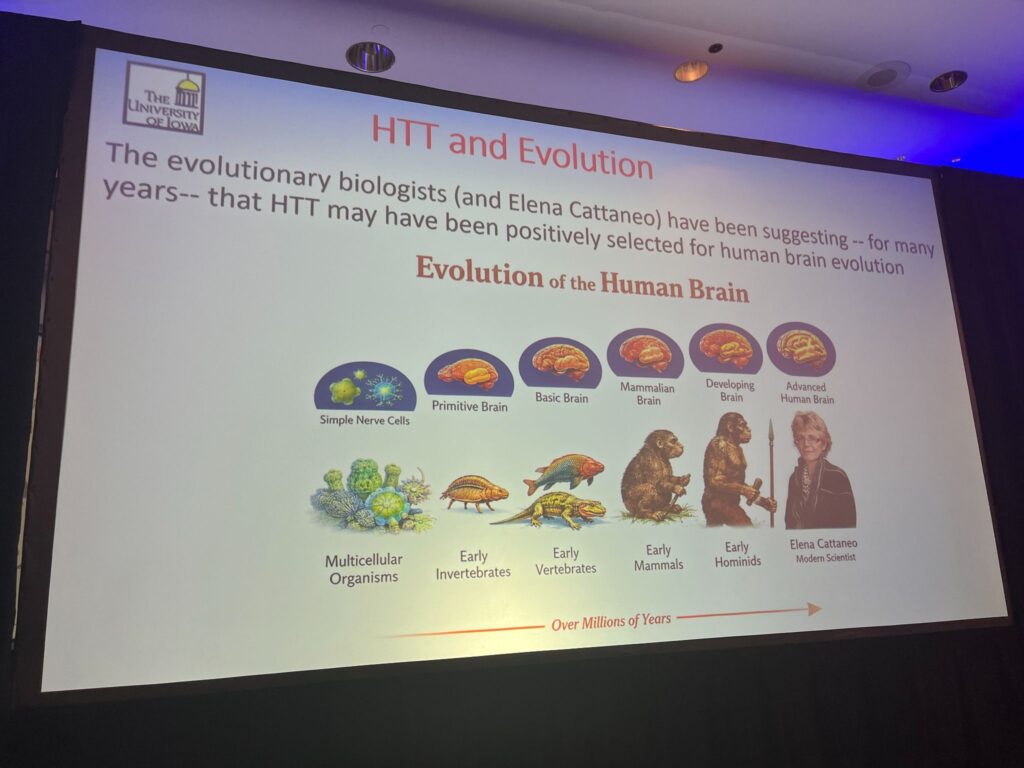
The data confirmed their hypothesis – the participants who were HD gene positive seemed to have some benefit at this early stage of life, as measured by thinking tests, brain imaging, and mapping of brain circuits. Some early data suggest that these effects may be occurring in the first year of life, with similarity or even benefit compared to the control group up to 20 years before predicted onset. This 20 year mark is a key inflection point at which the deficits of the HD gene seem to appear.
Next Peg talked about why this might have happened in evolution. Scientists who study evolutionary biology believe that genes like HTTHTT one abbreviation for the gene that causes Huntington’s disease. The same gene is also called HD and IT-15 with repeating DNA letter code may be advantageous – acting like tuning knobs for different traits. The problems seem mainly to arise with aging. Peg likens this to having a construction crew with too many builders and not enough folks doing repairs. At the start things seem to be going really well, with lots of construction, but without good maintenance, the building starts to get into bad shape.
The idea of HD having an evolutionary basis can be a sensitive topic, but Peg’s powerful delivery and camaraderie among researchers lightened the mood, with attendees quipping that extra CAGs conferred not only early cognitive benefits, but good looks.
HAP40: a constant partner to HTTHTT one abbreviation for the gene that causes Huntington’s disease. The same gene is also called HD and IT-15
Next we heard from Erich Wanker who studies the HTTHTT one abbreviation for the gene that causes Huntington’s disease. The same gene is also called HD and IT-15 protein – what it does and how it works in the cell. Erich and his team have focussed on understanding a protein that partners with HTTHTT one abbreviation for the gene that causes Huntington’s disease. The same gene is also called HD and IT-15, known as HAP40, to work out its influence on HTTHTT one abbreviation for the gene that causes Huntington’s disease. The same gene is also called HD and IT-15 in health and disease. When they pull HTTHTT one abbreviation for the gene that causes Huntington’s disease. The same gene is also called HD and IT-15 out of cells, they always see HAP40 coming along, and tightly attached. This does not change when the CAG repeats increase and the HTTHTT one abbreviation for the gene that causes Huntington’s disease. The same gene is also called HD and IT-15 protein becomes expanded.
Erich and his team captured images in cells, and saw that HTTHTT one abbreviation for the gene that causes Huntington’s disease. The same gene is also called HD and IT-15 and HAP40 were always hanging out together near the cell nucleusnucleus A part of the cell containing genes (DNA), where all the DNA is stored. This region contains a lot of the machinery for making and processing protein molecules, which was intriguing. Next, they made cells with no HAP40 at all, and they saw that HTTHTT one abbreviation for the gene that causes Huntington’s disease. The same gene is also called HD and IT-15 levels decreased significantly. Erich was also keen to find out more about the HAP40 and HTTHTT one abbreviation for the gene that causes Huntington’s disease. The same gene is also called HD and IT-15 relationship – it seems that HAP40 is ALWAYS stuck to HTTHTT one abbreviation for the gene that causes Huntington’s disease. The same gene is also called HD and IT-15 and when HAP40 is removed, HTTHTT one abbreviation for the gene that causes Huntington’s disease. The same gene is also called HD and IT-15 is unhappy.

They used a special light-emitting tag to make detailed measurements of HTT’s shape. When HAP40 was not there, HTTHTT one abbreviation for the gene that causes Huntington’s disease. The same gene is also called HD and IT-15 had a different shape and stuck to different binding partners, suggesting that HAP40 is important to keep HTTHTT one abbreviation for the gene that causes Huntington’s disease. The same gene is also called HD and IT-15 working properly. Finally, Erich’s team has shown that removing HAP40 in neuronsneuron Brain cells that store and transmit information messes up their ability to detect and remove the cell’s trash. As a result, the clean up crew begins to ditch excess HTTHTT one abbreviation for the gene that causes Huntington’s disease. The same gene is also called HD and IT-15 outside of the cells.
Erich cautioned the scientists studying huntingtin and huntingtin lowering to think about HTTHTT one abbreviation for the gene that causes Huntington’s disease. The same gene is also called HD and IT-15 and HAP40 as a package deal.
uniQure’s AMT130 results and the use of external comparator arms in rare disease
The next session comprised talks about ongoing or upcoming clinical trials. First, Sarah Tabrizi, a giant in the field of HD drug development, spoke about how we can compare data from observationalobservational A study in which measurements are made in human volunteers but no experimental drug or treatment is given studies (involving participants who did not receive any drug) to data from participants in trials of experimental drugs. Given the recent buzz around uniQure’s gene therapy trial, she wanted to explain why this type of “external control arm” is important in rare disease clinical trials.
Sarah explained that when there aren’t lots and lots of potential trial participants, and a disease is severe and has few treatments, it may not always be possible or ethical to run trials in which people must be on a placeboplacebo A placebo is a dummy medicine containing no active ingredients. The placebo effect is a psychological effect that causes people to feel better even if they’re taking a pill that doesn’t work. for a long time, or undergo an invasive “sham” procedure. In recent years, regulatory agencies like the FDA in the USA or the EMA in Europe have allowed some rare disease trials to give all the participants a drug, and compare these participants to folks outside of the trial who have simply been followed over time.
In cases where this is allowed, the regulatory agencies often require multiple stringent data analyses to make sure that benefits aren’t simply due to a placeboplacebo A placebo is a dummy medicine containing no active ingredients. The placebo effect is a psychological effect that causes people to feel better even if they’re taking a pill that doesn’t work. effect – the phenomenon where trial participants may do better even though they are not receiving a drug. In HD trials, there is a well-known placeboplacebo A placebo is a dummy medicine containing no active ingredients. The placebo effect is a psychological effect that causes people to feel better even if they’re taking a pill that doesn’t work. effect, especially within the first 18 months of testing a drug. There’s something about the simple fact of participation in a clinical trialclinical trial Very carefully planned experiments designed to answer specific questions about how a drug affects human beings that leads to some level of slowed decline or improvement. Sarah urges companies in the audience to consider this in their trial design and data analysis.
Sarah emphasized that sponsors (companies running HD trials) should engage with government agencies early, often, and with rigorous study designs and quality data, to have the best chance of using these types of “external control” arms. Fortunately, the HD field has rigorous studies like Enroll-HD that, in theory, can support this.

Decades of preclinical work led to uniQure’s trial of AMT-130, a gene therapy delivered once through a brain surgery. It is designed to lower both normal and expanded HTTHTT one abbreviation for the gene that causes Huntington’s disease. The same gene is also called HD and IT-15 in brain cells. Sarah walked through some of the latest data from the trial. She emphasized that the study is ongoing – we have seen data up to 3 years, but participants will be followed for 5 years and perhaps much longer. One part of the study involved a small “sham” surgery group – they did not receive any drug. Since some of this group received the drug or left the study after one year, it didn’t prove to be a very good comparison group, and the design also poses an ethical challenge.
Sarah is now explaining the careful process by which uniQure (with input from scientists, statisticians, and regulators) decided on the data and analyses they would use to compare people who received AMT-130 to people who participated in observationalobservational A study in which measurements are made in human volunteers but no experimental drug or treatment is given trials like Enroll-HD. A rigorous statistical method, called propensity score matching, can be used to help balance out data from experimental drug studies with observationalobservational A study in which measurements are made in human volunteers but no experimental drug or treatment is given studies, so that the groups can be more fairly compared.
Revisiting the data from 3 years after participants received AMT-130, and comparing this to the external control data, Sarah notes that the groups really begin to separate at this timepoint, with trial participants improving in a way that goes beyond a placeboplacebo A placebo is a dummy medicine containing no active ingredients. The placebo effect is a psychological effect that causes people to feel better even if they’re taking a pill that doesn’t work. effect. She notes that there are participants with HD who, after receiving AMT-130, were able to return to work. While this is purely anecdotal (it’s not something that can be measured scientifically), it is something she has never observed before in her experience as an HD doctor.
At the same time, levels of NfLNfL biomarker of brain health, a marker of damaged neuronsneuron Brain cells that store and transmit information, decreased in people who received AMT-130, which could mean that the brain is more protected. Typically, we would have expected this to increase significantly in the same timeframe.
It’s important to note that these observations were seen in a very small group of people who received AMT-130, and that data at 4 and 5 years will bring more information. Still, Sarah is optimistic that this is a step forward for HD, showing that effective treatment is possible. She emphasizes that external comparisons differ to true placeboplacebo A placebo is a dummy medicine containing no active ingredients. The placebo effect is a psychological effect that causes people to feel better even if they’re taking a pill that doesn’t work. groups, making the uniQure data difficult to interpret and potentially less impactful. However, there are serious ethics issues with studies asking participants to undergo invasive surgery and potentially receive a placeboplacebo A placebo is a dummy medicine containing no active ingredients. The placebo effect is a psychological effect that causes people to feel better even if they’re taking a pill that doesn’t work..
This talk clarified some points about comparing disparate sets of data and raised important questions about scientific rigor and ethics.
Origami Therapeuticstherapeutics treatments: Lowering Huntingtin by Cleaning up the Trash
Up next was Beth Hoffman from Origami Therapeuticstherapeutics treatments. This company is making a drug which could be taken as a pill and is designed to lower only the expanded HTTHTT one abbreviation for the gene that causes Huntington’s disease. The same gene is also called HD and IT-15 protein by sending it to the cell’s trash can. Origami did broad “screens” of many potential drugs to see whether they could help to clear away harmful clumps of huntingtin, and to make sure the drugs weren’t directly toxic to cells. Then they tested their top candidates more rigorously in animal models of HD.
The company is focused on autophagy, a system that allows cells to capture and dispose of unwanted, damaged, or harmful material. This system is disrupted in HD, and Origami has identified a potential drug called ORI-003 that seems to help to restore it. Beth’s team tested ORI-003 in cell and mouse models of HD, and saw positive changes in cell health, and decreased clumping of harmful HTTHTT one abbreviation for the gene that causes Huntington’s disease. The same gene is also called HD and IT-15 in mouse brain. It appears to target both full-length huntingtin and some smaller fragments that may be more harmful.
As a next step, Origami hopes to continue testing in animals in preparation for future clinical safety trials, which could begin as soon as 18 months from now, if additional results and funding allow.
LoQus23 Therapeuticstherapeutics treatments: Inhibiting MSH3 as an HD treatment
Next, we heard from Caroline Benn from LoQus23, a company that is developing a small molecule to target MSH3. MSH3 is a genetic modifier of HD, meaning that its genetic “spelling” and actions can change when HD symptoms begin. It is involved in DNA repair, and it’s known to play a role in somatic instabilitysomatic expansion A process in which the CAG repeat in the Huntingtin gene can change over a person’s lifetime in some cells of the body, particularly in the brain. – the continued expansion of CAG repeats over time that may trigger cell damage and lead to earlier HD onset.
Blocking MSH3 with a drug is hoped to delay HD onset. Caroline also noted the advantages of developing small molecules for HD – they can be taken by mouth, reach cells all over the body and brain, can be adjusted for the best dose, and stopped if needed.
This is the first time LoQus (or any company!) has shown in vivo (animal) data from an actual drug targeting MSH3. It’s called LQT-2011, and they show it limits the activity of MSH3 and its partners, enters the brain in HD mice, and most importantly, slows the expansion of CAG repeats. LoQus has developed an improved, next-generation drug called LQT-23 that performs similarly or better, and they are making moves towards the clinic in the near future!
Latus Bio: Advancing a genetic medicine for HD
The last company we heard from was Latus Bio, with a presentation from Jang-Ho Cha. Latus are leveraging cool technology developed in Bev Davidson’s lab, which uses harmless viruses to deliver drugs to different parts of the body, including the brain. For their HD program, Latus are developing a gene therapy to be delivered by one of these cool new viruses that can reach the deep parts of the brain. In the virus will be packaged a drug that targets MSH3 and reduces the levels of this protein.
This is similar to what Loqus23 are doing (targeting MSH3) but with a different approach – one and done delivery into the brain, rather than a pill which would be taken daily or weekly. The fancy virus they have developed has been tested in different animal models, including primates, and they have shown that it can reach brain structures important to HD and deliver its payload. With drug design it’s very important to avoid unintended genetic side effects that could cause harm beyond HD. To lower MSH3, Latus designed a micro RNARNA the chemical, similar to DNA, that makes up the ‘message’ molecules that cells use as working copies of genes, when manufacturing proteins. (miRNA) which targets MSH3 exclusively, suggesting that “off target” effects should be pretty minimal.
They looked to see how their drug impacted somatic instabilitysomatic expansion A process in which the CAG repeat in the Huntingtin gene can change over a person’s lifetime in some cells of the body, particularly in the brain., the process by which CAG repeats can get longer over time in some cells in the body. The more drug they used, the more MSH3 was lowered, and the bigger the reduction of somatic instabilitysomatic expansion A process in which the CAG repeat in the Huntingtin gene can change over a person’s lifetime in some cells of the body, particularly in the brain. they saw – good news! They were able to show this in different animal models, which is encouraging as Latus builds up to running a clinical trialclinical trial Very carefully planned experiments designed to answer specific questions about how a drug affects human beings with this drug soon (we hope!).
They have modeled what benefit this might have to keeping neuronsneuron Brain cells that store and transmit information healthy and the results are encouraging. This modelling will help them figure out exactly how much of the virus they would need to deliver, and which people with HD (i.e. what age and CAG number) might be the best candidates to receive it in initial trials. While clinical trials are often designed to get answers as quickly as possible in a particular subset of people with HD, Latus’s modeling suggests that people in many stages of HD could benefit from their drug.
Excitingly, Latus are expecting to submit an IND by the end of Q3 of this year! This type of application means that they are communicating with the FDA and gearing up for a clinical trialclinical trial Very carefully planned experiments designed to answer specific questions about how a drug affects human beings to start testing this drug in people.
Tune in tomorrow!
That wraps things up for Day 1 at the HD 2026 Milton Wexler Biennial Symposium. But good news! There are another 2 days of talks to go, so stay tuned for more updates on the latest research in the HD space.
Highlight summary:
- HD research is increasingly focused on the earliest stages of disease. Anne Rosser highlighted advances in understanding lifelong HD progression, alongside the challenge of measuring subtle changes well enough to test preventative therapies.
- Human brain tissue is revealing the complexity of HD. Studies linked patterns of brain cell loss with different symptoms and suggested TDP-43 pathology could contribute to disease in some people, emphasizing that HD does not occur in biological isolation.
- Scientists are connecting somaticsomatic relating to the body CAG expansion with potentially harmful forms of huntingtin. Preliminary human brain data suggest the HTT1a transcript may be increased in HD, supporting, but not yet proving, findings from mouse models.
- New insights into normal huntingtin biology could influence treatment strategies. Talks explored developmental effects of the HD gene, possible early-life effects of longer CAG repeats, and the close relationship between HTTHTT one abbreviation for the gene that causes Huntington’s disease. The same gene is also called HD and IT-15 and its partner HAP40.
- The therapeutic pipeline continues to diversify. Updates ranged from AMT-130 and the challenges of external control comparisons, to approaches targeting expanded HTTHTT one abbreviation for the gene that causes Huntington’s disease. The same gene is also called HD and IT-15 and MSH3, including small molecules and gene therapies moving toward clinical testing.
For more information about our disclosure policy see our FAQ…