
Hereditary Disease Foundation (HDF) conference 2024 – Day 4
Read our live tweet compilation from clinical trials and scientific research on Huntington’s disease from Day 4 of the 2024 HDF Milton Wexler Biennial Symposium #HD2024


We’re back for the last day of the Hereditary Disease Foundation conference!
Serendipitous finding?
Up first is HDBuzz co-founder and editor emeritus, Jeff Carroll. Jeff’s lab studies HD in mice and cells in a dish and investigates different potential treatments.
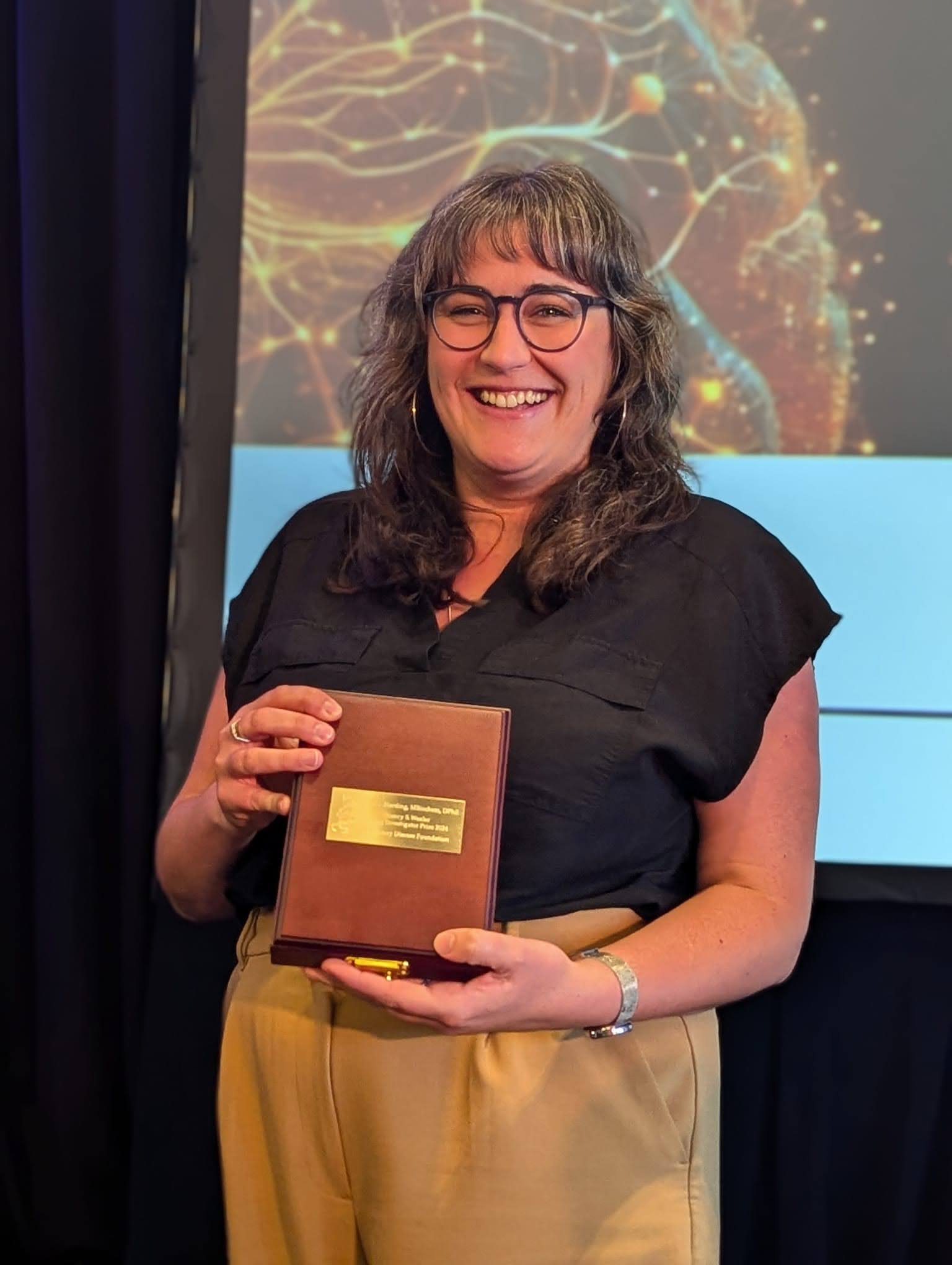
Image credit: Lauren Byrne
The first story Jeff is telling us about is developing tools that lower HTTHTT one abbreviation for the gene that causes Huntington’s disease. The same gene is also called HD and IT-15. He’s using something called an ASOASOs A type of gene silencing treatment in which specially designed DNA molecules are used to switch off a gene, or antisense oligonucleotideASOs A type of gene silencing treatment in which specially designed DNA molecules are used to switch off a gene. You may have heard of these if you followed Roche’s trials since tominersen is a HTT-lowering ASOASOs A type of gene silencing treatment in which specially designed DNA molecules are used to switch off a gene.
Jeff’s team saw that when they lowered HTTHTT one abbreviation for the gene that causes Huntington’s disease. The same gene is also called HD and IT-15 with ASOsASOs A type of gene silencing treatment in which specially designed DNA molecules are used to switch off a gene, the degree of somatic instabilitysomatic expansion A process in which the CAG repeat in the Huntingtin gene can change over a person’s lifetime in some cells of the body, particularly in the brain. seemed to go down. But it turns out this is not because of the reduced amount of HTTHTT one abbreviation for the gene that causes Huntington’s disease. The same gene is also called HD and IT-15 protein, but a strange quirk of how ASOsASOs A type of gene silencing treatment in which specially designed DNA molecules are used to switch off a gene work to target genetic message molecules. This doesn’t mean that HTT-lowering ASOsASOs A type of gene silencing treatment in which specially designed DNA molecules are used to switch off a gene will reduce somatic instabilitysomatic expansion A process in which the CAG repeat in the Huntingtin gene can change over a person’s lifetime in some cells of the body, particularly in the brain. in the key cells HD researchers are targeting. The doses would have to be crazy high to achieve this and then there might be unwanted off target effects. Still, an interesting observation – science is weird!
The ability of the ASOsASOs A type of gene silencing treatment in which specially designed DNA molecules are used to switch off a gene to influence somatic instabilitysomatic expansion A process in which the CAG repeat in the Huntingtin gene can change over a person’s lifetime in some cells of the body, particularly in the brain. got Jeff curious if other tools that lower HTTHTT one abbreviation for the gene that causes Huntington’s disease. The same gene is also called HD and IT-15 also affect somatic instabilitysomatic expansion A process in which the CAG repeat in the Huntingtin gene can change over a person’s lifetime in some cells of the body, particularly in the brain.. So he repeated his experiments with another tool to lower HTTHTT one abbreviation for the gene that causes Huntington’s disease. The same gene is also called HD and IT-15 called zinc finger proteins, or ZFPs. These work in a completely different way to ASOsASOs A type of gene silencing treatment in which specially designed DNA molecules are used to switch off a gene, binding the CAG repeats in the DNA molecule itself, not the genetic message molecule (RNARNA the chemical, similar to DNA, that makes up the ‘message’ molecules that cells use as working copies of genes, when manufacturing proteins.).
Again, they see that ZFPs decrease the amount of somatic instabilitysomatic expansion A process in which the CAG repeat in the Huntingtin gene can change over a person’s lifetime in some cells of the body, particularly in the brain. in the mouse models they studied. Jeff speculates that this could pave the way for new approaches to think about treating somatic instabilitysomatic expansion A process in which the CAG repeat in the Huntingtin gene can change over a person’s lifetime in some cells of the body, particularly in the brain., by decorating the HD gene DNA with things like the ZFP molecules.
The second story Jeff is telling us about is his work with ASOsASOs A type of gene silencing treatment in which specially designed DNA molecules are used to switch off a gene to specifically lower the expanded copy of HTTHTT one abbreviation for the gene that causes Huntington’s disease. The same gene is also called HD and IT-15. He’s collaborated with Wave Life Sciences on these experiments.
He’s being mindful of the super toxic HTT1a fragment we wrote about yesterday from a talk by Gill Bates. Since these are the form of HTTHTT one abbreviation for the gene that causes Huntington’s disease. The same gene is also called HD and IT-15 that causes sticky protein clumps, Jeff looked to see if those were affected in mice treated with these ASOsASOs A type of gene silencing treatment in which specially designed DNA molecules are used to switch off a gene. And they were! The HTTHTT one abbreviation for the gene that causes Huntington’s disease. The same gene is also called HD and IT-15 clumps in mice treated with the HTT-lowering ASOsASOs A type of gene silencing treatment in which specially designed DNA molecules are used to switch off a gene were dramatically lower.
They also see that the changes to which genes are switched on or off more in HD are restored when the mice are treated with the ASOsASOs A type of gene silencing treatment in which specially designed DNA molecules are used to switch off a gene. Jeff thinks that treatments that affect genes turning on or off might also have an added bonus of influencing somatic instabilitysomatic expansion A process in which the CAG repeat in the Huntingtin gene can change over a person’s lifetime in some cells of the body, particularly in the brain..
He finished with a call to arms to look into this idea more and encouraged drug developers to ensure that they’re also hitting HTT1a with their drugs.
Beyond the barrier
Up next is Nick Todd who is going to talk to us about using focused ultrasound to do a better job of getting drugs into the brain. The brain has a protective barrier that keeps things from the blood out that could cause harm to the delicate brain cells.
This barrier is also a headache for drug hunters as it often keeps out drug molecules from getting into the brain – this is why HTT-lowering ASOsASOs A type of gene silencing treatment in which specially designed DNA molecules are used to switch off a gene, like those from Roche and Wave, are delivered by spinal tap, as they are too large to get across this barrier.
Focused ultrasound can cause this barrier to open temporarily, potentially allowing drugs to get from the blood to the brain. Nick is showing that he can control this system to a very fine level of detail to open up the barrier in very specific areas for defined timeframes.
This approach has already been tested in 30 clinical trials – wow! So far, these have primarily been in cancer, but are moving to neurodegenerativeneurodegenerative A disease caused by progressive malfunctioning and death of brain cells (neurons) diseases, like Alzheimer’s and Parkinson’s. Nick and a collaborative team from Boston are hoping to apply this technology to HD.
Right now, Nick and his team are testing this approach in mice that model HD to work out if it is feasible and if there are any safety issues that need to be figured out. Once this is done, they want to start testing the delivery of gene therapies in mice with this technology. This approach looks very promising in other models and for other diseases, so we’re excited to have Nick using this approach for HD!
A new upcoming trial (!) to replace lost cells
Up next is Leslie Thompson – a total rockstar in the HD space. She was part of the team that went to Venezuela to help identify the gene that causes HD and runs a productive HD lab that works on various aspects of HD. One of the models she uses to study HD is stem cellsstem cells Cells that can divide into cells of different types.
For a long time now, one idea people have had to treat degenerative brain disease like HD, is to replace the cells that are lost over time – something called cell therapy. There are a lot of different ways scientists are researching this approach, including adding cells back with surgery.
There has been success with this approach in other disease fields, like a type of epilepsy. A cell therapy recently received FDA approval for people that live with this type of epilepsy, 60% of whom in the trial went from having 5-6 seizures a day to none. Impressive and exciting!
A global team of expert HD researchers have been working together to try and get a cell replacement therapy off the ground. This is no mean feat: they need to make the right type of cells that have certain markers and that are able to survive and thrive after transplant.
So far, Leslie and her team have tested this approach in mice that model HD with great success. The motor and movement symptoms of the mice improved after they were given the stem cell therapy. They also saw increases in molecules that are known to be protective for the brain and reduced amounts of sticky HTTHTT one abbreviation for the gene that causes Huntington’s disease. The same gene is also called HD and IT-15 protein clumps. They also saw restoration of other molecular markers indicating that the brain has more healthy neuronsneuron Brain cells that store and transmit information. Very cool!
Having healthy cells in the brain after transplant is one thing but, ideally, you want to see these new cells making connections with other nerve cells in the brain. Using cool imaging methods, they could see new connections formed between the transplanted and existing brain cells!
Leslie and her team are advancing this stem cell therapy toward the clinic and are gearing up to start a Phase ½ trial. She and her team are being ultra-cautious so that the stem cellsstem cells Cells that can divide into cells of different types that will get transplanted won’t cause tumors. So far, all tests indicate tumors won’t form.
The great news is the team have approval to start the trial. Once they receive funding, the trial will get underway under the name REGEN4HD. Participants will receive one dose of the therapy and different amounts of the cells will be tested to find the amount which works best.
“We have many irons in the fire now for HD therapeutics which is giving the HDBuzz team lots of hope.”
The aim of the trial will be to check the safety of this therapy in people. Although they have done lots of testing in different animal models, there are still many possible risks with a therapy like this, which adds cells to the brain and is delivered by brain surgery.
HDBuzz will keep you updated as we learn more about this new trial using a totally different approach! We have many irons in the fire now for HD therapeuticstherapeutics treatments which is giving the HDBuzz team lots of hope.
Improving ASOASOs A type of gene silencing treatment in which specially designed DNA molecules are used to switch off a gene technology
Next up is Holly Kordasiewicz from Ionis Pharmaceuticals. Ionis is the company that initially developed the HTT-lowering ASOASOs A type of gene silencing treatment in which specially designed DNA molecules are used to switch off a gene that is now called tominersen and is being tested in clinical trials by Roche in the ongoing trial GENERATION-HD2.
GENERATION-HD2 is happening across more than 70 sites in 15 different countries and is now at ~75% enrollment of trial participants. This trial is a huge undertaking with lots of complicated logistical considerations.
Holly is giving the crowd details on how Ionis develops their drugs and how they’ve been modified over time for improvements. If you loved your organic chemistry classes, this talk is for you! Lots of chemical structures are being shown.
Different chemical decorations on ASOsASOs A type of gene silencing treatment in which specially designed DNA molecules are used to switch off a gene can really impact how well they work as drugs, as well as the possible side effects they might cause. ASOASOs A type of gene silencing treatment in which specially designed DNA molecules are used to switch off a gene chemists are constantly improving these molecules to give the drugs the best chance of delivering the desired effects.
These small changes also help to improve how long the drugs stick around in the body, so spinal injections are needed less frequently. The chemical decorations also affect how the drugs spread through the body, including getting across structures like the blood-brain barrierblood-brain barrier A natural barrier, made from reinforcements to blood vessels, that prevents many chemicals from getting into the brain from the bloodstream.
Ionis are testing out technology where a small protein molecule is tacked onto the ASOASOs A type of gene silencing treatment in which specially designed DNA molecules are used to switch off a gene. They give this modified ASOASOs A type of gene silencing treatment in which specially designed DNA molecules are used to switch off a gene to mice by regular injection into their bloodstream. The protein handle helps the ASOASOs A type of gene silencing treatment in which specially designed DNA molecules are used to switch off a gene move from the bloodstream into the brain tissue – very exciting!
This could mean that ASOsASOs A type of gene silencing treatment in which specially designed DNA molecules are used to switch off a gene for brain diseases, like HD, could eventually be delivered by regular injections, not the more arduous spinal tap procedure. This would put less burden on folks receiving these drugs and be a real game changer.
Somatic instabilitysomatic expansion A process in which the CAG repeat in the Huntingtin gene can change over a person’s lifetime in some cells of the body, particularly in the brain. as a therapeutic target – MSH3
Our next speaker is David Reynolds from LoQus23. LoQus23 is one of the companies working to target one of the HD modifiers, called MSH3. By stopping the actions of MSH3, LoQus23 believes this will potentially slow down HD signs and symptoms by halting somatic instabilitysomatic expansion A process in which the CAG repeat in the Huntingtin gene can change over a person’s lifetime in some cells of the body, particularly in the brain..
Unlike many of the approaches we have heard about so far today, they are making small molecules that target MSH3 and stop it from working. The challenge with this approach is that MSH3 has many lookalikes in the cell, so they wanted to ensure that any molecules they made ONLY target MSH3. So far, they have found molecules which look very promising on this front.
They are using special microscopes to look at exactly how and where their molecules bind onto MSH3. These molecules work by handcuffing the MSH3 protein molecule. That locks MSH3 in place, preventing it from doing its job in the cell, which leads to CAG expansions.
The scientists at LoQus23 use cells in a dish to see if their molecules alter somatic instabilitysomatic expansion A process in which the CAG repeat in the Huntingtin gene can change over a person’s lifetime in some cells of the body, particularly in the brain.. A challenge with this is that somatic instabilitysomatic expansion A process in which the CAG repeat in the Huntingtin gene can change over a person’s lifetime in some cells of the body, particularly in the brain. is a slow process, making these experiments quite long. LoQus23 has optimized this and can get a readout in just 2 weeks.
In this system, they only need to add a very small amount of their drug to see a big impact on somatic instabilitysomatic expansion A process in which the CAG repeat in the Huntingtin gene can change over a person’s lifetime in some cells of the body, particularly in the brain. – great news! They use all kinds of chemistry tricks to show this is an “on target” effect i.e. it is happening because the molecules are hitting MSH3. They’re currently working to test these molecules in mouse models of HD and hope to be able to share if the molecules work at the next big HD scientific conference.
Somatic instabilitysomatic expansion A process in which the CAG repeat in the Huntingtin gene can change over a person’s lifetime in some cells of the body, particularly in the brain. as a therapeutic target – PMS1
Up next is Travis Wager from Rgenta. He will be telling us about his team’s work creating drugs that target PMS1, which works to drive somatic expansionsomatic expansion A process in which the CAG repeat in the Huntingtin gene can change over a person’s lifetime in some cells of the body, particularly in the brain. in HD and other diseases.
People whose bodies make more PMS1 tend to get HD symptoms earlier, whereas other people who make a less effective form of PMS1 get symptoms later. This points to the fact that PMS1 could be a great drug target to treat HD.
Rgenta’s approach is to target the message molecule of PMS1, causing it to get jumbled which will lower the amount of the PMS1 protein that is made. It looks like Rgenta has done a great job of finding molecules which do just this, with very low doses needed to see the reduced PMS1 levels.
Next, they looked at how changing PMS1 levels with their molecules affected somatic instabilitysomatic expansion A process in which the CAG repeat in the Huntingtin gene can change over a person’s lifetime in some cells of the body, particularly in the brain.. They saw a significant slow down in this regard – which is great news.
PTC’s trial is ongoing
Now we will hear from Amy-Lee Bredlau, from PTC therapeuticstherapeutics treatments. They have developed a small molecule, called PTC-518, which works to change the way the HTTHTT one abbreviation for the gene that causes Huntington’s disease. The same gene is also called HD and IT-15 message molecule is processed, causing it to get sent to the cell’s trash can, and reduce the amount of the HTTHTT one abbreviation for the gene that causes Huntington’s disease. The same gene is also called HD and IT-15 protein that is made.
PTC-518 is under investigation in a Phase 2 study, and we wrote about their interim update a little while ago.
The headline from that update is that things look very promising for PTC-518; it is effective at lowering HTTHTT one abbreviation for the gene that causes Huntington’s disease. The same gene is also called HD and IT-15 in the blood and in the central nervous system, and also appears to be generally safe. Great news!
We look forward to seeing the final results of this trial and learning more about PTC’s future plans for this drug. We will keep you all updated on all fronts.
Aggressive behavior in HD
Our next speaker is Amber Southwell, who will be telling us about a new mouse model she’s created to better study and understand aggression that some people with HD experience. Amber tells us that there are different kinds of aggression. Reactive aggression, that occurs after a trigger, even if seemingly small, is the type of aggression that’s been described in people with HD, and also in mice that model HD.
Amber does lots of experiments with mice. She noticed that some of her HD models had aggressive behavior even with normal handling. So she dug into this observation more to try and figure out if that was caused by HD, or perhaps by something else.
There are lots of different mouse models of HD, all of which differ in the forms and amounts of the HTTHTT one abbreviation for the gene that causes Huntington’s disease. The same gene is also called HD and IT-15 protein that they make. Amber thinks that these differences are likely why certain traits and signs of HD are observed in some mice, but not others.
Amber controls interactions between mice in several scenarios, films them, then scores their behavior data. It turns out her hunch was right, one type of HD mouse does seem to be generally more aggressive in certain scenarios than other HD mice.
However, in other scenarios, there was little difference between different types of HD mice and the control mice. One thing which did seem to hold true, is that HD mice are not very good at assessing perceived threats and are easily triggered to exhibit aggressive behavior.
Amber eloquently highlights that for a long time, many psychological symptoms people with HD experience were thought to be a reaction to the hardships of living with HD. But increasingly, we are finding out that depression, aggression etc. are in fact symptoms of the disease itself.
There are regions of the brain attributed to these type of behaviors in people and some scientists have observed changes in these regions in brain scans of people with HD. Amber and her team are now investigating these brain regions in their mouse models.
A prescription for sleep
Our next speaker is Zanna Voysey, who studies sleep in HD to see if there’s a link between problems with sleep and disease onset and progression. Zanna is also interested in using medication to treat this aspect of HD.
For people with HD, many experience insomnia or fragmented sleep. Similarly, people often move around a lot even whilst they are sleeping. This can really impact people’s quality of life and exacerbate other symptoms, so research into this is very welcome.
These sleep symptoms actually start very early in HD and people may be unaware of the extent of their symptoms. This is why we need specific sleep studies, as just asking how well someone slept does not always give a complete picture.
Beyond improving quality of life, sleep seems to directly impact many signs and symptoms of HD, at a molecular level and at a clinical level. So treating sleep issues could help people think more clearly and even help slow down symptoms of HD.
The Cambridge HD-Sleep study has now been running for 12 years! They have collected all sorts of data from more than 40 people, with and without HD to see how HD impacts sleep over the course of the disease. They confirmed that poor sleep tracked with HD progression, and the scientists could even predict who was more likely to progress to the next stage of HD based on sleep symptoms.
Interestingly, they found that people with HD who had worse sleep had more trouble thinking and increased amounts of NfLNfL biomarker of brain health, suggesting poor sleep is having a very real effect on the health of their brains.
MelatoninMelatonin a hormone produced by the pineal gland, important for regulating sleep, a chemical that causes us to fall asleep and stay asleep, increases in deep sleep, but people even at the very early stages of HD were shown to have altered melatoninMelatonin a hormone produced by the pineal gland, important for regulating sleep levels in this study. This indicates that sleep issues are an early sign and symptom of HD.
The good news is that there are now many options for treating sleep with a new series of drugs which target a molecule in the brain called orexin. These drugs seem to have very limited side effects and have shown great promise in different diseases, including Alzheimer’s. Zanna and her colleagues in Cambridge are keen to see if these drugs might help people with HD, and possibly even slow down disease. They’re setting up a clinical trialclinical trial Very carefully planned experiments designed to answer specific questions about how a drug affects human beings to measure these questions in a controlled way.
Excitingly, Zanna’s work shows us that there are things that people can do TODAY to help with signs and symptoms of HD. So grab your pillow and get to bed early!
Communication breakdown
Next up is Chiara Scaramuzzino who studies how molecules move along the long, thin branches of neuronsneuron Brain cells that store and transmit information. This process doesn’t work so well in HD so Chiara is trying to get into the details of exactly what is going wrong. Molecular messages travel throughout cells and between cells in little bubbles. The transfer of these bubbles and capture of them by neighboring cells doesn’t work as well as it should in cells affected by HD.
“Excitingly, Zanna’s work shows us that there are things that people can do TODAY to help with signs and symptoms of HD. So grab your pillow and get to bed early! ”
Chiara’s lab has made a cool way to study this in the lab. Using 3D printed micro structures, they grow neuronsneuron Brain cells that store and transmit information on a chip, where the nerve cells make connections with other cells in a similar way to how they do in the brain.
Using this system, they can do all kinds of imaging of the nerve cells. This includes measuring the transport of individual cargos in cells moving along the length of the nerve cell – Chiara is sharing super cool videos with the crowd!
Comparing regular and HD nerve cells on a chip, they can see that some of this transport is impaired in HD. They also looked at connections between different combinations of HD and regular cells, seeing that networks that start with HD cells are the most impacted in their function.
They followed up on these cargo transport issues by doing some experiments in mice. With some very cool imaging technologies, they were able to “see” the movement of the cargo in the mouse brain. Chiara is hoping that this work will help her and her team identify new targets to develop potential therapeutic targets that might help regulate communication within and between brain cells, which could help improve thinking, movement, and mood in HD.
Systematic screen for somatic instabilitysomatic expansion A process in which the CAG repeat in the Huntingtin gene can change over a person’s lifetime in some cells of the body, particularly in the brain.
Our next speaker is Ricardo Mouro Pinto, who was awarded a $1,000,000 Transformative Research Award from the HDF in 2023 for his work on targeting somatic expansionsomatic expansion A process in which the CAG repeat in the Huntingtin gene can change over a person’s lifetime in some cells of the body, particularly in the brain. using CRISPRCRISPR A system for editing DNA in precise ways to develop new drugs for HD.
Ricardo’s lab are some of the many talented folks investigating genetic modifiers that influence age of onset of HD symptoms and how they impact somatic instabilitysomatic expansion A process in which the CAG repeat in the Huntingtin gene can change over a person’s lifetime in some cells of the body, particularly in the brain. of the CAG repeatCAG repeat The stretch of DNA at the beginning of the HD gene, which contains the sequence CAG repeated many times, and is abnormally long in people who will develop HD in the HTTHTT one abbreviation for the gene that causes Huntington’s disease. The same gene is also called HD and IT-15 gene. Ricardo’s team systematically looked at every genetic modifier (60 in all!) in HD mice to see how they impacted somatic instabilitysomatic expansion A process in which the CAG repeat in the Huntingtin gene can change over a person’s lifetime in some cells of the body, particularly in the brain.. This found many of the usual suspects, like FAN1 and MSH3, as some of the genes with the most influence on somatic instabilitysomatic expansion A process in which the CAG repeat in the Huntingtin gene can change over a person’s lifetime in some cells of the body, particularly in the brain..
They looked in different parts of the mice, including the liver and the striatum, the part of the brain most impacted by HD. This showed that some modifiers, like PMS1, seemed to have more of an impact in the brain than in the liver. Identifying genes, like PMS1, that have a stronger effect in one tissue over another suggests some tissue-specific effects with this process.
Other modifiers, like MLH3, seemed to have an impact at different timepoints of the life of the HD mouse. Together, this shows us that somatic instabilitysomatic expansion A process in which the CAG repeat in the Huntingtin gene can change over a person’s lifetime in some cells of the body, particularly in the brain. is a complicated process that happens in different phases with many different proteins playing a role.
Interestingly, some drugs that lower HTTHTT one abbreviation for the gene that causes Huntington’s disease. The same gene is also called HD and IT-15 also seem to hit somaticsomatic relating to the body instability-related genes. We recently wrote about this idea. The drug branaplam not only lowers HTTHTT one abbreviation for the gene that causes Huntington’s disease. The same gene is also called HD and IT-15, but it also targets PMS1 to reduce somatic instabilitysomatic expansion A process in which the CAG repeat in the Huntingtin gene can change over a person’s lifetime in some cells of the body, particularly in the brain..
Ricardo and his team are looking through all of the different modifiers to see which might make the most sense to target with drugs, to slow somatic instabilitysomatic expansion A process in which the CAG repeat in the Huntingtin gene can change over a person’s lifetime in some cells of the body, particularly in the brain., and potentially treat HD and possibly other repeat expansion diseases like SCA1.
They are looking into CRISPRCRISPR A system for editing DNA in precise ways tools to try and edit some of these modifiers, with the aim of slowing somatic expansionsomatic expansion A process in which the CAG repeat in the Huntingtin gene can change over a person’s lifetime in some cells of the body, particularly in the brain.. A very exciting potential future treatment for HD. While they’re only in mice right now, their plan is to move toward the clinic, so we’ll keep you posted as Ricardo’s work moves forward!
Improving gene therapies for HD
The final talk of the conference is from Beverly Davidson, who also was also awarded with a $1,000,000 Transformative Research Award from the HDF in 2023 for her work advancing gene therapies for HD.
Bev’s lab works on the problem of gene therapy delivery and are working to optimize technology that will allow scientists to move from treating a mouse brain to a human brain. She doesn’t just work on HD, but many different genetic diseases, all in need of new drugs.
In current gene therapies under investigation right now, like that of uniQure, multiple injections of the drug are needed in brain surgery at relatively high doses. Bev’s team is trying to rethink this process, making it less laborious for surgeons and arduous for patients.
Gene therapies are generally packaged in harmless viruses called AAVs. Bev’s team is testing different AAVs in animal models to see which work best at getting into different regions of the brain. Bev’s team have identified AAVs which, at very low doses, are able to really get into the center of the brain. This will be a great tool for HD gene therapies which aim to target the striatum, which is right in the middle of the human brain.
She shared beautiful images of a monkey brain showing that her lead AAVAAV a virus that can be used to deliver gene therapy drugs to cells. AAV stands for adeno-associated virus. candidate, with only one injection, gets to deep structures of the brain and lights up lots of cells there. They’re working on producing a very potent drug delivery system!
Bev is also sharing a story about developing a new technique that allows them to mix samples from different mice, barcode the different cells, then analyze them as a group. This has massive advantages – saving time, money, and resources in the lab!
After the data is analyzed, they can work out which genes and how much of each are expressed in every cell from each brain that they pooled together. It’s a very innovative approach called SPLiTseq.
Up next on Bev’s to-do list is to package HD-targeting drugs into their potent AAVAAV a virus that can be used to deliver gene therapy drugs to cells. AAV stands for adeno-associated virus.. She promises an update at the next big HD conference!
That’s all from us for HDF’s 2024 conference! Thanks for following along. You can also find other updates in the near future about the conference from Ken Serbin, aka Gene Veritas at his blog. We’ll be back in Boston in 2026 to bring you more updates!
For more information about our disclosure policy see our FAQ…